Plant Overview
Meet the "Woolly Rose Cactus," a spherical marvel from the rocky grasslands of South America. Named erinaceus because of its resemblance to a curled-up hedgehog, this cactus is beloved for the contrast between its fierce, dark spines and the soft, cotton-like "wool" that protects its crown. It is a slow-growing companion that brings a touch of the Argentinian wild to any sunny windowsill.
🔍 How to Identify
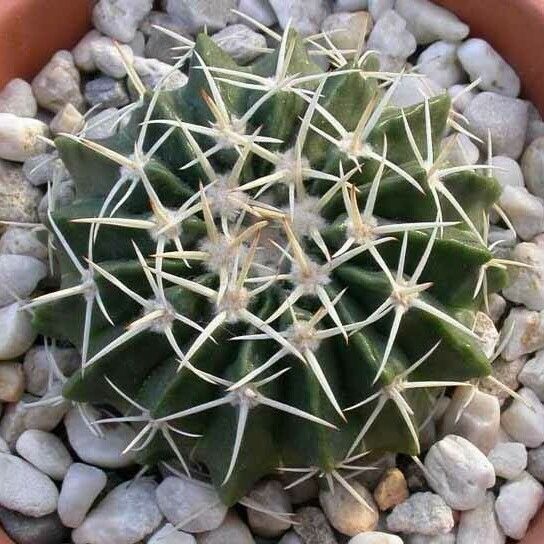
- 🌵 The Body: A dark green, globular stem that starts out round and can become slightly cylindrical as it ages, often reaching the size of a large grapefruit.
- 🧶 The Apex: The very top of the plant features a dense, white woolly tuft, which serves as the "nursery" for new growth and flower buds.
- 📐 Deep Ribs: The plant is divided into 15 to 20 sharp, well-defined vertical ribs that allow the cactus to expand and contract like an accordion when storing water.
- 🌼 The Flowers: Produces stunning, silky yellow flowers with bright red or pink stigmas at the center, appearing right out of the woolly top.
🏡 In Your Garden
- ☀️ Light Protection: While it loves bright light, the Parodia erinaceus can actually get "sunburned" in extreme, direct afternoon heat. Its woolly top acts as a natural sunshade for its most sensitive growing point.
- 💧 Winter Hibiscus: This plant enters a deep dormancy in the winter. It prefers a "cold and dry" treatment during the festive months—keeping it in a cool room without water helps trigger the spectacular golden blooms come springtime.
- 🪴 Drainage Nuance: It has a sensitive root system that dislikes "wet feet." Using a terracotta pot is highly recommended, as the porous material helps the soil breathe and prevents root rot.
⚠️ Safety & Toxicity
- ✅ Non-Toxic Status: This cactus is considered non-toxic to both humans and common household pets like cats and dogs.
- 🌵 Mechanical Injury: While not poisonous, the spines are very stiff and sharp. They can easily puncture skin or paws, so it should be placed on high shelves away from high-traffic areas or curious toddlers.
✨ Fun Fact
The specific epithet erinaceus is Latin for "hedgehog." This isn't just because of the spines; in the wild, these cacti often grow partially submerged in the ground among rocks, looking exactly like a small animal hiding in the brush!

Detailed Care Instructions

Place in a bright room that is sun drenched almost all day. Or directly in a south-facing window.

When the top few inches of soil dry out, water your plants. If the top few inches of soil are still moist, do not water your plant. Wait a few days, then poke your finger into the soil to see if anything has changed. Overwatering poses a disease risk, such as the development of fungal diseases in the roots. These plants have adaptations in there leaves that allow them to survive in low water supply.
These plants can thrive without taking help from any fertilizer. However, if the medium of growth is something other than soil for instance sand then you may need to add little fertilizer. The best way to know if your plants need fertilizer or not is to check for yellowing of leaves. If the leaves start to turn yellow it’s fertilizing time.
You may use Cactus Fertilizer for your Hedgehog Cactus
Common pests of the hedgehog cactus include Scale insect, mealybugs, spider mites. Make a habit of checking your hedgehog cactus frequently for pests so that any infestations can be caught and managed early.








