Plant Overview
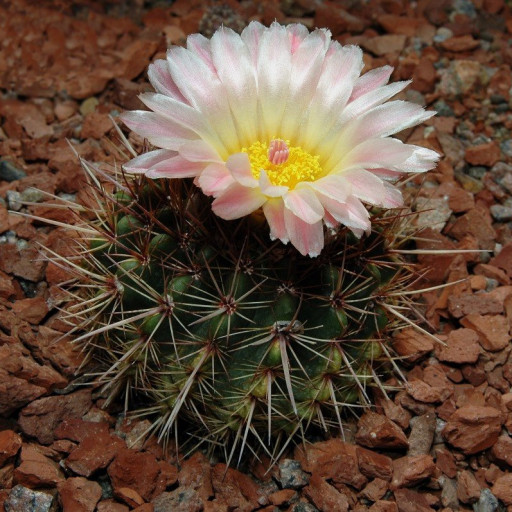
Often called the Lemon Ball Cactus or Tom Thumb, Parodia mammulosa is a charismatic, globose cactus that hails from the pampas of South America. It is a favorite among collectors because it manages to look both rugged and refined, producing large, satiny flowers that seem far too big for its small body. In its native Brazil and Uruguay, it thrives in rocky grasslands, soaking up the sun and bracing against the wind.
🔍 How to Identify
- 🌵 Body Shape: It begins as a perfect, flattened sphere but gradually stretches into a short cylinder as it matures, usually reaching about 6 inches in height.
- 🏔️ The "Chinned" Ribs: The cactus features 13 to 21 distinct vertical ribs. These are broken into prominent bumps or "tubercles" that look like little chins protruding beneath each cluster of spines.
- ⚔️ Spine Pattern: Each cluster features one to four thick, needle-like central spines surrounded by several smaller radial spines, varying in color from creamy white to a burnt yellow-brown.
- 🟡 Contrasting Flowers: It produces stunning lemon-yellow flowers. The most striking feature is the center of the bloom, which boasts a bright red or purple multi-lobed stigma that pops against the yellow petals.
🏡 In Your Garden
- ☀️ Light & Blooming: To see those famous yellow blooms, this cactus needs a "tough love" approach to light. It craves bright, direct sunlight; without it, the plant will stretch out (etiolate) and lose its symmetrical ball shape.
- 💧 The Winter Rest: While it is quite thirsty during the hot summer months compared to other cacti, it requires a strictly dry "hibernation" in winter. If the soil remains damp during cold spells, the roots are highly prone to sudden rot.
- 🪴 Potting Preferences: It has a relatively shallow root system. It prefers being slightly "pot-bound" in a gritty, porous mix that includes plenty of perlite or pumice to ensure the roots never sit in standing water.
⚠️ Safety & Toxicity
- 🟢 Non-Toxic: Parodia mammulosa is generally considered non-toxic to cats, dogs, and humans if accidentally nibbled.
- 🌵 Mechanical Injury: While not poisonous, the spines are very stiff and sharp. They can easily puncture the skin or a curious pet's paw. It is best kept on a high shelf or in a decorative container out of reach of high-traffic areas.
✨ Fun Fact
Unlike many other cacti whose flowers are purely one color, the Parodia mammulosa is famous for its "bicolored" look. The deep crimson or purple center of the flower acts as a "nectar guide," signaling to specific pollinators exactly where to land to find a sweet reward!

Detailed Care Instructions
| Lighting | Full Sun |
| Hardiness Zones | Min 6A |
To grow Parodia Mammulosa, also known as the golden ball cactus, follow these steps:
- Obtain a healthy Parodia Mammulosa plant from a reliable source. It is best to start with a young plant to allow it to adapt to your care.
- Choose the right pot. Select a shallow and wide pot with drainage holes to ensure proper water drainage. The pot should be slightly larger than the plant's current root ball.
- Use well-draining soil. Parodia Mammulosa prefers a cactus or succulent-specific soil mix. Ensure that the soil is loose and sandy to prevent waterlogging.
- Place the plant in a bright location. Parodia Mammulosa requires at least 6 hours of direct sunlight per day. Choose a south or west-facing window or provide artificial grow lights if adequate sunlight is not available.
- Water sparingly. Water the plant when the top 1-2 inches of soil are dry. Avoid overwatering as this can lead to root rot. During the winter months, reduce watering frequency.
- Apply fertilizer. Use a balanced, water-soluble fertilizer specifically formulated for cacti and succulents. Follow the instructions on the packaging for proper dilution and frequency of application. Fertilize once every month during the growing season (spring and summer).
- Maintain proper temperatures. Parodia Mammulosa prefers temperatures between 65-85°F (18-29°C). Protect the plant from cold drafts and frost during winter.
- Provide good air circulation. Proper air circulation helps prevent fungal diseases. Ensure the plant has enough space around it and avoid overcrowding on shelves or windowsills.
- Repot when necessary. Every 2-3 years, repot your Parodia Mammulosa into a slightly larger pot to accommodate its growing root system. This is usually needed when the plant becomes root bound.
- Watch for pests and diseases. Check regularly for signs of pests like mealybugs or scale insects. If detected, treat with an appropriate insecticide or use natural remedies like neem oil or a mixture of water and dish soap.
- Handle with care. Parodia Mammulosa has clusters of spines, so it is advisable to wear gloves or use newspaper to protect your hands while handling and repotting.
Remember, cacti are adapted to survive in harsh conditions, so it is better to underwater than overwater. Observe your plant closely and adjust care accordingly to ensure its optimal growth.

Place in a bright room that is sun drenched almost all day. Or directly in a south-facing window.

The Parodia Mammulosa plant should be watered sparingly during the summer growing season and almost not at all during the winter dormant period. When watering, it is important to thoroughly saturate the soil and then allow it to completely dry out before watering again. Over-watering or leaving the soil too damp for too long can lead to root rot and other problems. It is also important to avoid getting water on the plant's woolly or hairy surfaces, which can lead to fungal growth and other issues. When possible, water at the base of the plant rather than from above. Additionally, the plant should not be watered during extreme heat or when it is exposed to direct sunlight, as this can lead to scorching or burning.
To fertilize this plant, begin by choosing a balanced fertilizer with a ratio of 10-10-10 or 20-20-20. Dilute the fertilizer to half strength and water the plant with the solution every two to three weeks during the growing season, which typically lasts from early spring through fall. Avoid fertilizing the plant during the dormant winter months. Remember to always follow the instructions on the fertilizer package and to water the plant thoroughly before and after fertilizing to prevent burns and over-fertilization.
The most appropriate soil for the Parodia Mammulosa plant is a well-draining mix that is composed of various materials. This soil mix should be aerated, loose, and porous, which allows for proper drainage and air circulation. Ideal soil components for Parodia Mammulosa include perlite, coarse sand, pumice, and gritty gravel. These materials help to ensure that water drains quickly and efficiently, preventing the roots from becoming waterlogged, which can lead to root rot. Additionally, the soil should be slightly acidic, with a pH range of 5.5 to 7. This acidity level is conducive to the plant's optimal growth as well as nutrient uptake. When selecting soil for Parodia Mammulosa, it is vital to choose high-quality, sterile soil, free from pests, diseases, or contaminants that may harm the plant's health.
One way to propagate this cactus species is through stem cuttings. First, select a healthy stem that is at least 4 inches long and 1 inch in diameter. Using a sharp knife or scissors, cut the stem just below a node or joint where a new branch or fruit may grow. Allow the cutting to dry out for a few days in a warm, dry place, then dust the cut end with rooting hormone powder. Plant the cutting in a well-draining cactus mix, covering the cut end with at least an inch of soil. Water it lightly and keep it in a bright, warm location, avoiding direct sunlight. After a few weeks, the cutting should start to root and produce new growth. Over time, it will grow into a new Parodia Mammulosa plant.
Common pests of the tom thumb include Scale insect, mealybugs, spider mites. Make a habit of checking your tom thumb frequently for pests so that any infestations can be caught and managed early.








