Plant Overview
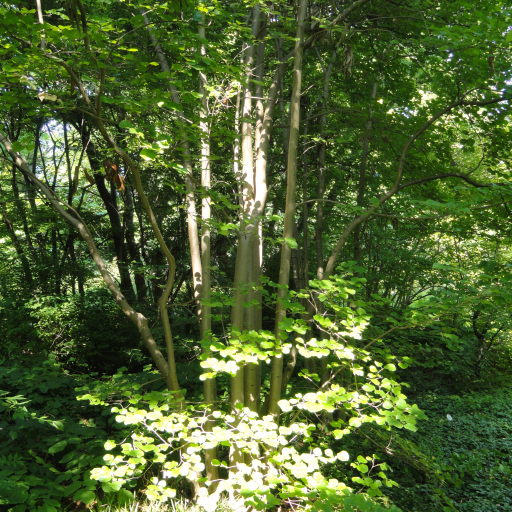
Often called the Himalayan Witch Hazel, this elegant deciduous shrub is a hidden gem from the high mountain slopes of Kashmir and Pakistan. While it is a close relative of the more common Witch Hazel, it offers a unique, sophisticated aesthetic with its "flowers" that aren't actually flowers at all. It is a slow-growing masterpiece that brings a sense of wild, mountainous serenity to temperate gardens.
🔍 How to Identify
- 🤍 The "Fake" Flowers: The most striking feature is the clusters of creamy-white bracts (specialized leaves) that look like petals, surrounding a center of tiny, fuzzy yellow stamens.
- 🍃 Toothed Foliage: The leaves are broad and rounded with distinctively serrated (toothed) edges, very similar in appearance to a hazelnut or common hazel leaf.
- 🌫️ Silvery Bark: As the plant matures, it develops smooth, silvery-gray bark that provides excellent visual interest during the sparse winter months.
🏡 In Your Garden
- 🏔️ Himalayan Resilience: Because it originates from high altitudes, this plant is remarkably hardy. It can withstand cold winds and frost that might damage more delicate spring-bloomers.
- 🍂 Autumn Brilliance: Before the leaves drop in winter, they undergo a dramatic transformation, turning a luminous, butter-yellow that glows even on overcast days.
- 🧺 Low Maintenance Structure: It naturally grows into a tidy, upright vase shape. It rarely needs heavy pruning, making it ideal for gardeners who prefer a "hands-off" structural plant.
⚠️ Safety & Toxicity
- 🌿 Safe Status: Parrotiopsis jacquemontiana is generally considered non-toxic to humans, cats, and dogs.
- 🧤 General Caution: While not poisonous, the fine hairs on the leaves and stems can occasionally cause mild skin irritation for those with highly sensitive skin. Wearing gloves during pruning is a good practice.
✨ Fun Fact
In its native Himalayan regions, the wood of this plant is so incredibly tough and flexible that it is the traditional material used for weaving heavy-duty bridges and crafting high-quality walking sticks!

Detailed Care Instructions
To grow Parrotiopsis Jacquemontiana, also known as Himalayan wisteria, you can follow these steps:
- Obtain Seeds or Cuttings: You can either obtain seeds from reputable plant nurseries or try to propagate the plant from softwood cuttings in spring or summer.
- Prepare the Growing Medium: Use a well-draining potting mix that consists of equal parts peat moss, perlite, and sand.
- Sow Seeds or Plant Cuttings: If using seeds, sow them in small pots or trays filled with the prepared growing medium. Press the seeds gently into the surface of the soil and cover them lightly. For cuttings, dip the bottom ends in a rooting hormone and plant them in the growing medium.
- Provide Optimal Growing Conditions: Parrotiopsis Jacquemontiana prefers partial shade or filtered sunlight, so place the pots or trays in a location that receives indirect sunlight. Maintain a temperature range of around 60-70°F (15-20°C).
- Watering: Keep the soil slightly moist but avoid overwatering, as it may cause root rot. Water the plant when the top inch of soil feels dry. Ensure good drainage to prevent waterlogging.
- Fertilizer: Feed the plant with a balanced, organic fertilizer once a month during the growing season (spring and summer). Follow the instructions on the fertilizer's packaging for dosage.
- Pruning: Regularly prune the plant to promote bushier growth and maintain its shape. Remove dead or damaged branches and cut back any overly long or unruly growth.
- Transplanting: Once the plant has outgrown its current container, transplant it into a larger pot or directly into the ground if the climate in your area suits its requirements.
- Pest and Disease Control: Monitor the plant for any signs of pests (such as aphids or scales) and diseases (such as powdery mildew). Treat any infestations or issues promptly using appropriate methods or consult with a horticulturist for guidance.
- Patience and Care: Growing Parrotiopsis Jacquemontiana may require patience, as it can be a slow-growing plant. Ensure consistent care, provide adequate support for climbing vines if necessary, and enjoy watching your plant thrive over time.
Remember to research specific care requirements for Parrotiopsis Jacquemontiana in your region, as it may have specific adaptions or considerations based on your climate and growing conditions.

Place in a bright room that is sun drenched almost all day. Or directly in a south-facing window.

To properly water this plant, locate it in a well-draining potting mix and ensure that the pot has drainage holes. Before watering, check the soil's moisture level by inserting your finger or a moisture meter into the soil. If the soil is dry at a depth of one to two inches, it's time to water the plant.
When watering, use room temperature water and saturate the soil until it begins to drain from the bottom of the pot. Allow the soil to dry out slightly before watering again, as over-watering can lead to root rot and other issues.
In addition to regular watering, misting the foliage with a spray bottle can help to increase humidity levels and promote healthy growth. It's also important to keep the plant in a location with bright, indirect sunlight and to avoid placing it in drafty areas or areas with extreme temperature fluctuations.
- Choose a balanced fertilizer that contains equal parts of nitrogen, phosphorus, and potassium.
- Mix the fertilizer as per the instructions mentioned on the packet.
- Use a watering can or a hose to sprinkle the mixture over the soil.
- Water the plant thoroughly to ensure that the nutrients reach the roots.
- Fertilize the plant once every 2-3 weeks during the growing season (spring and summer).
- Reduce the frequency of fertilizing during the dormant season (fall and winter) to once a month.
- Avoid overfertilizing as it can lead to the accumulation of salts in the soil, which can damage the roots.
- Always read the instructions on the fertilizer packet, and follow the recommended dosage.
The ideal soil for Parrotiopsis Jacquemontiana should be well-draining and moderately fertile. The soil should be slightly acidic, with a pH range of 5.5 to 6.5. The plant prefers a mix that is rich in organic matter, such as a blend of peat moss, compost, and sand. The soil should be kept moist, but not waterlogged, and the plant should be planted in a location that receives partial shade to full sun. It is necessary to avoid using heavy soils, as they do not drain well, and may lead to root rot. Additionally, the plant should not be fertilized excessively, as excess nitrogen can cause the leaves to grow too quickly and become susceptible to disease and pests. It is crucial to maintain the soil moisture level, as dryness can cause the plant to wilt and die.
There are different methods to propagate this plant, but one way to do it is through cuttings. Here are the steps:
- Choose a healthy stem that is at least 4 inches long and has a few leaves on it.
- Using a sharp and clean pair of scissors, cut the stem at a 45-degree angle just below a node (where a leaf was attached).
- Remove the lower leaves on the stem, leaving only a few on the top.
- Dip the cut end of the stem in rooting hormone powder, tapping off any excess.
- Insert the stem into a pot filled with a well-draining soil mixture (such as half perlite and half peat moss).
- Water the soil thoroughly to settle it around the cutting.
- Cover the pot with a clear plastic bag or a propagator lid to create a humid environment. Place the pot in a warm and bright spot, but not in direct sunlight.
- Mist the cutting and the inside of the plastic bag regularly to keep it moist.
- After a few weeks, check for roots by gently tugging on the stem. If there is resistance, the roots have formed.
- Once the cutting has established roots, gradually acclimate it to lower humidity and brighter light over a period of a few days.
- Transplant the new plant to a slightly larger pot when it outgrows the current one and continue to care for it appropriately.








