Plant Overview
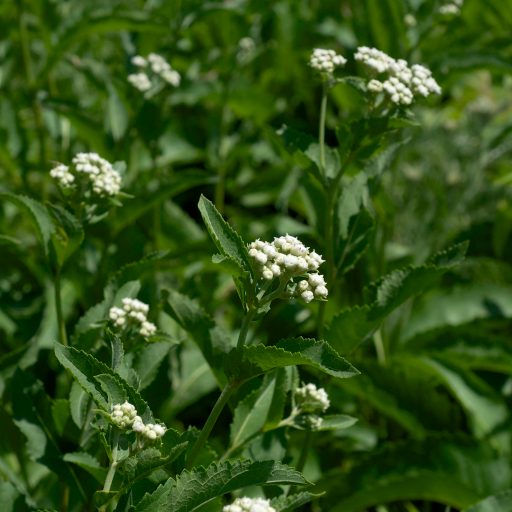
Known as Wild Quinine or American Feverfew, this architectural beauty is a resilient survivor of the North American tallgrass prairies. Its clusters of pearly white flowers look like small, unpopped kernels of popcorn or miniature clouds resting on sturdy, dark stems. Historically valued by Native American tribes and early settlers for its medicinal properties, it now serves as a structural "anchor" in modern pollinator gardens and meadow landscapes.
🔍 How to Identify
- ☁️ The Bloom: Dense, flat-topped clusters of small, white flower heads. Unlike daisies, they lack long "petals," giving them a unique, woolly, or button-like appearance.
- 🪨 The Texture: The leaves are large, oval, and surprisingly rough to the touch—similar to the texture of coarse sandpaper.
- 📏 The Stature: It grows in a very tidy, upright clump with stiff, hairy stems that rarely flop over, even after a heavy prairie rain.
🏡 In Your Garden
- 💧 The Taproot: This plant develops a very deep, thick taproot. This makes it incredibly drought-tolerant once established, but it also means it hates being moved—pick its "forever home" carefully!
- 🐝 Pollinator Party: While many flowers attract butterflies, Wild Quinine is a favorite for specialized native bees, soldier beetles, and beneficial wasps, making it a powerhouse for natural pest control.
- 🌱 Low Maintenance: It is remarkably disease-resistant and thrives in "lean" soil. If your garden soil is too rich or over-fertilized, the plant might actually grow too fast and lose its signature sturdy shape.
⚠️ Safety & Toxicity
- ✅ Safe for Pets: There are no known toxic effects for cats, dogs, or horses, making it a safe choice for farmhouse gardens.
- 🧤 Skin Sensitivity: The "scabrous" (rough) texture of the leaves and stems can cause mild skin irritation or redness for gardeners with sensitive skin. Wearing gloves during pruning is recommended.
- 🦌 Deer Resistant: Because of its bitter taste and sandpapery leaves, deer and rabbits almost always leave this plant alone in favor of tastier treats.
✨ Fun Fact
During World War I, when the supply of true Quinine (sourced from the tropical Cinchona tree) was cut off, the US government used Parthenium integrifolium as a substitute to treat fevers and malaria. While it doesn't contain the same alkaloids as true Quinine, its name remains as a tribute to its medicinal past!

Detailed Care Instructions
| Humidity | Normal |
| Lighting | Full Sun |
| Toxicity | Poisonous |
| Difficulty | Easy |
| Temperature | 14°C - 30°C |
| Hardiness Zones | 4 - 8 |
Parthenium integrifolium, also known as Wild Quinine or American Feverfew, is a herbaceous perennial plant native to North America. Here are some tips on how to grow it:
- Climate: Parthenium integrifolium prefers full sun to partial shade. It is hardy in USDA zones 4-9, so make sure your climate is suitable for its growth.
- Soil: This plant prefers well-draining, slightly acidic to neutral soil. Prepare the soil by adding organic matter such as compost to improve its fertility and drainage.
- Planting: Plant the seeds or seedlings in early spring or fall, depending on your climate. Sow the seeds about 1/4 inch deep and space them 12-18 inches apart. If using seedlings, dig a hole slightly larger than the root ball and cover it with soil, firming it gently.
- Watering: Keep the soil moist but not soggy. Water regularly, especially during dry spells or prolonged periods of heat. However, avoid overwatering, as this plant does not tolerate excessive moisture. Using a layer of mulch around the plant can help retain moisture and suppress weed growth.
- Fertilizing: Parthenium integrifolium doesn't require heavy fertilization. A balanced, slow-release fertilizer can be applied in spring to promote healthy growth. Follow the instructions on the fertilizer packaging for proper dosage.
- Maintenance: Remove any weeds that compete with Parthenium integrifolium for nutrients and water. Deadhead the spent flowers to encourage new blooms and prevent self-seeding, as this plant can become invasive in some areas.
- Pruning: Trim back the plant in late fall or early spring to promote bushier growth and maintain its shape. Cut back the old stems to the basal foliage.
- Pests and diseases: Parthenium integrifolium is relatively pest and disease resistant. However, keep an eye out for common garden pests, such as aphids or spider mites. In case of an infestation, treat with organic insecticidal soap or neem oil.
- Propagation: Parthenium integrifolium can be propagated by division in early spring or fall. Dig up the mature clump and separate it into smaller sections, each containing roots and top growth. Replant the divisions at the same depth as they were previously growing.
By following these guidelines, you should be able to successfully grow Parthenium integrifolium in your garden.

Place in a bright room that is sun drenched almost all day. Or directly in a south-facing window.

To water this plant, firstly identify its water needs based on its size, leaf density, and environmental conditions. It is best to water only when the surface of the soil is dry to the touch, as overwatering can cause root rot. Use a watering can or hose with a gentle spray to avoid disturbing the plant. Water the soil around the base of the plant until the water seeps through to the roots. Avoid getting water on the leaves, as this can cause fungal growth and disease. Adjust the frequency of watering based on the season and temperature to prevent under or overwatering.
To properly fertilize this plant, use a slow-release fertilizer with an NPK ratio of 10-10-10. Apply the fertilizer evenly around the base of the plant, taking care not to get any on the leaves or stems. Water the plant well after fertilizing to ensure the nutrients are properly absorbed. Repeat this process every six months to keep the plant healthy and thriving.
Parthenium Integrifolium is a type of plant that requires well-draining soil. It prefers soil that is slightly acidic with a pH range of 6.0 to 7.0. The soil should be rich in organic matter and have good moisture retention capabilities, but it should also allow for water to drain out easily. A good soil mix for Parthenium Integrifolium should contain a combination of loam, sand, and peat moss. Additionally, adding perlite, vermiculite, or coarse sand to the soil mix can improve drainage and aeration. The plant can be grown in containers or directly in the ground, but it should be provided with good quality soil to promote healthy growth.
Parthenium Integrifolium is a plant that can be propagated easily through different methods, including vegetative, seed, and rhizome propagation.
Vegetative propagation involves taking a part of the plant, such as a stem, leaf, or root cutting, and using it to grow a new plant. Stem cuttings and division are the most common methods of vegetative propagation for Parthenium Integrifolium. To take a stem cutting, cut a section of stem with a sharp knife and remove the leaves from the lower part of the stem. You can then plant the cutting in a pot with moist soil and keep it in a warm, bright place until it starts to root and grow new leaves.
Seed propagation involves collecting the seeds from the plant and planting them in a suitable medium. To collect the seeds, wait until the plant has matured and produced seeds, then collect them and remove any debris and chaff. Sow the seeds in a pot with moist soil and keep them covered until they germinate. It usually takes about a week for the seeds to germinate, and they will need to be transplanted into a larger pot or garden bed once they have grown larger.
Rhizome propagation involves dividing the roots of the plant and planting them to grow new plants. To do this, carefully dig up the plant and separate the roots into sections using a sharp knife. You can then plant each section in a pot or garden bed, making sure to cover the roots with soil and water them well.
Regardless of the method you choose, it is essential to keep the plants well-watered and protected from extreme temperatures and pests. With proper care, Parthenium Integrifolium can be propagated successfully, allowing you to grow your collection or share the plant with others.








