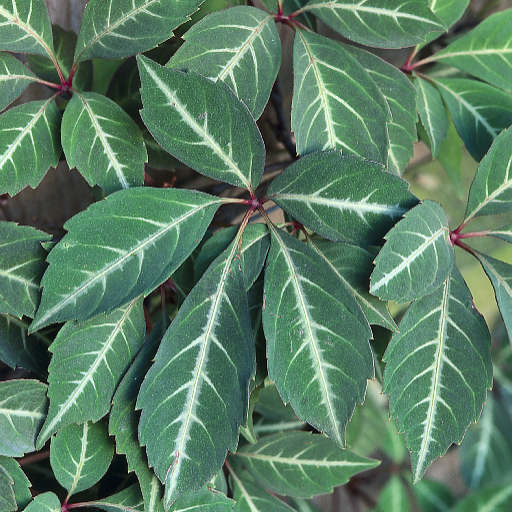
Plant Overview
Often called the Silvervein Creeper, this elegant climber is the more sophisticated, "velvet-dressed" cousin of the common Virginia Creeper. Hailing from the moist woodlands of China, it is beloved by gardeners for its deep, moody foliage and its ability to turn a mundane north-facing wall into a shimmering tapestry of silver and bronze. Unlike many vines that scream for attention with bright flowers, Parthenocissus henryana relies on its intricate patterns and dramatic autumn transformation to steal the show.
🔍 How to Identify
- 🌿 Leaf Structure: It features "palmate" leaves, typically split into five distinct, pointed leaflets that radiate from a central point like the fingers of a hand.
- 🥈 Silver Veining: The most striking feature is the bright white or silvery-white veins that trace the midrib and lateral veins of each dark, velvety leaf.
- 🍷 Hidden Color: If you flip a leaf over, you’ll find a surprising deep beetroot-red or purple underside, providing a beautiful contrast to the dark green surface.
🏡 In Your Garden
- 🌑 The Shade Advantage: Unlike most plants that lose their luster in the dark, this creeper actually develops its best silver markings and deepest colors in partial to full shade. Direct, harsh sun can actually "wash out" the delicate silver veins.
- 🧱 Gentle Climber: It uses small, adhesive "sucker pads" at the end of its tendrils to stick to surfaces. This means it doesn't need a trellis to climb, though you should keep it away from painted wood or loose mortar to prevent surface damage.
- 🍂 Autumn Finale: As the temperatures drop, the entire plant transitions from its dark, velvety green into a breathtaking, fiery crimson or electric pink before the leaves drop for winter.
⚠️ Safety & Toxicity
- 🚫 Toxic if Ingested: Like other members of the Vitaceae family, the small, dark berries and the leaves contain calcium oxalate crystals. If eaten, they can cause mouth irritation, swelling, and digestive distress.
- 🐾 Pet Warning: Keep a close eye on curious dogs or cats. While the berries aren't usually appealing, they are toxic to pets and should be kept out of reach.
- 🧤 Skin Sensitivity: Some gardeners find the sap irritating to the skin. It is always a good idea to wear gloves when pruning this vigorous grower.
✨ Fun Fact
This plant was named after the famous Irish plant hunter Augustine Henry, who discovered it in the late 19th century. Despite its delicate, high-fashion appearance, it is surprisingly hardy and can survive temperatures as low as -15°C (5°F)!

Detailed Care Instructions
To grow Parthenocissus Henryana, also known as Silver Vein Creeper, follow these steps:
- Select the right spot: Parthenocissus Henryana thrives best in partial shade to full shade, so choose a location with indirect sunlight or dappled shade. It can also tolerate some direct sunlight, especially in the morning.
- Prepare the soil: The plant prefers well-drained soil that is rich in organic matter. If your soil is heavy or clay-like, improve it by adding compost or organic matter to enhance drainage and fertility.
- Planting: Dig a hole that is slightly larger than the root ball of the plant. Place the Parthenocissus Henryana in the hole, ensuring that the top of the root ball is level with or slightly above the soil surface. Backfill the hole with soil and gently pat it down to eliminate any air pockets.
- Watering: Water the newly planted Parthenocissus Henryana thoroughly to settle the soil and encourage root establishment. Afterward, water the plant regularly, keeping the soil consistently moist but not waterlogged. During drier periods, increase the frequency of watering.
- Mulching: Apply a layer of organic mulch around the base of the plant to help retain moisture, suppress weed growth, and protect the roots from temperature extremes. Avoid placing mulch directly against the stem to prevent rot.
- Training and support: Parthenocissus Henryana is a climber, so it requires support to grow vertically. Provide a trellis, arbor, or wall for the plant to climb on. Initially, you may need to tie the vines loosely to the support structure until they start attaching themselves. Avoid allowing the vines to grow on wooden structures, as they can potentially damage them.
- Pruning: Regular pruning helps maintain the health and shape of Parthenocissus Henryana. Prune during the dormant season, preferably in late winter or early spring, before new growth begins. Trim back any damaged or dead branches, remove excessive growth, and shape the plant as desired. Avoid heavy pruning during the growing season to prevent reduced flowering and growth.
- Fertilizing: Parthenocissus Henryana generally does not require frequent fertilization. However, you can apply a balanced, slow-release fertilizer in early spring to promote healthy growth. Follow the instructions on the fertilizer packaging for the appropriate amount and method of application.
With proper care and maintenance, Parthenocissus Henryana should exhibit vigorous growth and beautiful silver-veined foliage.

Place in a window with dappled sun or a spot in the middle of a room. Or directly in a window facing west or east.

The plant should be watered thoroughly, but not so much that the soil becomes waterlogged. It is important to allow the soil to dry out slightly between watering, as the plant does not like to sit in consistently wet soil. When watering, be sure to water the soil directly, rather than the leaves or stems of the plant. This will help to prevent any potential leaf or stem damage. Finally, be conscious of the amount of direct sunlight the plant is receiving, as this will impact the amount of water it requires.
To fertilize this plant, mix a balanced, water-soluble fertilizer at half strength and apply it to the soil once a month during the growing season (spring/summer). Be sure to water the plant thoroughly before and after fertilizing. Avoid fertilizing in the winter when the plant is dormant.
Parthenocissus Henryana plant requires well-draining soil with good moisture retention capacity. The soil should be rich in organic matter and nutrients. A mixture of sandy loam soil, peat moss, and perlite is suitable for growing this plant. It is important to avoid heavy clay soils, which can become waterlogged and cause root rot. The pH of the soil should be slightly acidic to neutral, ranging from 6.0 to 7.0. Regular fertilization with a balanced fertilizer is recommended during the growing season to support healthy growth and flowering. Mulching around the base of the plant with organic matter will help conserve moisture and add nutrients to the soil.
To propagate this plant, first gather a softwood cutting from a healthy and mature plant. Be sure to choose a stem that is at least 4-6 inches long and has several nodes. Use sharp and clean pruning shears or scissors to make a clean cut just below the lowest node.
Remove any leaves from the lower half of the stem, leaving only the top leaves intact. Dip the cut end of the stem in rooting hormone, tapping off any excess powder.
Fill a small pot with moist potting soil and make a hole in the center using a pencil or your finger. Insert the cutting into the hole, ensuring that the bottom node is buried in the soil.
Water the soil well and cover the pot with a plastic bag or clear plastic wrap to create a humid environment. Place the pot in a bright but indirect light spot and maintain a consistent temperature of around 65-75°F.
Check the cutting regularly and mist the leaves if they appear dry. After a few weeks, roots should begin to form and new growth should emerge from the top leaves. Once the plant has established roots and a strong root system, transplant it to a larger pot or outdoor location.








