Plant Overview
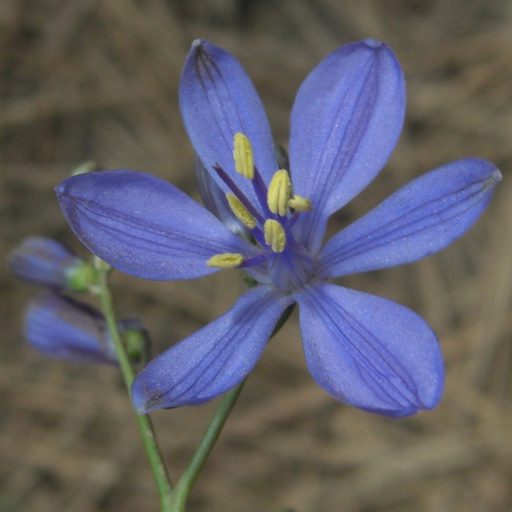
Known as the Blue Chilean Lily or Blue Stars, Pasithea caerulea is a breathtaking wildflower that brings the vibrant hues of the South American sky into your garden. Native to the rocky, sun-drenched landscapes of Chile and Peru, this plant is celebrated for its delicate, star-shaped blossoms that seem to float weightlessly above slender, grass-like foliage. It is a resilient survivor, perfectly adapted to Mediterranean-style environments where it thrives on a cycle of winter rain and summer rest.
🔍 How to Identify
- ⭐ The Flowers: Small, vivid blue to deep violet blossoms with six symmetrical petals (tepals) that form a perfect star shape.
- 💛 The Center: Bright yellow, prominent anthers that provide a sharp, beautiful contrast against the cool blue of the petals.
- 🌿 The Foliage: Long, narrow, and strap-shaped leaves that look remarkably like thick blades of grass or chives, often growing in a basal clump.
🏡 In Your Garden
- ☀️ Dormancy Strategy: This plant follows a unique Mediterranean growth cycle; it typically goes dormant during the hot, dry summer months. Don't be alarmed if the foliage dies back after flowering—it is simply storing energy in its fleshy roots for the next season.
- 🪨 Drainage is Key: In its native habitat, it clings to rocky slopes. In a garden setting, it hates "wet feet" and requires very gritty, well-draining soil to prevent its root system from rotting during the winter.
- 🦋 Pollinator Magnet: While humans love the color, the bright yellow centers and blue petals are specifically designed to catch the eyes of local bees and butterflies.
⚠️ Safety & Toxicity
- ✅ General Safety: Pasithea caerulea is generally considered non-toxic to humans and is not known for causing skin irritation upon contact.
- 🐾 Pet Watch: While not listed as a high-risk plant like true lilies (Lilium), it is always best practice to keep ornamental bulbs and tubers away from curious cats and dogs, as ingestion could lead to mild stomach upset.
✨ Fun Fact
The Pasithea caerulea is a "monotypic" genus, which is a fancy botanical way of saying it is a lonely leaf on the evolutionary tree—it is the only species of its kind in the entire world!

Detailed Care Instructions

Place in a bright room that is sun drenched almost all day. Or directly in a south-facing window.

Some plants require more regular watering than others, which should be done every few days. It's critical to maintain the soil moist all of the time. The water requirements of the same plant placed in pots with varying sizes will differ. Because the water in the smaller pot evaporates faster than the water in the larger pot, it will require more watering. Regardless of pot size, the surface should constantly be maintained moist.








