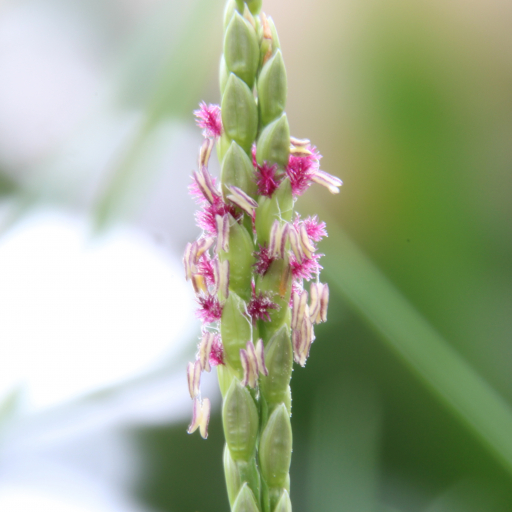
Plant Overview
Often called the "Saltwater Specialist," Paspalum vaginatum is the go-to grass for beachside luxury. While most plants wither at the sight of sea spray, this grass thrives in it, creating a dense, emerald-green carpet that feels like velvet underfoot. It is the ultimate coastal survivor, frequently used to turn salty, sandy landscapes into lush, manicured havens.
🔍 How to Identify
- 🌱 Leaf Texture: It features fine to medium-textured blades that are narrow and taper to a point, usually displaying a vibrant, deep green hue.
- 🏃 Growth Habit: This is a "creeping" grass that spreads aggressively via both surface runners (stolons) and underground stems (rhizomes), creating a thick, weed-resistant mat.
- 🌾 Seed Head: When allowed to grow tall, it produces a very distinct "Y-shaped" seed spike, consisting of two slender branches that fork out from the top of the stem.
🏡 In Your Garden
- 🌊 The Salt Superpower: Its biggest advantage is its "halophytic" nature; it can actually be irrigated with brackish or recycled water. This makes it a sustainable choice for coastal regions where fresh water is scarce.
- ✂️ High-Performance Grooming: To keep it looking like a professional golf green, it requires frequent, low mowing. It is prone to "thatch" (a buildup of organic debris), so it occasionally needs a deep thinning to help the roots breathe.
⚠️ Safety & Toxicity
- ✅ Pet & Human Safe: This grass is non-toxic. It is perfectly safe for dogs to play on and for children to run across barefoot.
- 🤧 Allergy Alert: Like most turf grasses, it produces wind-borne pollen. If you suffer from hay fever, keeping the grass mowed short will prevent it from flowering and releasing allergens.
✨ Fun Fact
⛳ Olympic Pedigree: Seashore Paspalum was the grass of choice for the 2016 Olympic Golf Course in Rio de Janeiro. It was chosen specifically because it could be irrigated with the local brackish water, making it one of the most eco-friendly turf choices in Olympic history!

Detailed Care Instructions
| Humidity | Dry |
| Lighting | Part Sun |
| Difficulty | Medium |
| Hibernation | Cold Period |
| Temperature | Min 15°C |
To grow Paspalum Vaginatum, also known as seashore paspalum, you can follow these steps:
- Determine the right growing conditions: Paspalum Vaginatum is a warm-season grass that thrives in tropical and subtropical regions. It prefers full sun exposure and can tolerate high temperatures, saltwater, and sandy soils.
- Soil preparation: It is essential to prepare the soil before planting. Paspalum Vaginatum prefers sandy or loamy soil with good drainage. Remove any debris, rocks, or weeds from the area and ensure proper irrigation and drainage.
- Planting: Paspalum Vaginatum can be planted from seeds or sod. If using seeds, plant them in the prepared soil, ensuring good soil-to-seed contact but without burying them too deeply. If using sod, lay it on the prepared soil and ensure it is firmly in place. Water the area thoroughly after planting.
- Watering: Paspalum Vaginatum requires sufficient water to establish and thrive. Water the grass deeply but infrequently. Watering deeply encourages the growth of deep roots, making the grass more drought-tolerant. However, avoid overwatering to prevent waterlogging and root rot.
- Fertilization: Regular fertilization helps ensure healthy growth. Use a slow-release fertilizer specifically formulated for grasses and follow the recommended application rates. Apply fertilizer according to the grass's specific needs, typically during the growing season.
- Mowing: Regular mowing helps maintain the desired height and density of the grass. Paspalum Vaginatum can be mowed at a cutting height between 1 to 2 inches. Avoid cutting the grass too short, as it may weaken its health.
- Weed control: Regular weeding is necessary to prevent weeds from competing with the Paspalum Vaginatum for nutrients, sunlight, and space. Hand-pulling weeds or using a selective herbicide specifically formulated for seashore paspalum can help control weeds effectively.
- Pest and disease management: Paspalum Vaginatum is generally resistant to pests and diseases. However, monitor the grass for any signs of pests or diseases, such as discoloration, wilting, or unusual growth. If necessary, consult a professional or your local agricultural extension office for appropriate treatment options.
By following these steps, you can successfully grow Paspalum Vaginatum and enjoy a lush, resilient, and attractive lawn.

Place in a bright room that is sun drenched almost all day. Or directly in a south-facing window.

1. Watering Schedule: Paspalum Vaginatum plants require regular watering. The frequency of watering depends on the weather and the growth stage of the plant. During the hot summer months, the plant needs more frequent watering, while in winter, it can be watered less frequently. A general rule of thumb is to water when the top inch of soil feels dry to the touch.
2. Watering Method: The best way to water Paspalum Vaginatum is by using a drip irrigation system or a soaker hose. These methods provide a slow and consistent flow of water, allowing the plant to absorb it slowly and effectively. Alternatively, if you are watering by hand, use a watering can to direct the water to the base of the plant, taking care not to splash the leaves.
3. Water Quantity: The quantity of water required by Paspalum Vaginatum depends on the size of the plant and the soil type. Aim to provide the plant with enough water to saturate the soil to the root zone. Avoid overwatering, as this can lead to waterlogging and root rot.
4. Watering Time: The best time to water Paspalum Vaginatum is early in the morning or late in the afternoon. This allows the plant to absorb water before the sun gets too hot and the water evaporates. Avoid watering during the heat of the day, as this can cause the water to evaporate before the plant can use it.
5. Mulching: Finally, consider mulching around the base of the plant. This can help to retain moisture in the soil and reduce the need for frequent watering. Use a layer of organic material, such as shredded bark, compost, or leaves, to create a protective layer around the base of the plant.
In order to fertilize this plant, first assess the nutrient needs of the soil in which it is growing. Use a soil test kit to determine the levels of nitrogen, phosphorus, and potassium, as well as the pH level. Based on the results of the soil test, choose a fertilizer that provides the appropriate levels of these nutrients. Apply the fertilizer evenly over the soil surface, taking care not to let it come into contact with the foliage of the plant. Water the plant immediately after fertilizing to help distribute the nutrients throughout the soil. Fertilize the plant on a regular basis, following the manufacturer's instructions for application rates and frequency. Avoid over-fertilizing, as this can cause damage to the plant and negatively impact the environment.
In general, the soil preferred by the plant is a well-draining soil that is rich in organic matter. It is important for the soil to have good drainage as the plant doesn't tolerate waterlogged soil. The ideal pH range is between 6.0 to 7.5. Additionally, the plant prefers sandy loam to silty soil texture to grow well. Soil that has a high salt content should be avoided as the plant is not salt-tolerant. It is important to maintain the soil moisture level as Paspalum Vaginatum requires a consistent supply of moisture to grow well, but do not tolerate overwatering. Regular fertilization is also essential for good growth of the plant.
To propagate this particular plant, the first step is to collect mature seeds from a healthy parent plant. The seeds should be stored in a cool, dry place until they are ready to be sown.
The seeds should be sown in a well-draining soil mixture that is kept consistently moist until the seedlings emerge. Once the seedlings are established, they can be transplanted into larger pots or directly into the desired planting location.
Another method of propagation is through division. This involves separating the root ball of an established plant into smaller sections and replanting them in separate containers or locations.
Both methods require proper care and attention to ensure successful propagation. This includes providing adequate water, nutrients, and sunlight while minimizing stress factors such as extreme temperatures or pest infestations.








