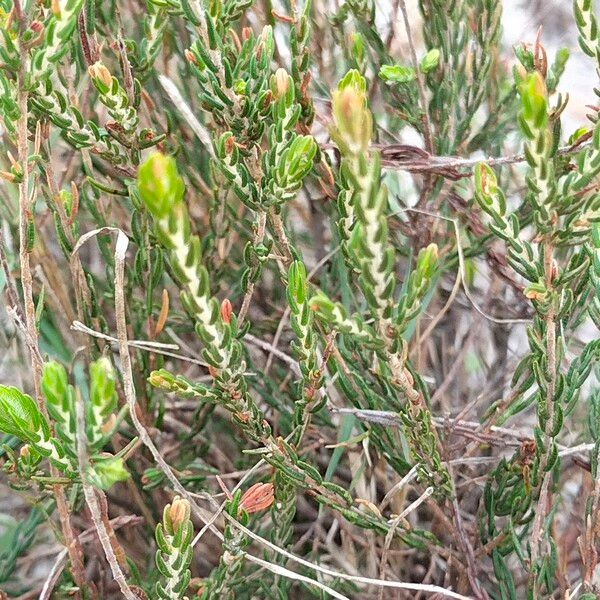
Plant Overview
Known in its native South Africa as the "Blunt-leaf Gonna," Passerina obtusifolia is a resilient, woody shrub that thrives in the rugged Fynbos landscape. Historically, its exceptionally tough and fibrous bark was used by local communities as a natural twine or rope for building and crafting. Today, it is admired by Mediterranean-climate gardeners for its understated, heather-like beauty and its incredible ability to withstand harsh coastal winds.
🔍 How to Identify
- 🍃 The Foliage: Features small, leathery leaves that are tightly packed along the stems. The leaves are curved and notably "blunt" at the tips (which is what obtusifolia means), giving the shrub a textured, moss-like appearance.
- 🌸 The Blooms: Produces minute, petal-less flowers that appear as tiny, yellowish to reddish-pink tubes. They lack the showiness of a rose but cover the branch tips in a delicate, hazy glow during the spring.
- 🪵 The Bark: The most distinct feature is the bark's strength. If a branch is broken, the bark doesn't snap; it peels away in long, incredibly tough strings.
🏡 In Your Garden
- 💨 Wind Warrior: This plant is a specialist in coastal survival. It uses its tiny, waxy leaves to minimize water loss and can handle salty sea breezes that would wither other garden shrubs.
- 🏜️ Drainage is Vital: In a home landscape, this shrub demands "lean" and sandy soil. It has evolved to live in nutrient-poor environments and will suffer from root rot if kept in heavy, water-logged clay.
- ✂️ Pruning Nuance: It is a slow-growing species that maintains a neat, rounded shape on its own. Only light tip-pruning is recommended; heavy hacking into old wood may prevent the plant from recovering.
⚠️ Safety & Toxicity
- 🚫 Potential Irritant: Like many members of the Thymelaeaceae family, the sap and leaves may contain compounds that cause mild skin irritation or "burning" sensations for those with sensitive skin.
- 🐾 Pet Safety: While not frequently cited as highly toxic, it is best kept away from curious chewers. Ingesting the fibrous leaves can lead to digestive upset or irritation of the mouth and throat in cats and dogs.
✨ Fun Fact
The common name "Gonna" comes from the indigenous Khoekhoe language. The bark is so strong and pliable that it was traditionally used as a primary material to tie together the wooden frames of nomadic huts!

Detailed Care Instructions

Some plants require more regular watering than others, which should be done every few days. It's critical to maintain the soil moist all of the time. The water requirements of the same plant placed in pots with varying sizes will differ. Because the water in the smaller pot evaporates faster than the water in the larger pot, it will require more watering. Regardless of pot size, the surface should constantly be maintained moist.








