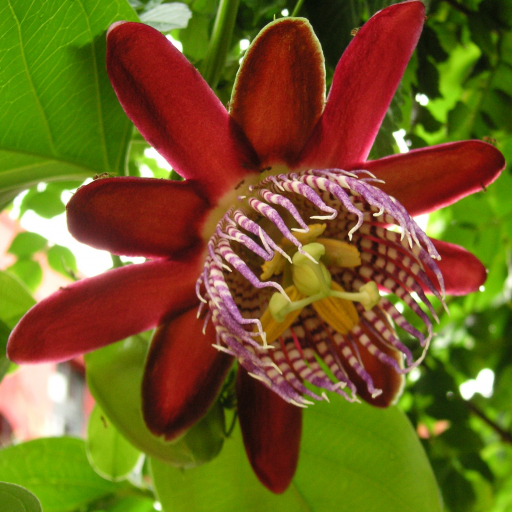
Plant Overview
Known as the Fragrant Granadilla, this Amazonian beauty is one of the most celebrated members of the passionflower family. It earns its botanical name, alata (meaning "winged"), from its unique square-shaped stems that feature prominent leafy ridges. Historically prized in Victorian glasshouses, it is famous for producing some of the most intricate and heavenly-scented flowers in the plant kingdom.
🔍 How to Identify
- 翼 Winged Stems: Unlike most vines with round stems, this plant features distinct four-sided, "winged" square stems that are sturdy and deep green.
- 🌺 Complex Blooms: The flowers are large, bowl-shaped, and crimson-red, featuring a dramatic "corona" of filaments striped in purple, white, and blue.
- 🍃 Broad Leaves: The foliage consists of large, oval, unlobed leaves with a glossy texture, often reaching up to 6 inches in length.
🏡 In Your Garden
- 🧗 Support is Key: Because this is a vigorous climber, it needs a strong trellis or fence to cling to; its heavy vines can quickly overwhelm flimsy supports.
- ☀️ Warmth and Humidity: Native to the rainforest, it thrives in high humidity and bright, indirect light; it is quite sensitive to frost and will drop its leaves if temperatures dip too low.
- 🐝 Pollination Partners: To get the delicious fruit, you often need a helping hand from large carpenter bees or manual pollination, as the flowers are heavy and require specific vibration to release pollen.
⚠️ Safety & Toxicity
- ✅ Status: Generally safe, with highly prized edible fruit.
- 🐾 Details: While the ripe fruit is a culinary treat (often used in juices and desserts), the leaves and unripened fruit contain small amounts of cyanogenic glycosides. It is best to keep curious pets and children from chewing on the foliage to avoid stomach upset.
✨ Fun Fact
The Passiflora alata is so aesthetically and botanically significant that it earned the prestigious Royal Horticultural Society's Award of Garden Merit. In its native Brazil, the fruit is known as "Ouro-do-cerrado" (Gold of the Savannah) due to its brilliant yellow color and high value.

Detailed Care Instructions
To grow Passiflora alata, also known as the Winged Passionflower or Fragrant Granadilla, you can follow these steps:
- Choose a suitable location: Passiflora alata prefers a spot in full sun to partial shade.
- Prepare the soil: Ensure that the soil is well-draining and fertile. You can amend the soil with organic matter such as compost to improve its nutrient content and drainage.
- Planting: Dig a hole that is as deep and wide as the root ball of your Passiflora alata plant. Place the plant in the hole and backfill with soil, gently firming it around the base of the plant. Space multiple plants at least 6 to 10 feet apart, as Passiflora alata can spread vigorously.
- Watering: Water deeply after planting, and then water regularly to keep the soil consistently moist during the growing season. However, avoid overwatering, as Passiflora alata prefers slightly dry conditions rather than waterlogged soil.
- Mulching: Apply a layer of organic mulch, such as wood chips or straw, around the base of the plant. This helps to conserve moisture, suppress weed growth, and regulate soil temperature.
- Support: As the Passiflora alata vine grows, it will need support to climb. You can provide a trellis, fence, or any other sturdy structure for the vine to climb on.
- Fertilizing: Passiflora alata benefits from regular fertilization to promote healthy growth and flowering. Use a balanced fertilizer, such as a granular 10-10-10 or a slow-release fertilizer, following the package instructions for proper application rates.
- Pruning: Prune the plant in late winter or early spring to remove any dead, damaged, or diseased branches. Additionally, you can prune to control the size or shape of the plant.
- Pests and diseases: Keep an eye out for common pests such as aphids, whiteflies, or mealybugs. If necessary, use insecticidal soap or neem oil to manage them. Passiflora alata is generally resistant to diseases.
- Propagation: Passiflora alata can be propagated by seeds or stem cuttings. Seeds can be sown directly in the garden or in pots, while stem cuttings can be taken in spring or early summer and rooted in a well-draining potting mix.
By following these steps, you should be able to successfully grow Passiflora alata and enjoy its beautiful vines, flowers, and fruit.

Place in a bright room that is sun drenched almost all day. Or directly in a south-facing window.

When watering this plant, it is important to water deeply and consistently to ensure that the roots are thoroughly hydrated. Allow the soil to dry out slightly between watering, but be careful not to let it completely dry out, as this can cause stress to the plant. When watering, aim to water around the base of the plant rather than overhead, as this can lead to moisture on the foliage, which can increase the risk of disease. Additionally, make sure to use lukewarm water rather than cold water, as overly cold water can shock the plant and damage the root system.
For best results, apply a balanced fertilizer with equal amounts of nitrogen, phosphorus, and potassium every two weeks during the growing season. Use a 20-20-20 fertilizer or a similar blend. Follow the instructions on the label for specific application rates. Avoid fertilizing during the winter months when the plant is dormant. Water the plant thoroughly before and after fertilizing.
For Passiflora Alata plant, it is recommended to use a well-draining soil that is slightly acidic to neutral in pH. The soil should be rich in organic matter, as this plant requires a nutrient-rich environment to thrive. Adding compost to the soil can also help to improve its texture and fertility.
It is important to avoid using heavy clay soils or soils that retain water, as this can lead to waterlogged conditions that can harm the Passiflora Alata plant. Instead, choose a soil that is light and airy, and that allows water to drain freely.
When planting Passiflora Alata, it is also a good idea to add a layer of mulch to help retain moisture and protect the roots from fluctuations in temperature. Additionally, regular fertilization with a balanced fertilizer can help to keep the plant healthy and promote strong growth.
To propagate this plant, first take a cutting from a healthy mature vine, selecting a stem that is firm and at least six inches long. Cut the stem at an angle just below a leaf node using sanitized pruning shears. Remove the lower leaves from the stem and place it in a container of fresh water. Change the water every few days to keep it from becoming stagnant. After a few weeks, roots should start to grow from the bottom of the stem.
Once the roots are several inches long, carefully plant the cutting in a pot filled with well-draining soil. Water the plant and place it in a location with bright, indirect light. Keep the soil moist but not waterlogged, and provide occasional fertilizer to encourage growth.
As the plant grows, it may need to be trained onto a trellis or support structure. Pruning may also be necessary to keep the plant from becoming too large or unwieldy. With proper care, the propagating plant should grow into a beautiful and productive vine.








