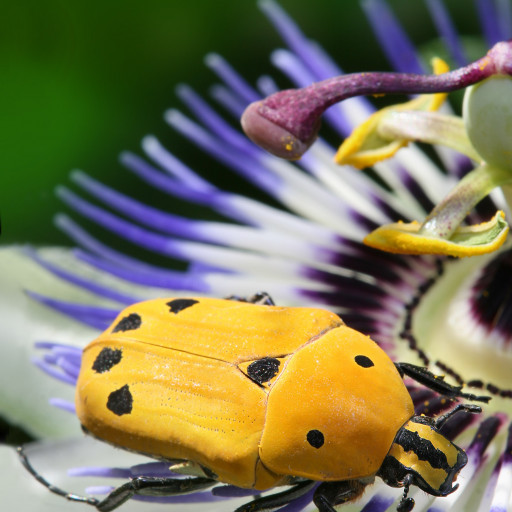
Plant Overview
Known as the "Blue Crown Passion Flower," this exotic-looking climber is actually much hardier than its tropical appearance suggests. Named by 16th-century missionaries who saw the complex parts of the flower as symbols of the Passion of Christ, it is a favorite for adding a Mediterranean or jungle vibe to temperate gardens. It grows with incredible speed, using spring-like tendrils to zip up trellises and fences in a single season.
🔍 How to Identify
- 🌸 The "Clock" Flower: The most striking feature is the flower, which looks like a complex clock face. It features white to pale blue outer petals with a central "crown" of purple, blue, and white filaments.
- 🍃 Five-Fingered Leaves: Unlike many other vines, the leaves are deeply lobed, usually featuring five distinct "fingers" that look like an open hand. They are a deep, glossy dark green.
- 🌀 Coiling Tendrils: Look for thin, wiry green coils that sprout from the stems. These are highly sensitive and will wrap tightly around any support they touch to pull the plant upward.
🏡 In Your Garden
- ☀️ The Sun-Seeker: While it can survive in partial shade, this plant needs full sun to produce its famous blooms. If kept in the dark, it will focus all its energy on leaves and "stretching" its vines rather than flowering.
- ✂️ Vigorous Growth: Be prepared for its speed! In the right conditions, it can become invasive if not pruned back annually. It’s best grown against a wall or fence where its "wandering" roots can be contained.
- 🦋 A Butterfly Magnet: It is a primary host plant for several butterfly species, particularly the Gulf Fritillary. Don't be alarmed if you see orange caterpillars munching on the leaves; they are part of the plant's natural ecosystem!
⚠️ Safety & Toxicity
- 🐾 Mildly Toxic: The leaves and unripe fruit contain cyanogenic glycosides. While it rarely causes severe issues, it can cause stomach upset, vomiting, or drooling in cats, dogs, and horses if ingested in large quantities.
- 🍊 The Fruit: It produces egg-shaped orange fruits. While technically edible when fully ripe, they are mostly hollow, seedy, and generally considered bland compared to the commercial passion fruit (Passiflora edulis).
✨ Fun Fact
The Passiflora caerulea has a memory of sorts! Its tendrils are so sensitive to touch that they can "sense" a support within minutes of contact, and once they've wrapped around it, they undergo a process called "circumnutation," coiling into a spring shape that provides both grip and flexibility against the wind.

Detailed Care Instructions
To grow a Passiflora Caerulea plant, also known as a blue passionflower, follow these steps:
- Choose the right location: Pick a sunny spot in your garden or a large pot if you prefer growing it indoors. The plant requires at least six hours of direct sunlight daily.
- Prepare the soil: Use well-draining soil that is rich in organic matter. The pH level should ideally be between 6.5 and 7.0.
- Planting: Dig a hole slightly larger than the root ball of your Passiflora Caerulea plant. Place the plant in the hole, ensuring it sits at the same depth as it was in the nursery pot. Backfill the hole with soil and gently press it down to remove any air pockets.
- Watering: Water the plant deeply after planting to help it establish. Afterward, keep the soil consistently moist but not waterlogged. The plant prefers regular watering but doesn't tolerate waterlogging well.
- Training: If you want the plant to climb, provide support such as a trellis or a wall where it can attach itself using tendrils.
- Fertilization: Start with a balanced, slow-release fertilizer when planting. Afterward, feed the plant every four to six weeks during the growing season with a balanced fertilizer or a phosphorus-rich formula to encourage blooming.
- Pruning: Prune the plant in early spring to remove any dead or damaged stems. Cut it back to control size, encourage bushiness, or reshape it as desired.
- Protection: As Passiflora Caerulea is a tender perennial, it might need protection in colder climates. If temperatures drop below freezing, cover the plant with a frost blanket or move potted plants indoors.
- Watch for pests and diseases: Keep an eye out for common garden pests like aphids, spider mites, and whiteflies. Regularly check the plant for signs of damage or disease, and take appropriate actions like using insecticidal soap or organic pest control methods if necessary.
- Enjoy the blooms: With proper care and maintenance, your Passiflora Caerulea plant should produce beautiful, exotic blooms. Passiflora Caerulea flowers typically bloom in summer and fall and attract butterflies and bees.
Remember that Passiflora Caerulea can be invasive in some regions due to its ability to self-seed and spread quickly. Monitor its growth and take necessary measures to control its spread if needed.

Place in a window with dappled sun or a spot in the middle of a room. Or directly in a window facing west or east.

To water this plant, it is important to keep the soil consistently moist but not waterlogged. It may be necessary to water it more frequently during the warmer months when it is actively growing. However, during the winter months or if the plant is in a cooler environment, less frequent watering may be necessary. One way to determine when to water is to stick your finger about an inch into the soil. If it feels dry, it is time to water. Avoid getting water on the leaves and flowers as this can cause damage. Use room temperature or tepid water and water thoroughly until the water runs out of the drainage holes at the bottom of the pot. Allow the soil to drain thoroughly before putting it back in its usual location.
To fertilize the Passiflora Caerulea plant, use a slow-release fertilizer with a balanced N-P-K ratio, such as 10-10-10 or 20-20-20. Apply the fertilizer according to the instructions on the package, being careful not to over-fertilize as this can damage the plant. Fertilize the plant during the growing season, which is typically in the spring and summer months. Water the plant well before and after fertilizing to help distribute the nutrients evenly throughout the soil.
The ideal soil for Passiflora Caerulea should be well-draining and rich in organic matter. It should have a pH between 5.5 to 7.0, which is slightly acidic to neutral. The soil should be moist but never waterlogged as Passiflora Caerulea does not like to sit in water. It is important to ensure that the soil is loose and airy to allow for proper root growth. A mixture of loam, sand, and perlite or vermiculite is recommended. Additionally, adding compost or well-rotted manure to the soil will provide the plant with essential nutrients.
- Collect ripe fruit from the Passiflora Caerulea plant.
- Cut open the fruit and scoop out the seeds.
- Rinse the seeds under running water to remove any pulp and let them air dry.
- Fill a small pot with a moist soil mix.
- Plant the seeds about half an inch deep in the soil.
- Cover the pot with a clear plastic bag or plastic wrap to create a greenhouse effect.
- Place the pot in a warm and bright location, but not directly under bright sunlight.
- Keep the soil moist during the germination process, which can take up to a few weeks.
- Once the seedlings have grown a few leaves, remove the plastic cover and place the pot in a location with more light.
- Repot the seedlings in larger pots as they grow.
Note: Passiflora Caerulea can also be propagated through cuttings.
Common pests of the common passion flower include Spider mites, aphids, thrips, larvae. Make a habit of checking your common passion flower frequently for pests so that any infestations can be caught and managed early.








