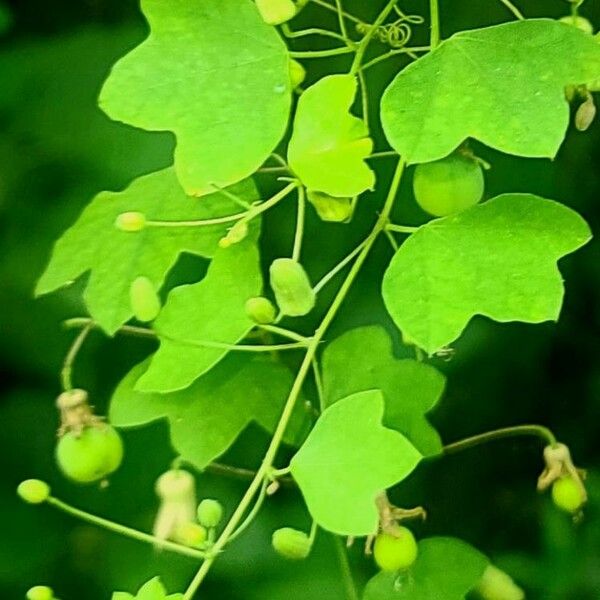
Plant Overview
Known as the Slender-stemmed Passionflower, this delicate vine is a subtle treasure native to the Americas. Unlike its more flamboyant, purple-petaled cousins, Passiflora filipes opts for a minimalist aesthetic with dainty, lime-tinted blooms. It is a favorite among "butterfly gardeners" who want to provide a sanctuary for local pollinators without the aggressive, fence-crushing growth seen in larger passion vines.
🔍 How to Identify
- 🍃 The Foliage: Look for deeply three-lobed leaves that often resemble a bird's footprint. They are thin, matte-green, and feel slightly papery to the touch.
- 🌼 Star-Shaped Blooms: The flowers are small and greenish-yellow. They feature the classic "crown" (corona) of filaments typical of passionflowers, but in a much more delicate, understated scale.
- 🧶 Wiry Stems: True to its name, the stems are incredibly thin and wiry. It uses coiled, spring-like tendrils to hitchhike its way up nearby shrubs or trellises.
🏡 In Your Garden
- 🦋 A Living Nursery: This plant is a vital host for the Gulf Fritillary and Zebra Longwing butterflies. If you see tiny orange caterpillars munching on the leaves, don't panic—they are just "borrowing" the plant to transform into beautiful garden guests.
- 🧗 Support Systems: Because the stems are so slender, this vine struggles with thick wooden fences. It performs best on fine wire mesh or thin netting where its tiny tendrils can easily get a grip.
- 💧 Moisture Balance: It prefers "jungle floor" conditions—dappled sunlight and soil that stays consistently moist but never soggy. It hates "wet feet," so ensure your pot or garden bed has excellent drainage.
⚠️ Safety & Toxicity
- 🚫 Toxicity Status: Like many members of the Passiflora family, the leaves and unripe fruit contain cyanogenic glycosides.
- 🐾 Pet & Child Safety: Keep this plant away from curious nibblers. If ingested, it can cause vomiting, drooling, or lethargy in cats and dogs. While the ripe fruit of some passionflowers is edible, it is best to treat this specific wilder variety as purely ornamental.
✨ Fun Fact
The name filipes is derived from Latin and translates literally to "thread-footed." This refers to the incredibly long, thread-like stalks (peduncles) that hold the flowers and fruit out away from the main vine, making them look as if they are floating in mid-air.

Detailed Care Instructions
To successfully grow a Passiflora Filipes plant, you can follow these guidelines:
- Climate: Passiflora Filipes, also known as the Red Banana Passionflower, thrives in warm climates. It is hardy in USDA zones 9 to 11. Make sure your region has a warm average temperature.
- Sunlight: Choose a site that receives full sun or partial shade. Passiflora Filipes will grow best in a location with at least 6 hours of direct sunlight.
- Soil: The plant prefers well-draining soil with a slightly acidic to neutral pH level. Sandy loam or loamy soil is the ideal choice. If your soil is heavy clay or compacted, add organic matter like compost to improve drainage.
- Planting: Dig a hole that is twice the width and depth of the plant's root ball. Place the plant in the hole ensuring it is at the same depth as it was in the nursery container. Backfill the hole with soil, gently firming it around the plant.
- Watering: Water the plant regularly, particularly during hot and dry periods. The soil should be consistently moist but not waterlogged. Provide a deep watering at least once a week.
- Mulching: Apply a layer of organic mulch around the base of the plant to help retain moisture, suppress weed growth, and regulate soil temperature.
- Pruning: Prune Passiflora Filipes in late winter or early spring before new growth starts. Remove any dead or damaged stems and lightly shape the plant. Pruning will encourage more vigorous growth in the following season.
- Support: Passiflora Filipes is a climbing vine, so it requires some support. Install a trellis, fence, or similar structure for the plant to climb on. Secure the branches to the support as they grow.
- Fertilizing: Apply a balanced, slow-release fertilizer in early spring and mid-summer to provide essential nutrients. Follow the manufacturer's instructions for the appropriate amount and frequency.
- Pest and Disease Control: Monitor your plant regularly for signs of pests like aphids, spider mites, or caterpillars. Treat any infestations promptly using safe and appropriate methods like insecticidal soaps or neem oil. Watch out for fungal diseases like powdery mildew and rust, and take action if necessary.
Remember to research any local variations in growing Passiflora Filipes based on your specific climate and conditions.

Place in a bright room that is sun drenched almost all day. Or directly in a south-facing window.

To water this particular plant, it is important to first ensure that the top layer of soil is dry to the touch before proceeding. When watering, be sure to pour water directly onto the soil around the base of the plant, rather than onto the leaves or flowers. The soil should be thoroughly soaked, but be careful not to overwater, as this can lead to root rot. It is also important to avoid watering during periods of high humidity, as this can further increase the risk of fungal diseases. Additionally, be sure to monitor the plant closely for signs of stress, such as wilting or yellowing leaves, as this may indicate that it needs more or less water.
To fertilize Passiflora Filipes, apply a well-balanced and slow-release fertilizer during the growing season. Ensure that the fertilizer contains phosphorus, nitrogen, and potassium. Apply the fertilizer at a rate of one tablespoon per square foot and water the plant immediately to ensure that the fertilizer reaches the roots. Fertilize every four to six weeks during the growing season. Do not fertilize in the winter months, as the plant is dormant.
Passiflora Filipes plant prefers a well-draining soil that is rich in organic matter. A mixture of loamy soil, perlite, and compost can be an ideal choice for this plant. The addition of sand or gravel can improve soil drainage. The ideal pH range for the soil should be between 5.5 to 7.0. It is important to avoid using heavy clay soil as it can retain moisture and become waterlogged. Additionally, the plant prefers a slightly acidic soil. It is recommended to fertilize the soil with a balanced fertilizer once a month during the growing season. It's important to note that the soil should not be overly wet or dry, as the plant can become stressed and die. Proper watering and drainage are essential for the successful growth and development of this plant.
To propagate this particular plant, you will need a mature and healthy parent plant. Begin by taking a 4- to 5-inch cutting from a non-flowering stem, making sure the cutting has at least two or three nodes. Remove any leaves from the bottom half of the cutting and dip the cut end into rooting hormone powder. Place the cutting into a pot filled with a well-draining soil mix, making sure the bottom node is buried beneath the soil. Water the cutting, cover it with a plastic bag to retain moisture, and place it in a warm and well-lit area. Keep the soil moist but not waterlogged, and the cutting should root within four to six weeks. Once the cutting has established roots, you can transplant it into a larger pot or into your garden bed, being careful not to damage the delicate root system.








