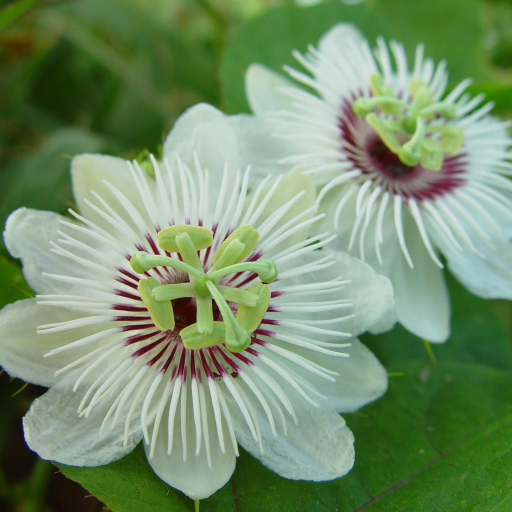
Plant Overview
Known by the whimsical name "Love-in-a-mist" or the more pungent "Stinking Passionflower," Passiflora foetida is a botanical contradiction. This sprawling tropical vine creates a visual masterpiece with its delicate, lacy "cages" that protect its ripening fruit. Native to the neotropics but now found globally, it is famous for its unique defense mechanism—a sticky, hair-covered exterior that traps curious insects.
🔍 How to Identify
- 🌿 The Foliage: The leaves are typically three-lobed and covered in soft, yellowish glandular hairs that release a distinct, musky scent when crushed.
- 🌸 The Bloom: Smaller than the common passionfruit flower, these blooms feature creamy white petals and a central "corona" of vibrant purple and white filaments.
- 🕸️ The Bracts: The most striking feature is the trio of green, moss-like, deeply fringed bracts that surround the flower and the fruit, looking like a tangled green web.
🏡 In Your Garden
- 🧗 Growth Habit: This is a vigorous climber that uses wiry tendrils to hitchhike onto fences or trellises. It is much hardier than its cousins and can tolerate poorer soils, making it a "survivor" plant in many landscapes.
- 🦟 Natural Pest Control: Because the lacy bracts are sticky, they act as a natural flypaper, trapping small insects. While it isn't a true carnivore, this "protocarnivorous" trait helps protect the developing fruit from hungry bugs.
⚠️ Safety & Toxicity
- 🚫 Warning Status: Use caution with this species. The leaves and the unripe, green fruits contain cyanogenic glycosides, which are toxic if ingested.
- 🐾 Pets & Kids: Keep this vine out of reach of pets and children. Only the fully ripe, orange-yellow fruits are generally considered safe, but because of the high risk of mistaking an unripe fruit for a ripe one, it is best treated as an ornamental-only plant.
✨ Fun Fact
The "Stinking" part of its name is a bit of an exaggeration—many people find the scent of the crushed leaves to be more like a heavy, earthy musk or even a mild soap, rather than something truly foul!

Detailed Care Instructions
| Humidity | Normal |
| Lighting | Full Sun |
| Difficulty | Medium |
| Hibernation | Cold Period |
| Hardiness Zones | 9 - 11 |
To grow a Passiflora Foetida plant, also known as the stinking passionflower or wild maracuja, you can follow these steps:
- Obtain seeds or a young plant: You can purchase Passiflora Foetida seeds or young plants from a local nursery or online. Make sure to choose a reputable source.
- Choose a suitable location: Select a spot in your garden that receives full or partial sunlight and has well-draining soil. The plant can tolerate a variety of soil types, including sandy or loamy soils.
- Prepare the soil: If the soil in your chosen location is heavy or poorly draining, amend it with organic matter such as compost or well-rotted manure to improve drainage and nutrient content.
- Sow the seeds or transplant the young plant: If you have seeds, sow them about 1/4 inch deep in the soil. If you have a young plant, dig a hole slightly larger than the root ball and place the plant in it, ensuring the top of the root ball is level with the soil surface.
- Water well: After sowing the seeds or transplanting the young plant, water thoroughly to settle the soil and ensure good root-to-soil contact. Water regularly to keep the soil evenly moist, but avoid overwatering, as this plant is susceptible to root rot.
- Mulch and support: Apply a layer of organic mulch around the base of the plant to help conserve moisture and suppress weed growth. Passiflora Foetida is a climbing vine, so you may need to provide a trellis, fence, or other structure for it to climb on.
- Pruning: As the plant grows, you can prune it to shape or manage its size. Pruning also helps encourage new growth and flowering.
- Monitor for pests and diseases: Keep an eye out for pests like aphids, mealybugs, or spider mites, and promptly take action to control them. In terms of diseases, Passiflora Foetida is relatively resistant, but fungal infections can occur in overly moist conditions.
- Harvest the fruits (optional): Passiflora Foetida produces small fruits that are edible but quite tart. You can harvest them when they turn from green to yellow or orange. They can be eaten raw, used in cooking or baking, or made into jams and jellies.
By following these steps, you can successfully grow Passiflora Foetida and enjoy its unique flowers and fruits.

Place in a bright room that is sun drenched almost all day. Or directly in a south-facing window.

To water this plant, it is important to use a watering can or hose with a gentle spray nozzle to prevent the soil from being washed away. The plant should be watered deeply but not too frequently, as it prefers well-drained soil that is moist but not waterlogged. The frequency of watering will depend on the climate, humidity, and soil type, so it is best to check the moisture level in the soil before watering. It is important to avoid getting the leaves wet, as this can lead to fungal growth and damage the plant. Additionally, it is important to avoid overwatering, as this can lead to root rot and other diseases. Overall, it is best to water this plant when the soil feels slightly dry to the touch, and to avoid letting the soil dry out completely between waterings.
To fertilize this plant, use a balanced fertilizer with equal amounts of nitrogen, phosphorus, and potassium. Apply the fertilizer in early spring and then again in mid-summer. Water the plant thoroughly before fertilizing to prevent fertilizer burn. Avoid over-fertilizing, as this plant is sensitive to excess nutrients. Use a slow-release fertilizer for best results.
It is recommended to use well-draining and nutrient-rich soil for the Passiflora Foetida plant. The soil should be slightly acidic with a pH level between 5.5 to 6.5. It is important to avoid using heavy clay soils or soils that retain excessive water, as this can lead to root rot and other plant diseases. A mixture of organic compost, peat moss, and perlite can provide the ideal conditions for the Passiflora Foetida plant to thrive. Additionally, regular fertilization with a balanced fertilizer can help provide the necessary nutrients the plant needs to grow and produce flowers.
To propagate this particular plant, one should first select a healthy and mature specimen to serve as the parent plant. Softwood stem cuttings can be taken in spring or early summer, and they should be approximately four to six inches in length. The cuttings should be dipped in rooting hormone and placed in a pot filled with a well-draining soil mix. The pot should be covered with a plastic bag or dome to create a humid environment, and the soil should be kept moist but not saturated. The cutting should develop roots within six to eight weeks, at which point it can be transplanted into its own pot. It is important to keep the newly rooted plant in a warm and bright location until it is fully established.
Common pests of the wild passion fruit include Mealybugs, aphids, larvae. Make a habit of checking your wild passion fruit frequently for pests so that any infestations can be caught and managed early.








