Plant Overview
Known as the Water Lemon, Jamaican Honeysuckle, or Belle Apple, this exotic vine is a true gem of the Caribbean and South America. While most passionflowers are grown for their intricate blooms, Passiflora laurifolia is equally prized for its incredibly sweet, perfumed fruit and its elegant, laurel-like foliage. It is a vigorous climber that brings a lush, jungle-like atmosphere to any tropical garden or greenhouse.
🔍 How to Identify
- 🍃 The Foliage: Unlike the deeply lobed leaves of many passionflowers, these leaves are oblong, smooth, and leathery, closely resembling those of a Laurel tree.
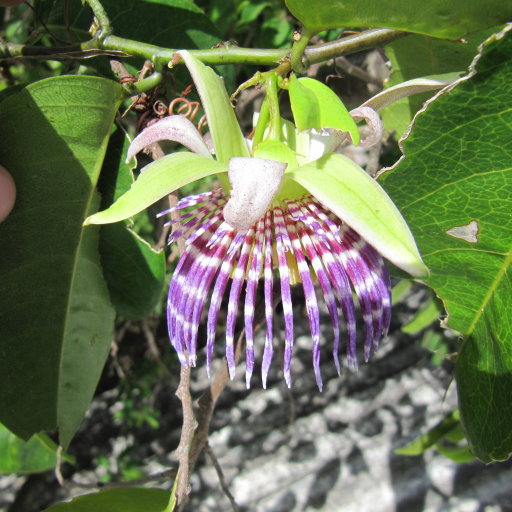
- 🌸 The Bloom: Features stunning, 2-to-3-inch wide flowers with white or greenish petals overlaid by a striking "corona" of purple and white striped filaments.
- 🍋 The Fruit: Produces egg-shaped fruits that turn a beautiful golden-yellow or orange when ripe, often covered in tiny, faint white specks.
🏡 In Your Garden
- 🧗 Climbing Support: This is a high-climbing vine that uses tendrils to pull itself upward. It requires a sturdy trellis, fence, or arbor to support its weight as it matures.
- ☀️ Climate Needs: Being a true tropical native, it is very sensitive to frost. It thrives in high humidity and needs a sunny spot to encourage flowering, though it appreciates "cool feet"—keeping the root zone shaded or mulched.
⚠️ Safety & Toxicity
- ✅ The Fruit: The pulp of the fully ripe fruit is edible and delicious, often described as having a floral, honey-like sweetness.
- 🚫 Foliage & Unripe Fruit: Like many members of the Passiflora family, the leaves, stems, and unripe green fruits contain cyanogenic glycosides. They should not be ingested by humans, and they are toxic to cats, dogs, and horses if chewed.
✨ Fun Fact
The "Water Lemon" gets its name not from its flavor, which is much sweeter than a lemon, but from its incredibly juicy, liquid-like pulp that can be sipped directly from the fruit once a hole is made in the rind!

Detailed Care Instructions
To grow Passiflora laurifolia (water lemon or Jamaican wild passionfruit), you can follow these steps:
- Choosing a suitable location: Passiflora laurifolia requires a warm and sunny location, so choose a spot in your garden that receives full sun for at least 6 hours a day.
- Soil preparation: The plant prefers well-draining, fertile soil. Amend your soil with organic matter like compost or well-rotted manure to improve its nutrients and drainage. Aim for a pH level of 6.5-7.
- Planting: Dig a hole slightly larger than the root ball of the plant. Place the plant in the hole, ensuring that the top of the root ball is level with the surrounding soil. Fill the hole with soil, gently firming it around the plant.
- Watering: Keep the soil consistently moist but not waterlogged. Water the plant regularly during the growing season, especially during hot and dry periods. However, avoid overwatering, as it can lead to root rot.
- Mulching: Apply a layer of organic mulch, such as straw or wood chips, around the base of the plant. This will help retain moisture, suppress weed growth, and provide insulation.
- Fertilizing: Passiflora laurifolia benefits from regular fertilization. Use a balanced, slow-release fertilizer with equal amounts of nitrogen, phosphorus, and potassium. Follow the manufacturer's instructions for application rates and timings.
- Supporting the plant: Passiflora laurifolia is a vine that will need support to climb. Install a trellis or provide a sturdy structure for the plant to climb on. As the vine grows, gently train it to climb the support.
- Pruning: Prune your Passiflora laurifolia in late winter or early spring before new growth begins. Remove any dead, damaged, or weak branches. Additionally, you can pinch back new growth to encourage bushier growth and higher fruit production.
- Harvesting fruits: Passiflora laurifolia produces green, ribbed fruits that turn yellow when ripe. Harvest the fruits when they have a slight give when gently squeezed. Avoid completely soft or wrinkled fruits, as they may be overripe.
- Pest and disease control: Monitor your plant for common pests like aphids, mealybugs, and spider mites. Treat infestations with appropriate organic or chemical insecticides. Additionally, keep an eye out for diseases like fusarium wilt or powdery mildew and promptly treat them with appropriate fungicides if necessary.
Remember to check with your local nursery or gardening expert for specific tips and recommendations based on your location and climate.

Place in a bright room that is sun drenched almost all day. Or directly in a south-facing window.

When watering this particular species of plant, it is important to avoid getting water on the foliage as this can lead to the growth of diseases and pests. Instead, water directly at the soil level around the base of the plant to ensure the roots receive the necessary moisture. Avoid over-watering, as this can lead to root rot and damage. Wait until the top inch of soil is dry before watering again. Use room temperature water to prevent shock to the plant. Also, consider using a well-draining soil mix to prevent water from sitting in the pot.
To fertilize this plant, use a general-purpose liquid fertilizer diluted to half strength every two weeks during the growing season (spring and summer). Make sure to water the plant thoroughly before and after fertilizing to prevent root burn. In the dormant season (fall and winter), you can reduce fertilizing to once a month or stop altogether. Avoid over-fertilizing and monitor the plant's growth and health to determine if further fertilization is necessary.
The ideal soil composition for Passiflora Laurifolia plant is a well-draining, loamy soil that is rich in organic matter. The soil should be slightly acidic, with a pH range of 6.0 to 6.5. Avoid using soil that is heavy and compacted or holds water for long periods. A mix of equal parts of peat moss, coconut coir, and perlite is a good option. Adding slow-release fertilizers or compost will encourage healthy growth. It is also important to ensure proper drainage, as standing water can lead to root rot. Regular watering, as needed, is recommended to keep the soil moist but not waterlogged.
To propagate this plant, you will need to take stem cuttings from a mature, healthy plant. Take the cuttings in the spring or early summer when the plant is actively growing. Make sure the cuttings are at least 6 inches long and have at least two nodes or leaves.
Prepare a pot with well-draining soil and moisten it slightly. Dip the bottom of the cuttings in rooting hormone and insert them into the soil, making sure at least one node is below the surface. Firm the soil around the cutting and water it lightly.
Place the pot in a warm, bright location but out of direct sunlight. Keep the soil slightly moist but not too wet. Within a few weeks, you should see new growth emerging from the cuttings, indicating that they have rooted.
Once the plants have rooted, you can transplant them into individual pots or into the garden. Make sure to provide them with plenty of sunlight, water, and fertilizer to ensure they thrive.








