Plant Overview
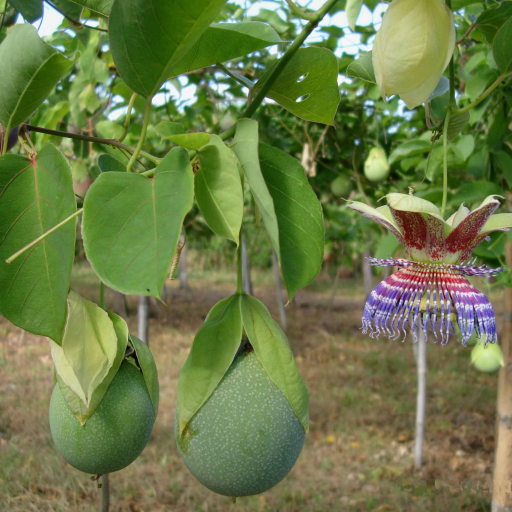
Commonly known as the Sweet Calabash or the Shell-of-a-Grape, this tropical vine is the "armored" cousin of the common passionfruit. Native to the Caribbean and Central America, it earned its nickname because its fruit possesses a shell so incredibly hard that it often requires a hammer or a heavy stone to crack open. Beyond its tough exterior, it is beloved for its hauntingly beautiful, fragrant flowers that look like something out of a science fiction film.
🔍 How to Identify
- 🌿 Heart-Shaped Foliage: Unlike many passion vines with lobed leaves, the Sweet Calabash has glossy, broad, heart-shaped (ovate) leaves that provide dense, lush cover.
- 🌸 Ornate Blossoms: The flowers are a stunning mosaic of purple, white, and green filaments, hanging downward like elaborate chandeliers. They are intensely fragrant, often smelling of musk or spice.
- 🍏 Hard-Shelled Fruit: The fruit is small, round, and greenish-yellow. Unlike the brittle skin of a standard passionfruit, this shell is woody and remarkably tough, protecting the sweet, aromatic pulp inside.
🏡 In Your Garden
- 🧗 Vertical Ambition: As a vigorous climber, this plant requires a very sturdy trellis or fence. It uses tenacious tendrils to pull itself upward and can quickly overwhelm smaller, delicate neighboring plants if not pruned.
- ☀️ Tropical Requirements: It thrives in high humidity and full sun. While it is a fast grower, it has a sensitive root system; it dislikes being moved once established, so choose its permanent "forever home" carefully to avoid transplant shock.
- 🦋 Pollinator Magnet: The complex structure of the flower is specifically designed to accommodate large bees and butterflies, making it an excellent choice for a "living wall" in a pollinator garden.
⚠️ Safety & Toxicity
- 🟢 Status: Generally safe, with highly prized edible fruit.
- 🐶 Details: Like many members of the Passiflora genus, the leaves and unripe fruits may contain trace amounts of cyanogenic glycosides, which can be toxic to pets or livestock if consumed in large quantities. The ripe fruit pulp is perfectly safe and delicious for human consumption, though the shell is strictly inedible!
✨ Fun Fact
The species name maliformis literally translates to "apple-shaped," but in parts of the West Indies, it is called "Shell-of-a-Grape" because the flavor of the orange pulp inside is said to resemble a sweet, concentrated Muscat grape.

Detailed Care Instructions
When watering this plant, it is important to ensure that the soil is completely moist, but not waterlogged. This can be achieved by watering the plant deeply once a week or more frequently during periods of high heat or drought. It is important to water the plant at the base, avoiding getting the leaves wet as this can increase the risk of fungal growth. Additionally, the plant should be allowed to dry out slightly between waterings to prevent root rot and other moisture-related issues. Some gardeners recommend fertilizing the plant regularly during the growing season to promote healthy growth and blooming. However, it is important to follow the specific fertilizer instructions for this plant and avoid over-fertilizing, as this can damage the roots and stunt growth.
For Passiflora Maliformis plant, it is recommended to use a well-draining soil mixture. The soil should be slightly acidic with a pH range of 5.5 to 6.5. It should also be rich in organic matter and provide good aeration to the roots. A mixture consisting of equal parts of peat moss, perlite, and vermiculite is a good option. However, before planting, it is advisable to amend the soil with compost or well-rotted manure to improve its fertility. Additionally, it is important to ensure that the soil is moist but not waterlogged, as excess water can cause root rot.








