Plant Overview
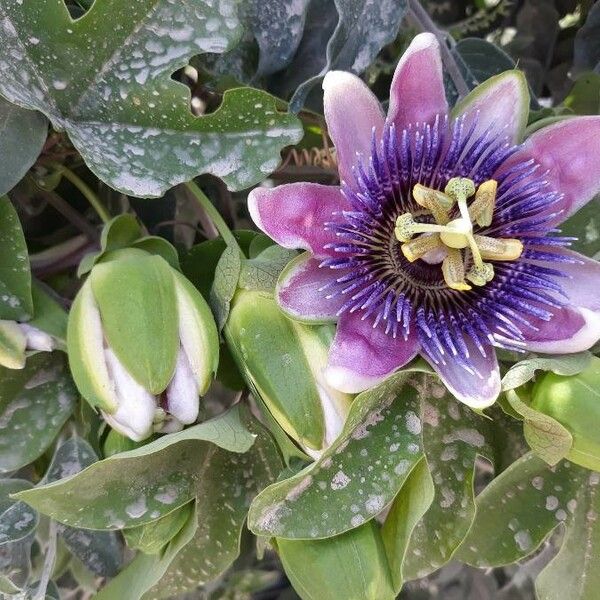
Commonly known as the Moonseed-leaved Passionflower, Passiflora menispermifolia is a stunning tropical climber native to the rainforests of Central and South America. Its name refers to its unique foliage, which mimics the shape of the Moonseed plant (Menispermum). This vine is a favorite among rare plant collectors for its incredibly intricate, neon-purple flowers and its surprisingly soft, "fuzzy" texture.
🔍 How to Identify
- 🍃 Moon-Shaped Leaves: The leaves are typically three-lobed with rounded edges, often appearing more heart-shaped or oval than the sharp, pointed leaves of common passionvines.
- 🧶 Velvety Texture: One of its most distinct features is that the entire plant—stems, leaves, and buds—is covered in fine, soft hairs (pubescence), giving it a silvery-green shimmer.
- 🟣 Ornate Blooms: The flowers feature a dramatic fringe of purple and white banded filaments (the corona) surrounding a central green structure, looking almost like an alien satellite dish.
🏡 In Your Garden
- 🧗 The Need for Support: As a vigorous climber, this plant uses small tendrils to pull itself upward. It requires a sturdy trellis or fence to prevent it from tangling into a messy mound on the ground.
- ☁️ Humidity is Key: Coming from the humid tropics of Peru and Costa Rica, this species dislikes dry indoor air. If growing it as a houseplant, a pebble tray or frequent misting is essential to prevent the leaf tips from browning.
- 🦋 Butterfly Magnet: In its native habitat, it is a primary host for various longwing butterflies. While beautiful, be prepared for "sacrificial" leaves if local butterflies decide to lay eggs on its soft stems!
⚠️ Safety & Toxicity
- 🐾 Mildly Toxic: Like many members of the Passiflora genus, the leaves and unripe fruit contain cyanogenic glycosides.
- 👶 Keep Away: It is best kept out of reach of curious pets and small children. Ingestion can cause stomach upset, nausea, or lethargy. Always wait for the fruit to be fully, perfectly ripe before considering it safe (though this specific species is grown more for beauty than food).
✨ Fun Fact
The "fuzzy" hairs on the stems of Passiflora menispermifolia aren't just for show! They act as a sophisticated defense mechanism against caterpillars; the tiny hairs make it difficult for insects to get a firm grip or move easily across the plant to feed.

Detailed Care Instructions
To grow Passiflora menispermifolia, also known as the Yellow Granadilla vine, follow these steps:
- Choose a suitable location: Pick a spot with full sun to partial shade. Passiflora menispermifolia prefers well-drained soil that is rich in organic matter.
- Prepare the soil: Dig 1-2 feet deep and amend the soil with compost or well-rotted manure. This will improve drainage and nutrient content.
- Planting: Dig a hole slightly larger than the root ball of the plant. Place the Passiflora menispermifolia in the hole and backfill with soil, gently firming it around the plant. Keep a distance of about 3-6 feet between multiple plants.
- Watering: Water the plant deeply immediately after planting and continue to keep the soil evenly moist during the growing season. However, ensure that the soil doesn't become waterlogged as this can harm the plant.
- Mulching: Apply a layer of organic mulch around the base of the plant to help conserve moisture, suppress weeds, and regulate soil temperature.
- Support: Passiflora menispermifolia is a vine that needs support structure to climb. Install a trellis, arbor, or sturdy fence near the plant to provide support as it grows.
- Fertilization: Apply a balanced, slow-release fertilizer during the growing season to provide necessary nutrients. Follow the instructions on the chosen fertilizer label for proper dosage.
- Pruning: Passiflora menispermifolia benefits from regular pruning to keep its growth in check and maintain its shape. Prune out dead, damaged, or overly tangled branches during the dormant season.
- Pests and diseases: Monitor the plant regularly for pests like aphids, whiteflies, or spider mites. If an infestation is found, treat with appropriate organic or chemical insecticides. Passiflora vines are generally resistant to diseases.
- Pollination: Passiflora menispermifolia relies on insects for pollination, typically bees. Ensure that the plant is located in an area with good insect activity to facilitate proper fruiting.
By following these guidelines, you can successfully grow Passiflora menispermifolia and enjoy its vibrant blooms and delicious fruits.

Place in a bright room that is sun drenched almost all day. Or directly in a south-facing window.

To properly water Passiflora Menispermifolia, you need to consider various factors for its health and growth. Here are some guidelines to aid you in watering this plant effectively:
1. Evaluate the soil moisture: Before watering, examine the soil to check its moisture level. Insert your finger into the soil up to the second knuckle. If it feels dry, it is an indication that the plant requires watering. However, if it feels moist, hold off on watering for a few more days.
2. Watering frequency: Passiflora Menispermifolia thrives in moderately moist soil, so you need to provide regular but not excessive watering. Aim to water it once every 7-10 days during the growing season and reduce the frequency during the dormant period. Adjust the watering schedule based on the prevailing weather conditions and the plant's specific needs.
3. Watering method: Use a watering can or a hose with a spray nozzle to water gently around the base of the plant. Avoid overhead watering as it may promote the growth of fungal diseases. Direct the water towards the root zone, ensuring it penetrates deeply into the soil.
4. Water quantity: Provide an adequate amount of water to ensure deep root penetration. The goal is to moisten the soil to a depth of at least 6 inches. As a general rule, apply enough water to make the soil damp, but not waterlogged. Overwatering can lead to root rot and other plant health issues.
5. Mulching: Apply a layer of organic mulch around the base of the plant, leaving a few inches of space near the stem to prevent rotting. Mulching helps retain soil moisture, reduce evaporation, and suppress weed growth. It also insulates the soil and moderates temperature fluctuations.
6. Monitor plant response: Observe how the plant responds to your watering routine. Look for signs of over or under watering, such as yellowing leaves, wilting, or fungal growth. Adjust the watering schedule accordingly to maintain optimal moisture levels.
7. Seasonal adjustments: During periods of increased humidity or rainfall, you may need to reduce the watering frequency. Conversely, in hot and dry conditions, you may need to water more frequently. Regularly adapt your watering routine according to the current weather patterns.
Remember that these guidelines provide a general understanding of watering requirements for Passiflora Menispermifolia. Monitoring the specific needs of your individual plant and providing appropriate moisture levels based on its condition and environment will contribute to its overall health and flourishing growth.
- Choose a well-draining potting mix: Passiflora Menispermifolia prefers a mix with equal parts of perlite, peat moss, and sand.
- Select a pot or container: Use a pot that has drainage holes to prevent waterlogging and allow excess water to escape.
- Position the plant in bright, indirect sunlight: Place your Passiflora Menispermifolia plant in an area where it can receive at least 6-8 hours of indirect sunlight each day.
- Water adequately: Water the plant thoroughly until the excess water drains out of the bottom of the pot, but avoid over-watering. Allow the top inch of soil to dry out between watering sessions.
- Provide humidity: Passiflora Menispermifolia thrives in high humidity environments. Consider using a pebble tray or misting the plant regularly to increase humidity.
- Feed with a balanced fertilizer: Apply a balanced liquid fertilizer, such as a 10-10-10 or 20-20-20 formula, diluted to half strength, once a month during the growing season (spring and summer). Reduce fertilization during the dormant period (fall and winter).
- Prune as needed: Regularly trim back any dead, damaged, or overgrown branches to maintain a well-shaped and healthy plant.
- Monitor for pests: Keep an eye out for common plant pests like aphids, spider mites, or mealybugs. If detected, treat the plant with an appropriate insecticidal soap or horticultural oil.
- Support climbing growth: Given that Passiflora Menispermifolia is a climbing plant, provide supports like trellises, stakes, or fences to allow it to grow and spread.
- Observe for signs of stress: Watch out for any wilting, yellowing leaves, or other signs of distress. Adjust watering, lighting, and other care routines accordingly to ensure the plant's well-being.
When selecting soil for Passiflora menispermifolia, it is important to consider certain properties to provide an optimal growing environment for the plant. The ideal soil should have a balanced composition of organic matter, minerals, and good drainage.
Firstly, the soil should be well-draining to prevent waterlogging and root rot. This can be achieved by incorporating perlite, coarse sand, or vermiculite into the soil mix. These additions help to improve aeration and ensure excess water doesn't accumulate around the roots.
In terms of organic matter, incorporating compost or well-rotted manure into the soil will supply essential nutrients and improve soil structure, promoting healthy growth of the Passiflora menispermifolia. Organic matter aids in moisture retention and provides a steady release of nutrients over time.
The soil pH should be slightly acidic to neutral, typically ranging from 5.5 to 7.0, as Passiflora menispermifolia generally thrives in those conditions. Conducting a pH test can help determine if adjustments are necessary. Adding sulfur or lime can modify pH levels accordingly.
It is advisable to avoid using heavy clay soils as they tend to compact easily and hinder root growth. Sandy soils, although well-draining, may not retain enough moisture and nutrients for the plant. Therefore, finding a balance between these soil types is key.
Additionally, incorporating a controlled-release fertilizer specifically formulated for flowering plants or using an organic fertilizer during the growing season can ensure the plant receives necessary nutrients for healthy growth and abundant blooming.
Remember, regular monitoring of soil moisture and adjusting watering practices accordingly is important to prevent over or under-watering, as Passiflora menispermifolia prefers slightly moist soil.
Passiflora menispermifolia, a tropical plant native to Central and South America, can be propagated through several methods. Here is a detailed guide on how to propagate this plant:
- Seeds: Collect mature fruits from a healthy Passiflora menispermifolia plant. The fruits are usually green or yellow when ripe and contain several seeds. Remove the seeds from the fruit pulp and rinse them with water to remove any remaining pulp. It is advisable to soak the seeds in water for 24-48 hours before sowing to enhance germination.
- Sowing: Fill a seed tray or small pots with a well-draining potting mix. Place the seeds on top of the soil, spacing them adequately apart. Cover the seeds with a thin layer of the potting mix, ensuring they are lightly covered but not buried too deeply. Water the soil gently, keeping it constantly moist but not waterlogged.
- Germination: Keep the seed tray or pots in a warm and well-lit location, preferably with indirect sunlight. Maintain a temperature of around 70-80°F (21-27°C) for germination. It may take anywhere from a few weeks to a few months for the seeds to germinate, depending on the conditions.
- Transplanting: Once the seedlings have developed two or three sets of leaves and are large enough to handle, they can be transplanted into individual pots. Choose pots with good drainage and fill them with a suitable potting mix. Gently lift the seedlings from the seed tray and transfer them to the new pots, ensuring not to damage their fragile roots.
- Care: Place the newly transplanted seedlings in a bright location with partial shade. Water them regularly, keeping the soil consistently moist but not waterlogged. Provide adequate support or trellis as the Passiflora menispermifolia grows and develops climbing tendrils. Additionally, applying a balanced organic fertilizer every two to four weeks during the growing season can help promote healthy growth.
By following these propagation steps, you can successfully propagate Passiflora menispermifolia and enjoy its unique beauty in your garden or indoor space.








