Plant Overview
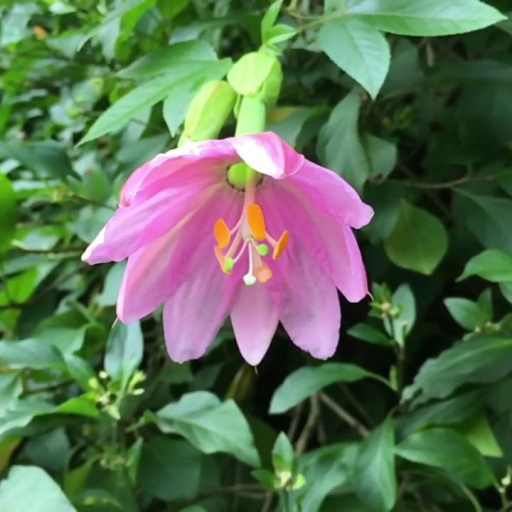
Often called the Banana Passionfruit or Curuba, Passiflora mollissima is a high-altitude climber hailing from the misty valleys of the South American Andes. Unlike its round, purple cousins, this vine produces long, cylinder-shaped fruits that look like tiny, velvety bananas. It is a favorite among gardeners for its dramatic, dangling pink flowers that look like jewelry hanging from the canopy.
🔍 How to Identify
- 🌸 The Flower: Breathtaking, pendant-style blossoms that hang downward. They feature a long, green calyx tube and bright pink, star-shaped petals.
- 🍌 The Fruit: Elongated, oval-shaped fruit that turns from dusty green to a vibrant lemon-yellow when ripe, with a soft, slightly fuzzy skin.
- 🍃 The Foliage: Large, three-lobed leaves with a distinctively soft, velvety texture on the underside—hence its name mollissima, which means "very soft" in Latin.
🏡 In Your Garden
- 🧗 Space & Support: This is a vigorous, fast-growing climber. It needs a very sturdy trellis or fence to scramble over, as it can quickly overwhelm smaller plants if left unchecked.
- ☁️ Climate Nuance: Unlike most tropical passionflowers, the Banana Passionfruit prefers "eternal spring" conditions. It thrives in cooler, temperate climates and high-altitude settings; it often struggles in extreme tropical heat or hard frost.
- 🕊️ Wildlife Magnet: In its native habitat, its long flower tubes are specifically designed for the beaks of high-altitude hummingbirds. In a garden setting, it remains a major draw for pollinators.
⚠️ Safety & Toxicity
- 🟢 Human Safety: The golden-orange pulp inside the fruit is edible, aromatic, and tangy, often used in smoothies or desserts.
- 🐾 Pet Safety: While the ripe fruit pulp is generally safe, the leaves and unripened fruit of many Passiflora species contain cyanogenic glycosides. It is best to keep curious dogs or cats from chewing on the vines to avoid stomach upset.
- 🌱 Environmental Warning: Because it grows so aggressively, this plant is considered an invasive weed in parts of Hawaii and New Zealand. Always check your local regulations before planting it in the ground.
✨ Fun Fact
In Colombia and Ecuador, the fruit is a staple known as Curuba. It is most famously used to make a creamy, refreshing milk-based drink called Sorbet de Curuba, which tastes like a blend of orange, melon, and tart cream!

Detailed Care Instructions
To successfully grow a Passiflora mollissima plant, also known as the banana passionfruit or velvet banana flower, you can follow these general guidelines:
- Climate and Soil:
- The plant thrives in warm, subtropical to tropical climates. Ensure your location has a climate suitable for this plant.
- Choose a well-draining soil with a pH level between 6.0 and 7.5. The soil should be rich in organic matter.
- The plant thrives in warm, subtropical to tropical climates. Ensure your location has a climate suitable for this plant.
- Planting:
- Plant your Passiflora mollissima in full sun or partial shade.
- Dig a hole that is slightly larger than the root ball of the plant.
- Place the plant in the hole and backfill it with the soil, firming it gently around the plant.
- Water the plant thoroughly after planting.
- Plant your Passiflora mollissima in full sun or partial shade.
- Watering:
- Keep the soil consistently moist but not soggy. Water the plant regularly, especially during dry spells.
- Be careful not to overwater, as it can lead to root rot.
- Keep the soil consistently moist but not soggy. Water the plant regularly, especially during dry spells.
- Mulching and Fertilizing:
- Apply a layer of mulch around the base of the plant to help conserve moisture and suppress weed growth.
- Use a balanced, slow-release fertilizer during the growing season to promote healthy growth.
- Apply a layer of mulch around the base of the plant to help conserve moisture and suppress weed growth.
- Support:
- Passiflora mollissima is a climbing vine and needs support to grow vertically. Install a trellis or arbor for the plant to climb on.
- Passiflora mollissima is a climbing vine and needs support to grow vertically. Install a trellis or arbor for the plant to climb on.
- Pruning:
- Prune the plant annually to keep it in shape and encourage new growth. Remove any dead or damaged branches.
- Prune the plant annually to keep it in shape and encourage new growth. Remove any dead or damaged branches.
- Harvesting:
- The fruit of Passiflora mollissima is edible and typically ripens in late summer or early fall. Harvest the fruit when it turns yellow and falls easily from the vine.
- The fruit of Passiflora mollissima is edible and typically ripens in late summer or early fall. Harvest the fruit when it turns yellow and falls easily from the vine.
- Pests and Diseases:
- Monitor for pests such as aphids, mealybugs, or spider mites. Treat infestations promptly with appropriate insecticides.
- Common diseases include fusarium wilt and root rot. Provide proper drainage and avoid overwatering to prevent these issues.
Remember to research and consider specific growing conditions for your area, as variations may exist depending on your location.
- Monitor for pests such as aphids, mealybugs, or spider mites. Treat infestations promptly with appropriate insecticides.

Place in a bright room that is sun drenched almost all day. Or directly in a south-facing window.
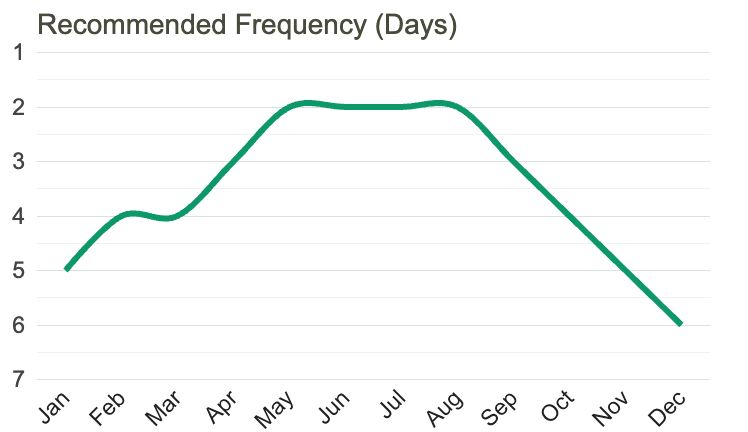
The Passiflora Mollissima plant requires regular watering to thrive, especially during the hotter months of the year. When watering, it is important to be mindful of the soil moisture level to prevent waterlogging and root rot. To water the plant, fill a watering can and carefully pour the water directly onto the soil at the base of the plant. Do not spray the foliage, as this can cause damage and increase the risk of disease. Allow the water to soak in thoroughly before watering again, typically once or twice a week depending on the weather conditions and soil type. Avoid letting the soil dry out completely, as this can stress the plant and lead to wilting. Additionally, reduce watering during the winter months when the plant is dormant and requires less moisture.
To fertilize this plant, use a balanced fertilizer with equal parts nitrogen, phosphorus, and potassium. Apply the fertilizer during the active growing season, typically in the spring and summer months. Do not fertilize during the dormant period in the fall and winter. Dilute the fertilizer according to the manufacturer's instructions, and apply to the soil around the base of the plant. Avoid getting the fertilizer on the foliage, as this can cause leaf burn. Water the plant after fertilizing to help distribute the nutrients.
For the Passiflora Mollissima plant, it is recommended to use a well-draining soil that is deep and rich in organic matter. The plant prefers a slightly acidic soil with a pH range of 6.1 to 6.5. It is also important to ensure that the soil is nutrient-rich, with added compost or manure to promote healthy growth. Additionally, the soil should be kept moist, but not waterlogged, as the plant does not tolerate waterlogged conditions. Overall, a well-balanced, nutrient-rich soil will provide the Passiflora Mollissima plant with the best growing conditions.
To propagate this plant, you will need to first identify a healthy and mature stem that has several leaves attached to it. Cut this stem with a sharp and sterile pair of pruning shears just below a leaf node, ensuring that the cutting is between 4-6 inches in length. Remove any leaves from the lower 2-3 inches of the cutting, leaving only the top few leaves intact.
Next, dip the cut end of the stem into rooting hormone powder or gel to promote root growth. If you do not have rooting hormone, you can also try dipping the cut end into honey or aloe vera gel.
Fill a small pot or container with a well-draining soil mix and make a small hole in the center of the soil. Insert the cutting into the soil, making sure it is firmly planted and the remaining leaves are not touching the soil. Water the cutting thoroughly, and cover the pot with a plastic bag or container to create humidity. Place the pot in a warm and bright spot, but away from direct sunlight.
Keep the soil moist but not waterlogged, and mist the cutting occasionally or remove the cover to prevent mold growth. After 4-6 weeks, you should start to see new growth and roots forming. Once the cutting has established roots and is growing well, you can transplant it into a larger pot or directly into the garden.








