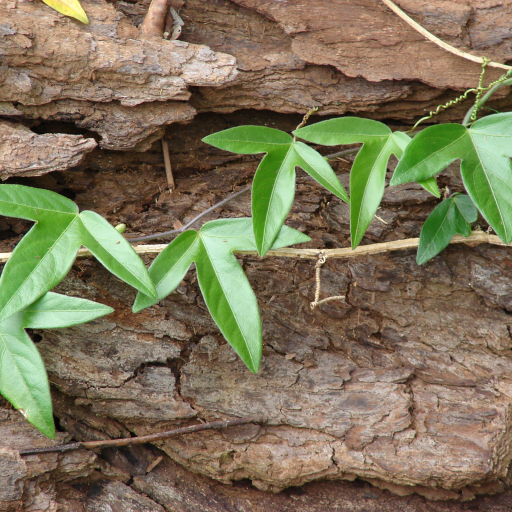
Plant Overview
Often called the Corkystem Passionflower or "Indigo Berry," this delicate vine is a hidden gem of the tropical Americas. While it lacks the flamboyant, oversized purple blooms of its famous cousins, it is a master of architectural detail and a powerhouse for local ecosystems. Its name comes from the fascinating way its older stems transform, developing a thick, gray, corky bark that looks like miniature mountain ranges.
🔍 How to Identify
- 🌿 The "Corky" Stem: The most distinct feature is the base of the vine. As the plant matures, the green stems develop a thick, winged, cork-like texture that is soft to the touch.
- 🍃 Variable Leaves: The leaves are masters of disguise! They can be simple ovals or deeply three-lobed, often changing shape on the same vine to confuse herbivores.
- 🌼 Petal-less Flowers: The blooms are tiny, star-shaped, and greenish-yellow. Interestingly, they lack true petals; what you see are five colored sepals surrounding a fringed corona.
- 🍇 Indigo Berries: After flowering, it produces small, marble-sized fruits that transition from a dusty green to a deep, dark purple-black when ripe.
🏡 In Your Garden
- 🦋 A Butterfly Nursery: This plant is a "must-have" for pollinator gardens. It serves as a primary host plant for the Zebra Longwing, Gulf Fritillary, and Julia Heliconian butterflies. Don't be alarmed if you see caterpillars munching the leaves—that’s exactly what it's there for!
- 🧗 Low-Maintenance Climber: Unlike some high-maintenance tropicals, the Corkystem is incredibly drought-tolerant once established. It uses delicate tendrils to climb trellises or fences, but it is just as happy scrambling over the ground as a dense cover.
- ☀️ Light Nuance: It is highly adaptable, thriving in full sun to deep shade. However, if you want to see those signature "corky" stems develop quickly, give it a spot with dappled sunlight.
⚠️ Safety & Toxicity
- 🐾 Mildly Toxic: Like many members of the Passiflora family, the foliage and unripe (green) berries contain cyanogenic glycosides.
- 👶 Precaution: While the ripe purple berries are technically edible for some wildlife, they are not tasty for humans. Keep the plant away from curious pets or toddlers who might be tempted to sample the "grapes," as ingestion can cause nausea or vomiting.
✨ Fun Fact
Passiflora suberosa is a master of evolutionary camouflage. Scientists believe its leaves vary so wildly in shape specifically to mimic other plants in its environment. This "leaf mimicry" helps the vine hide from butterflies who are searching for specific leaf patterns to lay their hungry eggs on!

Detailed Care Instructions
To grow Passiflora Suberosa (aka corky-stemmed passionflower or granadilla) plant, you can follow these steps:
- Climate: Ensure that you live in a suitable climate for this plant. Passiflora Suberosa thrives in tropical and subtropical regions.
- Soil requirements: Choose a well-draining soil with a slightly acidic to neutral pH (around 6.0 to 7.0). The soil should be rich in organic matter. Amend the soil with compost or well-rotted manure before planting.
- Planting: Select a location with full sun exposure for at least 6-8 hours a day. Dig a hole slightly larger than the plant's root ball and place the plant in the hole, ensuring that it is at the same depth as it was in its nursery pot. Backfill the hole with soil, firming gently around the plant.
- Watering: Water the plant immediately after planting and continue to water regularly, especially during dry spells. Keep the soil slightly moist but not waterlogged. Ensure that the plant receives around 1-2 inches of water every week.
- Support: Passiflora Suberosa is a climbing vine. Provide structural support like a trellis, arbor, or fence for it to climb on. Install the support system before the plant starts to grow vigorously.
- Mulching: Apply a layer of organic mulch around the base of the plant to conserve moisture, suppress weeds, and regulate soil temperature. Keep the mulch a few inches away from the plant's stem to prevent rot.
- Fertilizer: Feed the Passiflora Suberosa plant with a balanced, slow-release fertilizer according to the manufacturer's instructions. Apply the fertilizer in early spring and again in midsummer.
- Pruning: Prune the plant in late winter or early spring to remove dead or damaged stems. Pruning also helps to maintain the shape and promote new growth.
- Pests and diseases: Monitor the plant regularly for any signs of pests (such as aphids or spider mites) or diseases (such as powdery mildew or leaf spot). Treat or prevent any issues accordingly using organic or chemical methods, if necessary.
- Propagation: Passiflora Suberosa can be propagated through stem cuttings or by sowing fresh seeds.
Remember to be patient, as Passiflora Suberosa can take some time to establish and start blooming.

Place in a bright room that is sun drenched almost all day. Or directly in a south-facing window.

To water this plant, wait until the top inch of soil feels dry to the touch and then thoroughly moisten the soil, taking care not to let the water pool on the surface. Watering once a week should be sufficient, but adjust frequency according to the plant's needs based on climate, lighting, and soil conditions. Additionally, avoid watering the leaves and flowers of the plant directly, as this can lead to fungal growth and damage to delicate structures. Instead, direct the water at the base of the plant, allowing it to soak in gradually. Finally, be mindful of overwatering, as this can cause root rot and other issues, so ensure that the soil has adequate drainage and do not water excessively.
To fertilize this plant, use a well-balanced fertilizer with equal amounts of nitrogen, phosphorus, and potassium. Apply the fertilizer once a month during the growing season, which is typically from spring to fall. Be sure to dilute the fertilizer according to the instructions on the package and avoid over fertilizing, as this can lead to burn and damage the plant. Additionally, make sure the soil is moist before applying fertilizer.
It is recommended to use a well-draining soil with good aeration for this particular plant. The soil should be slightly acidic and have a pH between 6.1 to 6.5. It is important to avoid soil that is too heavy or compacted, as this can lead to poor root development and limit the plant's ability to absorb nutrients. Additionally, adding organic matter like compost or leaf litter to the soil can help improve soil structure and provide nutrients for the plant.
To propagate this plant, a gardener first needs to gather mature seeds that have been properly dried. The gardener then prepares a sterile, well-draining soil mix to sow the seeds in. The seeds should be sown just below the surface of the soil and kept moist, but not waterlogged. It is best to keep the soil temperature consistent and warm for optimal germination. Once the seedlings are big enough to handle, they can be transplanted into individual pots. Additionally, softwood cuttings can be taken in spring or summer and rooted in a similar soil mix using a rooting hormone. The cuttings should be kept moist and shaded until they have developed roots and can be transplanted into individual pots as well.
Common pests of the cork passionflower include Spider mites, aphids, thrips, larvae. Make a habit of checking your cork passionflower frequently for pests so that any infestations can be caught and managed early.








