Plant Overview
Commonly known as the Banana Passionfruit or Curuba, this high-climbing vine is a treasure of the Andean mountains. Unlike the round purple passionfruits you might see in a typical grocery store, this species produces elongated, golden fruits that look remarkably like small, straight bananas hanging from a lush green canopy.
🔍 How to Identify
- 🌿 The Foliage: The leaves are deeply divided into three distinct lobes (hence the name tripartita) and have a soft, velvety texture on the underside that feels like fine felt.
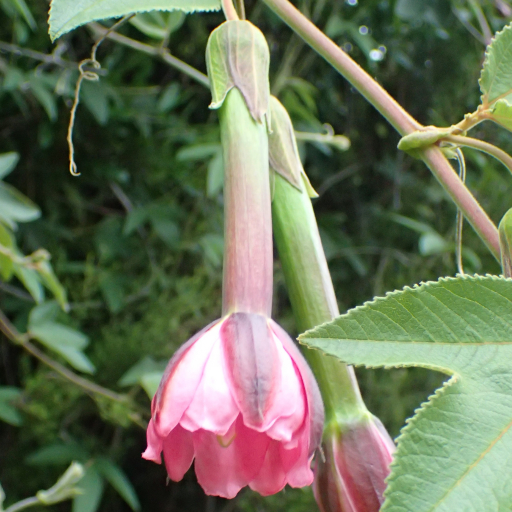
- 🌸 The Blossom: It produces stunning, pendulous pink flowers with an exceptionally long nectar tube. These blossoms hang downward like exotic lanterns, often reaching 3 to 4 inches in length.
- 🍌 The Fruit: Look for oblong, cylindrical fruits that transition from a dusty green to a bright, waxy yellow as they ripen. Inside, you’ll find orange pulp filled with small, crunchy seeds.
🏡 In Your Garden
- 🧗 Support is Key: This is a vigorous, woody climber that uses tendrils to haul itself upward. In a home setting, it requires a heavy-duty trellis or a sturdy fence; otherwise, it will happily "walk" over neighboring trees and shrubs.
- ☁️ Cooler Ambitions: Coming from the high altitudes of South America, this plant prefers "eternal spring" conditions. It thrives in mild, temperate climates and may struggle or drop its buds if the thermometer stays consistently above 85°F (30°C).
- ✂️ Pruning Strategy: Because it grows so quickly, it can become a tangled mess. Prune it after the fruiting season to encourage new growth, which is where the next season's flowers will appear.
⚠️ Safety & Toxicity
- ✅ Edible Fruit: The ripe fruit is delicious, tangy, and widely used in South America for juices, sorbets, and creams.
- 🐾 Pet Caution: Like many members of the Passiflora family, the leaves and unripe fruits contain cyanogenic glycosides. While poisoning is rare, it is best to keep curious dogs or cats from chewing on the foliage.
- 🌿 Skin Sensitivity: Some gardeners report mild skin irritation when handling the fuzzy vines for long periods; wearing gloves during heavy pruning is recommended.
✨ Fun Fact
The Passiflora tripartita has a "special relationship" with the Sword-billed Hummingbird. The flower’s nectar tube is so long that this specific bird—the only one in the world with a beak longer than its body—is one of the few creatures capable of reaching the nectar and pollinating the plant!

Detailed Care Instructions
To grow Passiflora tripartita, also known as banana passionfruit, you can follow these steps:
- Climate: Verify that your climate is suitable for growing Passiflora tripartita. It is commonly found in tropical and subtropical regions, and it prefers warm temperatures.
- Soil: Choose well-draining soil that is rich in organic matter. The pH level should be slightly acidic to neutral.
- Sunlight: Find a location that receives full or partial sun exposure. Passiflora tripartita thrives in bright, indirect light.
- Planting: Start by collecting ripe fruits with mature seeds. Remove the outer skin and pulp, then rinse the seeds to remove any remaining pulp. Allow the seeds to dry for a day before planting.
- Germination: Place the seeds in a small container filled with moist sterile potting mix. Bury the seeds about half an inch deep and cover the container with a plastic wrap or a clear plastic lid to create a humid environment. Place the container in a warm spot with indirect light.
- Watering: Keep the soil moist but not waterlogged. Water regularly, ensuring that the soil doesn't dry out completely between waterings.
- Transplanting: Once the seedlings have grown a few inches tall with a few sets of leaves, they can be transplanted into larger pots or directly into the ground. Ensure that each plant has enough space to spread its vines.
- Support: Provide a trellis or some form of support for the Passiflora tripartita vines to climb. This will maximize their growth and encourage fruit production.
- Fertilization: Use a balanced organic fertilizer, following the instructions on the label. Apply it once a month during the growing season to provide necessary nutrients.
- Pruning: As the plant grows, you can trim any dead or damaged branches. Pruning can help maintain the shape of the plant and promote better airflow.
- Pollination: Passiflora tripartita is self-fertile, but it benefits from cross-pollination by insects. You can attract pollinators by planting other flowering plants nearby.
- Harvesting: The plant typically takes around 10-12 months to mature and bear fruit. Harvest the banana passionfruit when it has turned yellow and slightly soft. The fruit should be eaten when fully ripe for the best flavor.
By following these steps, you can successfully grow Passiflora tripartita and enjoy its tasty fruits.

Place in a bright room that is sun drenched almost all day. Or directly in a south-facing window.

To water this plant, you should first ensure that the soil is dry to the touch about an inch below the surface before watering. When watering, thoroughly soak the soil until water starts to drain out of the bottom of the pot or container. Avoid letting the soil become waterlogged, as this can lead to root rot. It is best to water this plant in the morning or early afternoon to avoid water sitting on the leaves overnight, which can lead to fungal growth. In general, this plant prefers consistently moist soil, but not overly wet conditions.
To fertilize the Passiflora Tripartita plant, use a balanced fertilizer with equal amounts of nitrogen, phosphorus, and potassium. Apply the fertilizer every 2-3 weeks during the growing season and every 4-6 weeks in the winter. Make sure to water the plant well before and after fertilizing to prevent root burn. Avoid over-fertilizing as it can lead to excessive growth and weaker stems.
The ideal soil for the Passiflora Tripartita plant is a well-draining soil mixture that is rich in nutrients. The soil should have a slightly acidic to neutral pH level and be able to retain moisture without becoming waterlogged. It is recommended to use a soil mix that consists of a combination of peat moss, perlite, and vermiculite in equal parts. This will create a light, fluffy soil that allows for optimal drainage, while also retaining the necessary moisture for healthy plant growth. Additionally, adding organic matter, such as compost or aged manure, can help to further enrich the soil and improve its overall quality. Avoid using heavy clay soils or soils with a high sand content, as these may not provide the necessary nutrients and drainage for the Passiflora Tripartita plant to thrive.
To propagate this plant, you can take stem cuttings from a healthy mature plant. Select a stem that is at least 6 inches long and has several leaves. Cut the stem at a 45-degree angle using a clean, sharp knife or pruning shears.
Remove the leaves from the bottom half of the stem, leaving only a few leaves near the top. Dip the cut end of the stem into rooting hormone powder to stimulate root growth.
Prepare a pot with well-draining soil and create a hole in the soil with a pencil. Insert the stem cutting into the hole and cover it with soil, gently pressing the soil around the stem to secure it.
Water the soil thoroughly and cover the pot with a clear plastic bag or plastic wrap to create a greenhouse effect. Keep the plant in a warm, bright location but out of direct sunlight.
Once the stem cutting has formed roots (usually within 4-6 weeks), you can remove the plastic covering and gradually acclimate the plant to its new environment. Water the plant regularly and provide it with appropriate light and temperature conditions.








