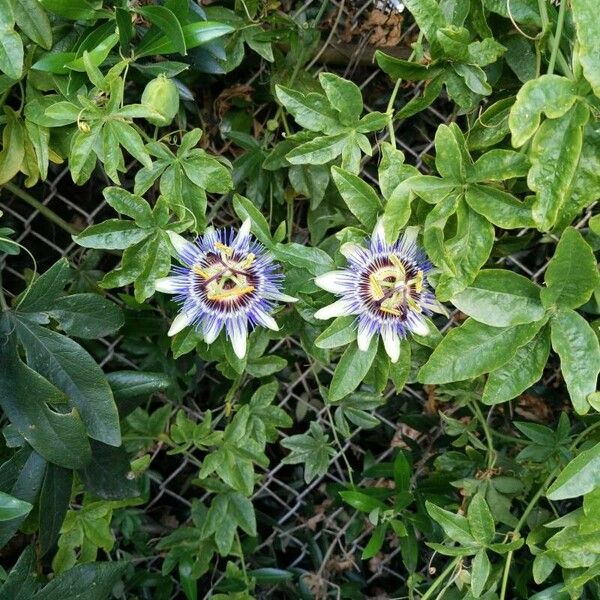
Plant Overview
Often called the Amethyst Passion Flower, this stunning hybrid is like a living piece of jewelry for your garden. Created by crossing two South American species in the 1800s, it quickly became a Victorian favorite for its deep, royal purple hues and intricate geometry. While it looks like an exotic alien, it is actually quite a vigorous climber that brings a dramatic, tropical flair to temperate patios.
🔍 How to Identify
- 🟣 The Bloom: Large, saucer-shaped flowers featuring deep violet petals and a mesmerizing "corona" of dark purple fringed filaments tipped with white.
- 🍃 The Foliage: Rich green leaves that are typically deeply divided into three distinct lobes, providing a dense, lush backdrop for the flowers.
- 🌀 The Tendrils: Look for thin, wiry green coils that act like springs, tightly wrapping around anything they touch to pull the vine upward.
🏡 In Your Garden
- 🧗 The Vertical Scrambler: Because it uses tendrils to climb, this plant is not self-clinging. It requires a trellis, wire, or fence to navigate. Without support, it will quickly turn into a tangled groundcover.
- ✂️ Pruning Strategy: This hybrid blooms on new growth, so don't be afraid to give it a hard prune in early spring. This encourages a flush of fresh stems and, subsequently, more of those iconic purple flowers.
- 🧊 Root Protection: While the top of the plant loves the sun, the roots prefer to stay cool. Planting it behind a smaller shrub or applying a thick layer of mulch helps mimic its natural forest-edge habitat.
⚠️ Safety & Toxicity
- 🐾 Mildly Toxic: Like many members of the Passiflora family, the leaves and unripe fruits contain cyanogenic glycosides.
- 👶 Keep Out of Reach: It is best kept away from curious pets and children, as ingestion can cause stomach upset, drooling, or lethargy.
- 🚫 Not the Fruiting Kind: Unlike Passiflora edulis, this hybrid is grown for its beauty, not for food. Its fruit is usually hollow, orange, and unpalatable.
✨ Fun Fact
The Passiflora × violacea was one of the first successful passion flower hybrids ever recorded, first bred in 1824. It proved that the wildly different species of the rainforest could be combined to create hardier, more colorful varieties for garden enthusiasts.

Detailed Care Instructions
Growing Passiflora × Violacea, a hybrid passionflower known for its striking purple flowers, involves several steps to ensure the plant thrives. Here is a comprehensive guide to help you grow this beautiful plant:
1. Location and Climate:
- Climate: Passiflora × Violacea thrives in USDA hardiness zones 9-11. It prefers warm climates but can tolerate cooler temperatures, although not severe frost.
- Sunlight: Choose a location that receives full sun to partial shade. Ideally, the plant should get at least 6 hours of direct sunlight daily.
2. Soil Preparation:
- Soil Type: The plant prefers well-draining soil. Sandy loam or loamy soil mixed with organic compost works well.
- pH Level: A slightly acidic to neutral pH (around 6.0-7.5) is ideal.
3. Planting:
- Seed Propagation: You can start from seeds, but be aware that they may take several months to germinate. Soak the seeds for 24 hours before planting and sow them in a seed-starting mix.
- Cuttings: Use 4-6 inch cuttings from healthy plants. Dip the cut end in rooting hormone and plant it in moist, well-draining soil. Keep the soil consistently moist until roots develop.
- Transplanting Seedlings or Cuttings: Space the plants at least 3-6 feet apart to give them plenty of room to grow.
4. Watering:
- Consistent Moisture: Keep the soil consistently moist but not waterlogged. Water deeply whenever the top inch of soil feels dry.
- Mulching: Apply a layer of mulch around the base of the plant to retain moisture and regulate soil temperature.
5. Support and Training:
- Trellis or Support Structure: Passionflowers are vigorous climbers. Provide a trellis, fence, or other support structure for the vines to climb.
- Training: Regularly guide the tendrils onto the support structure to ensure even growth.
6. Fertilization:
- Balanced Fertilizer: Use a balanced fertilizer (such as 10-10-10) monthly during the growing season (spring and summer).
- Organic Matter: Mixing compost into the soil during planting can also provide essential nutrients.
7. Pruning:
- Regular Pruning: Prune the plant in late winter or early spring to remove dead or weak growth and to shape the plant.
- Encouraging Flowering: Pruning can encourage more vigorous growth and more abundant flowering.
8. Pest and Disease Management:
- Common Pests: Watch for pests such as aphids, spider mites, and caterpillars. Use insecticidal soap or neem oil if needed.
- Diseases: Ensure good air circulation around the plant to prevent fungal diseases. Avoid overhead watering to reduce the risk of leaf spot or mildew.
9. Winter Care (if applicable):
- Cold Protection: In cooler climates, mulch heavily around the base in late fall to protect the roots. You can also cover the plant with a frost cloth if frost is expected.
- Container Growth: If you're growing the plant in a container, move it indoors to a bright, cool area during the winter.
10. Propagation:
- Passionflowers can be propagated from seeds, cuttings, or layering. For layering, bend a low-growing vine to the ground, cover a section with soil, and wait for roots to develop before separating it from the parent plant.
By following these guidelines, you can grow Passiflora × Violacea successfully and enjoy its beautiful flowers. Regular care and attention will help ensure your passionflower plant thrives and adds a stunning display to your garden.

Place in a window with dappled sun or a spot in the middle of a room. Or directly in a window facing west or east.

To properly water a Passiflora × Violacea plant, it’s important to follow these guidelines:
1. **Soil Moisture**: This plant prefers consistently moist soil without being waterlogged. Allow the top inch of soil to dry out between waterings. Insert your finger into the soil to check the moisture levels.
2. **Watering Frequency**: During the growing season, typically spring through early autumn, water the plant when the top soil starts to dry out. In cooler months, reduce the watering frequency as the plant's growth slows down.
3. **Watering Amount**: Ensure that you provide a thorough watering each time. This means watering until you see water begin to drain out of the pot's drainage holes. If grown in the ground, water the soil deeply to encourage roots to grow deeper.
4. **Water Quality**: Use room-temperature water to avoid shocking the plant. If possible, use rainwater or distilled water, as tap water can sometimes contain chemicals like chlorine that the plant might be sensitive to.
5. **Container Plants**: If growing in a container, ensure it has good drainage to prevent water from accumulating at the bottom, which can cause root rot.
6. **Mulching**: Apply a layer of organic mulch around the base of the plant to help retain moisture in the soil and regulate temperature.
7. **Humidity**: In addition to regular watering, maintaining a higher humidity level can be beneficial. You can mist the plant occasionally or place a humidity tray nearby.
8. **Observation**: Regularly observe the plant's leaves for signs of overwatering (yellow leaves, soft stem) or underwatering (wilting, dry soil). Adjust the watering schedule accordingly.
By paying close attention to these factors, you can ensure that your Passiflora × Violacea receives the proper amount of water needed to thrive.
Sure, here are fertilizing instructions for Passiflora × violacea:
- Soil Preparation: Ensure your soil is well-draining and rich in organic matter. Amend the soil with compost or well-rotted manure before planting.
- Type of Fertilizer: Use a balanced, water-soluble fertilizer with an N-P-K (Nitrogen-Phosphorus-Potassium) ratio of around 10-10-10 or 14-14-14 for general feeding.
- Frequency: During the active growing season (spring and summer), fertilize every 4-6 weeks. Reduce feeding in the fall, and avoid fertilizing during the winter months when the plant is dormant.
- Application: Follow the manufacturer’s instructions for the amount of fertilizer to use. Typically, you will dilute the fertilizer in water and apply it directly to the soil around the base of the plant. Avoid getting fertilizer on the leaves or stems.
- Organic Options: If you prefer organic fertilizers, compost tea, fish emulsion, or well-rotted manure can be excellent choices. Apply these every 4-6 weeks during the growing season.
- Micronutrients: Occasionally, you may want to add a micronutrient supplement to provide elements such as magnesium, iron, and zinc, which can support overall plant health.
- Monitoring: Keep an eye on your plant’s growth and health. Yellowing leaves can indicate nutrient deficiencies, while overly lush, leafy growth with few flowers can suggest over-fertilizing, particularly with nitrogen.
By following these guidelines, you can ensure that your plant receives the nutrients it needs to thrive and produce beautiful flowers.
To cultivate Passiflora × Violacea effectively, it's crucial to choose the right type of soil that will support its growth and health. This hybrid plant thrives best in well-draining soil, which ensures that water does not remain stagnant, preventing root rot. Here's a detailed guide on the optimal soil conditions:
Soil Composition:
- Texture:
- Loamy Soil: Ideally, a loamy soil mix is preferred as it offers a good balance of sand, silt, and clay. This composition ensures adequate drainage while retaining sufficient moisture and nutrients.
- Sandy Soil: Sandier loam can also be beneficial because it enhances drainage. Amend heavy clay soils with sand or fine gravel to prevent waterlogging.
- Loamy Soil: Ideally, a loamy soil mix is preferred as it offers a good balance of sand, silt, and clay. This composition ensures adequate drainage while retaining sufficient moisture and nutrients.
- Organic Matter:
- Incorporate plenty of organic matter such as compost or well-rotted manure. This addition improves soil structure, promotes aeration, and supplies essential nutrients to the plant.
Soil Characteristics:
- Incorporate plenty of organic matter such as compost or well-rotted manure. This addition improves soil structure, promotes aeration, and supplies essential nutrients to the plant.
- pH Level:
- The plant prefers a slightly acidic to neutral pH, ideally between 6.0 and 7.0. Testing the soil before planting can help determine if any amendments are needed to adjust the pH.
- The plant prefers a slightly acidic to neutral pH, ideally between 6.0 and 7.0. Testing the soil before planting can help determine if any amendments are needed to adjust the pH.
- Moisture:
- While the soil should be well-draining, it must also hold adequate moisture. Mulching around the plant can help retain soil moisture and regulate temperature.
- While the soil should be well-draining, it must also hold adequate moisture. Mulching around the plant can help retain soil moisture and regulate temperature.
- Nutrient Content:
- Ensure the soil is rich in essential nutrients. Incorporating a balanced, slow-release fertilizer during planting can provide initial nutrient support. Periodic feeding with a balanced fertilizer during the growing season can sustain its growth.
Soil Preparation:
- Ensure the soil is rich in essential nutrients. Incorporating a balanced, slow-release fertilizer during planting can provide initial nutrient support. Periodic feeding with a balanced fertilizer during the growing season can sustain its growth.
- Site Selection:
- Choose a location with ample sunlight, as the plant requires full sun to partial shade for optimal blooming and growth.
- Choose a location with ample sunlight, as the plant requires full sun to partial shade for optimal blooming and growth.
- Ground Preparation:
- Dig the soil to a depth of at least 12-18 inches and remove any weeds or debris.
- Mix in organic matter and any soil amendments necessary to adjust the pH and improve texture.
- Dig the soil to a depth of at least 12-18 inches and remove any weeds or debris.
- Planting:
- Ensure the planting hole is twice as wide and just as deep as the root ball to encourage easier root spread.
By adhering to these soil recommendations, cultivating Passiflora × Violacea can result in a robust and healthy plant that thrives beautifully in your garden or landscape.
- Ensure the planting hole is twice as wide and just as deep as the root ball to encourage easier root spread.
Sure, propagating Passiflora × violacea involves several steps and methods to ensure successful growth. Here’s a detailed guide:
Methods of Propagation
- Seed Propagation
- Seed Collection: Collect seeds from a mature fruit. Clean and dry them.
- Scarification: Lightly sand the seed coat to aid germination.
- Soaking: Soak the seeds in warm water for 24-48 hours to soften the seed coat.
- Planting: Sow the seeds in seed-starting soil mix, covering them lightly.
- Conditions: Keep the soil consistently moist and maintain a temperature around 20-25°C (68-77°F).
- Germination: Seeds can take several weeks to months to germinate, so patience is key.
- Seed Collection: Collect seeds from a mature fruit. Clean and dry them.
- Cuttings
- Selection of Stem: Choose healthy, non-flowering stems that are semi-hardwood.
- Cutting Preparation: Cut a section about 4-6 inches long, ensuring it has at least 3-4 nodes.
- Hormone Treatment: Dip the cut end in rooting hormone powder to encourage root development.
- Planting: Insert the cutting into a potting mix made of equal parts peat and perlite or sand.
- Conditions: Keep the soil moist and place the pot in a warm, humid environment with indirect light.
- Rooting: Roots typically develop within 4-6 weeks. You can check for root growth by gently tugging on the cutting.
- Selection of Stem: Choose healthy, non-flowering stems that are semi-hardwood.
- Layering
- Method Selection: Air layering or ground layering can be used.
- Air Layering:
- Select a healthy, mature stem.
- Make a small wound on the stem and apply rooting hormone.
- Wrap the wounded area with moist sphagnum moss and cover with plastic wrap.
- Secure both ends of the plastic wrap with tape or twist ties.
- Roots should develop in 1-2 months, after which the stem can be cut below the rooted area and planted in soil.
- Select a healthy, mature stem.
- Ground Layering:
- Bend a low-growing stem to the ground.
- Make a small wound on the underside of the stem and cover with soil.
- Secure it with a U-shaped pin or stone.
- Keep the soil moist. Once roots develop, cut the stem from the parent plant and transplant.
General Propagation Tips
- Bend a low-growing stem to the ground.
- Method Selection: Air layering or ground layering can be used.
- Soil Requirements: Ensure the soil mix is well-draining to avoid waterlogging.
- Lighting: Provide bright, indirect light for best results, avoiding direct harsh sunlight for young plants.
- Watering: Keep the soil consistently moist but not soggy. Overwatering can lead to root rot.
- Temperature and Humidity: Maintain a warm environment with high humidity, mimicking the plant's natural habitat.
Post-Propagation Care
- Transplanting: Once roots are established, transplant the young plants into larger pots or directly into the garden.
- Fertilization: Use a balanced, diluted liquid fertilizer to promote growth. Avoid over-fertilizing as this can damage young roots.
- Support: As the plant grows, provide trellises or supports for climbing.
- Pests and Diseases: Monitor for common pests like aphids, mites, and caterpillars. Use appropriate treatments if necessary.
By following these steps, you can successfully propagate and grow healthy Passiflora × violacea plants.
Common pests of the violet passionflower include Spider mites, aphids, thrips, larvae. Make a habit of checking your violet passionflower frequently for pests so that any infestations can be caught and managed early.








