Plant Overview
Known as the Purple Flag or Native Iris, this stunning Western Australian native is a master of the "short and sweet" strategy. While it looks like a delicate wildflower, it is actually a rugged, clumping perennial that can survive harsh coastal winds and dry spells. It is a favorite in Australian "bush gardens" for its ability to provide a burst of royal purple against the silvery-green landscape of the outback.
🔍 How to Identify
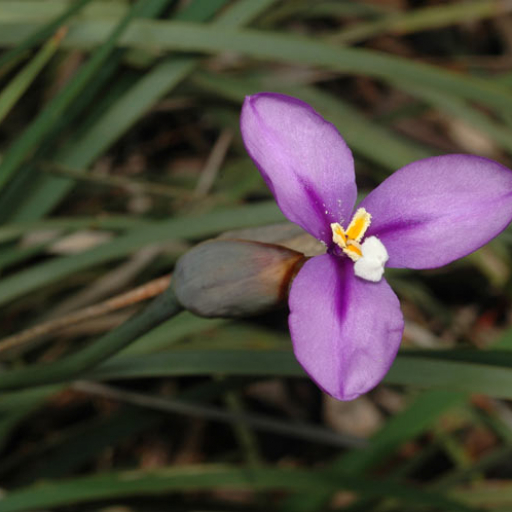
- 💜 The Petals: It features three large, silky, triangular petals that are typically a deep violet-blue, though they can occasionally appear pale blue or white.
- 🗡️ The Foliage: The leaves are stiff, narrow, and sword-shaped, growing in a dense, grass-like tuft that stands upright even in windy conditions.
- 📏 The Stature: The flowering stems usually rise slightly above the foliage, reaching about 50-80cm in height, topped with several flower buds enclosed in dark, bract-like sheaths.
🏡 In Your Garden
- ☀️ Sun Lover: To get the best floral display, place it in full sun. While it tolerates partial shade, the "flags" will be less frequent and the foliage might become floppy.
- 💧 Drainage is Key: In the wild, it thrives in sandy or gravelly soils. If your garden has heavy clay, plant it in a raised bed or a pot; it "hates wet feet" and is prone to root rot if the soil stays soggy over winter.
- ✂️ Low Maintenance: This plant is virtually "set and forget." Once established, it requires very little water and can be tidied up once a year by simply pulling away the old, dried outer leaves.
⚠️ Safety & Toxicity
- ✅ Safe Status: Patersonia occidentalis is generally considered non-toxic and safe for home gardens.
- 🐾 Pet Caution: While not high on the list of poisonous plants, like many members of the Iris family, the underground rhizomes could cause mild digestive upset if a curious dog decides to dig them up and chew on them.
✨ Fun Fact
The Purple Flag is a true "One-Day Wonder." Each individual flower opens at sunrise and collapses by sunset. However, the plant is a prolific producer, with dozens of buds waiting in line to take turns, ensuring the plant stays "in bloom" for several weeks during the spring!

Detailed Care Instructions

Some plants require more regular watering than others, which should be done every few days. It's critical to maintain the soil moist all of the time. The water requirements of the same plant placed in pots with varying sizes will differ. Because the water in the smaller pot evaporates faster than the water in the larger pot, it will require more watering. Regardless of pot size, the surface should constantly be maintained moist.








