Plant Overview
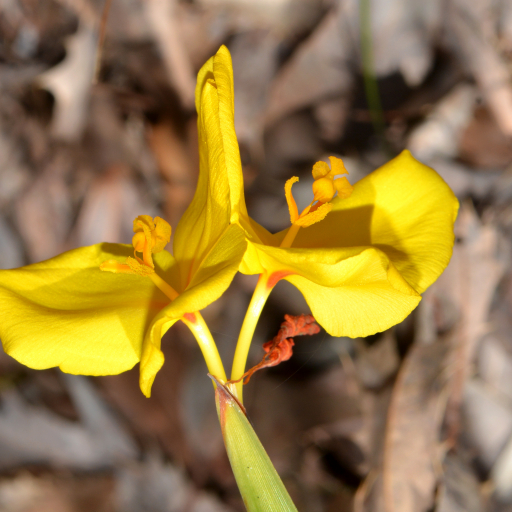
Known famously as the Yellow Purple-flag, Patersonia umbrosa is a sun-drenched paradox of the Western Australian wilderness. While most of its cousins in the Patersonia genus bloom in deep indigos and violets, this particular species (specifically the variety xanthina) brings a vivid burst of lemon-yellow to the scrubland. It is a resilient, clumping beauty that mimics the look of a wild Iris while carrying the untamed spirit of the bush.
🔍 How to Identify
- 🗡️ Sword-like Foliage: The plant forms a dense, architectural clump of stiff, grey-green leaves that resemble ornamental grass or Iris blades.
- 📐 Triangular Blooms: It features striking flowers with three large, delicate petals that form a distinct triangular shape, looking almost like crinkled silk.
- 🌾 Dark Bracts: The flowers emerge from dark, almost black, sheath-like bracts at the top of tall, wiry stems, creating a sharp color contrast.
🏡 In Your Garden
- 🏜️ The Drainage Secret: Like many Western Australian natives, this plant is highly sensitive to "wet feet." It thrives in sandy or gravelly soils where water moves quickly; heavy clay will likely cause the roots to fail.
- 🦢 The "One-Day" Wonder: Don't be alarmed if a flower withers by sunset. Each individual bloom lasts only a single day, but the plant is a prolific producer, sending up a constant succession of new "flags" throughout the spring.
- 🔥 Fire Survivor: In the wild, this plant is adapted to fire. It grows from a tough, woody underground rhizome, allowing it to resprout with vigor even after a summer bushfire has swept through the area.
⚠️ Safety & Toxicity
- 🐾 Non-Toxic Status: Patersonia umbrosa is generally considered safe and non-toxic for humans, dogs, and cats, making it a "worry-free" addition to family backyards.
- 🧤 Leaf Edges: While not chemically toxic, the long, stiff leaves can have slightly sharp edges. Handling the plant without gloves during heavy pruning might lead to minor "paper-cut" style skin irritations.
✨ Fun Fact
The genus was named after William Paterson, a Scottish soldier and botanist who was one of the early Lieutenant Governors of New South Wales. Despite his busy military career, he was obsessed with sending Australian seeds back to England to see if they would grow in the cold British climate!

Detailed Care Instructions

Some plants require more regular watering than others, which should be done every few days. It's critical to maintain the soil moist all of the time. The water requirements of the same plant placed in pots with varying sizes will differ. Because the water in the smaller pot evaporates faster than the water in the larger pot, it will require more watering. Regardless of pot size, the surface should constantly be maintained moist.








