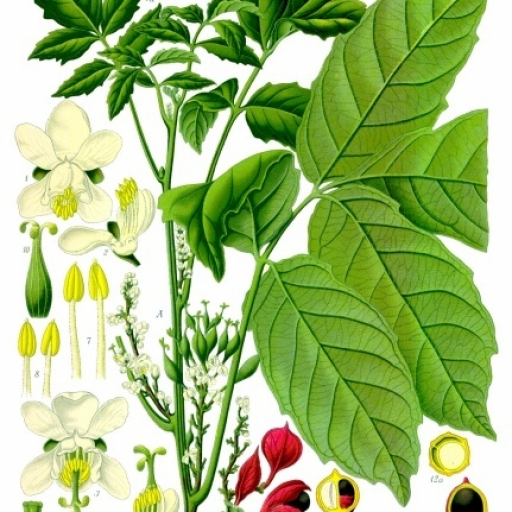
Plant Overview
Known as the "Eye of the Amazon," Paullinia cupana—commonly called Guarana—is a climbing vine famous for its high-energy seeds. Native to the lush rainforests of Brazil, this plant is deeply woven into the folklore of the Sateré-Mawé tribe, who believe the plant originated from the eye of a divine child. Beyond its mythical roots, it is a powerhouse of natural stimulation, containing twice the caffeine concentration of a standard coffee bean.
🔍 How to Identify
- 👁️ The "Eyeball" Fruit: The most striking feature is the fruit cluster. When the bright orange-to-red capsules ripen and split open, they reveal a white fleshy interior and a dark seed, making the plant look like it is covered in dozens of staring human eyes.
- 🌿 Divided Foliage: The leaves are large, alternate, and compound, usually composed of five oval-shaped leaflets with serrated edges and deep green veins.
- 🧗 Woody Habit: As a liana (woody vine), it uses its tendrils to scale the canopy. In its natural habitat, it can reach lengths of over 10 meters, though it remains much smaller when cultivated in pots.
🏡 In Your Garden
- 🌦️ Tropical Demands: Because it hails from the Amazon, Guarana is not a "set it and forget it" plant for most climates. It craves high humidity and temperatures that never drop below 60°F (15°C). If you live in a dry area, frequent misting or a greenhouse environment is essential to prevent leaf drop.
- 🏗️ Supportive Structure: Unlike self-supporting shrubs, this vine is a natural climber. It requires a sturdy trellis or fence to thrive. Gardeners should avoid frequent transplanting, as its root system is sensitive; choose a permanent, well-draining spot with acidic soil right from the start.
⚠️ Safety & Toxicity
- ☕ Caffeine Sensitivity: While the seeds are widely used in teas and sodas, they are extremely potent. Ingesting raw seeds in large quantities can lead to jitters, insomnia, or heart palpitations in humans.
- 🐾 Pet Warning: The seeds contain high levels of caffeine and theobromine, both of which are highly toxic to dogs, cats, and horses. Keep this plant and its fallen fruit well out of reach of curious pets.
✨ Fun Fact
Guarana is often called "the king of stimulants" because its caffeine is bound to tannins and phenols. This causes the energy to be released into the human body much more slowly than coffee, providing a long-lasting "alert" feeling without the typical caffeine crash.

Detailed Care Instructions
To grow Paullinia cupana, commonly known as guarana, you can follow these steps:
- Obtain seeds or seedlings: Purchase Paullinia cupana seeds or seedlings from a nursery or reputable online store.
- Choose a suitable location: Select a planting location that receives full sun or partial shade. Guarana prefers a warm and humid climate, so choose a spot with good air circulation.
- Prepare the soil: Guarana thrives in well-draining soil. Amend the soil with organic matter, such as compost, to improve fertility and drainage.
- Sow the seeds or plant seedlings: If starting from seeds, soak them in warm water overnight to improve germination. Plant the seeds 1/4 inch deep in the soil or transplant seedlings according to their recommended spacing.
- Maintain optimal moisture levels: Guarana requires consistent moisture. Keep the soil evenly moist but not waterlogged. Water deeply and regularly, especially during dry spells.
- Provide support: Guarana is a high-climbing vine that requires support to grow. Install a trellis, fence, or other sturdy structure for the plant to climb on.
- Fertilize adequately: Apply a balanced fertilizer, such as a slow-release granular fertilizer, according to the package instructions. Repeat the application every few months during the growing season.
- Prune as needed: Prune the plants to manage their growth and shape. Regular pruning helps control the size, encourage branching, and promote air circulation.
- Control pests and diseases: Monitor the plants regularly for pest infestations and diseases. Common pests include aphids, spider mites, and whiteflies. Use organic or chemical insecticides as needed.
- Harvest the fruits: Guarana fruits are typically ready for harvest when they turn red. After harvesting, open the fruits and remove the seeds. Clean and dry the seeds before using them for consumption or further propagation.
Remember that growing guarana might require specific conditions and care depending on your region's climate and local growing conditions.
When watering this particular plant, it is important to ensure that the soil is moist but not waterlogged. It is usually recommended to water it once a week, but this may vary depending on the climate and humidity in the environment. Before watering, check the top layer of the soil to make sure it is dry to the touch. When watering, pour water slowly and evenly over the soil, making sure to avoid getting water on the leaves or stem. It is best to water in the morning, as this allows the plant to absorb the water throughout the day and reduces the risk of fungal growth. It is important not to overwater, as this can cause root rot and other issues for the plant. If the plant is in a pot, make sure it has good drainage to avoid water buildup at the roots.
To fertilize this plant, first make sure it is planted in a well-draining soil mixture and watered thoroughly before fertilization. Choose a fertilizer that is balanced or higher in phosphorus (the middle number on the label). Dilute the fertilizer according to the package instructions and apply it to the soil around the plant's root zone, but avoid getting the fertilizer on the leaves or stems. Fertilize the plant every 2-4 weeks during the growing season (spring and summer), but reduce or eliminate fertilization during the dormant period (fall and winter).
Paullinia Cupana plants thrive in well-draining soil that is rich in nutrients. The soil should be slightly acidic with a pH range of 5.5-6.5. A good mix for this plant would be a mixture of peat moss, perlite, and vermiculite. This type of soil will allow for proper drainage while retaining enough moisture for the plant. It is also important to avoid using soil that contains high levels of clay or sand as this can prevent the plant from absorbing nutrients and water properly. Additionally, adding in a slow-release fertilizer will provide the plant with the necessary nutrients for healthy growth. It is recommended to repot the plant every 2-3 years to replace the soil and ensure that the plant has enough space to grow.
- Gather materials: To propagate Paullinia Cupana, you will need pruning shears, rooting hormone, a container, soil, and water.
- Prepare the cutting: Using pruning shears, cut a healthy stem from the plant, making sure the stem is at least 6 inches long. Trim off any leaves or buds from the bottom half of the stem.
- Apply rooting hormone: Dip the cut end of the stem into rooting hormone. This will help the plant develop roots.
- Plant the cutting: Fill a container with soil and make a hole in the soil with your finger or a pencil. Insert the stem of the cutting into the hole and press the soil around it.
- Water: Water the soil around the cutting, making sure it is evenly moist but not waterlogged.
- Provide humidity: Cover the container with a plastic bag or a clear plastic lid to provide humidity. This will help the cutting develop roots.
- Monitor growth: Keep an eye on the cutting, checking it every few days. Make sure the soil remains moist and the plastic cover is not too humid. When you see new growth, you can remove the plastic cover and continue to care for the plant as it grows.








