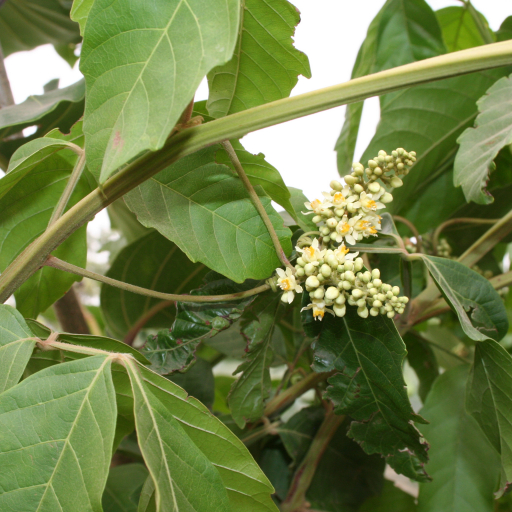
Plant Overview
Often called "Bread and Cheese" or the "Winged Paullinia," this vigorous woody vine is a master of the tropical canopy. Native to both tropical Africa and the Americas, it has been woven into the fabric of local cultures for centuries, serving as everything from a sturdy construction material to a potent tool for traditional fishing.
🔍 How to Identify
- 🍃 The Winged Rachis: The most telltale sign is the "wings" on the leaf stalk. The stem between the leaflets has thin, leafy borders that make the stalk look flattened and green.
- 🌿 Leaf Pattern: It typically displays a "pinnate" arrangement with five leaflets—two pairs and one terminal leaf at the tip. The edges are usually coarsely toothed.
- 🎈 Pear-Shaped Fruit: It produces striking, leathery capsules that turn a vibrant red or orange-brown when ripe. These pods eventually split open to reveal shiny black seeds partially covered in a white fleshy coating.
🏡 In Your Garden & Wild
- 🧗 A Vigorous Climber: As a woody liana, Paullinia pinnata uses spiraling tendrils to hitchhike onto neighboring trees. If grown in a garden, it needs a heavy-duty trellis or fence; otherwise, it will quickly turn into a tangled, ground-hugging thicket.
- 🌞 Tropical Requirements: This plant thrives in high humidity and bright, filtered sunlight. It is not frost-tolerant and prefers rich, loamy soil that mimics the forest floor. It is often used in ecological restoration because it provides excellent cover for birds and small mammals.
⚠️ Safety & Toxicity
- 🚫 High Toxicity: The plant contains high levels of saponins and tannins. While it has been used in traditional medicine, it is considered toxic if ingested without expert preparation.
- 🐾 Pet & Aquatic Warning: It is particularly dangerous to pets and extremely toxic to fish. Avoid planting it near decorative ponds or areas where runoff could enter aquatic ecosystems, as the chemicals can interfere with the way fish "breathe" through their gills.
✨ Fun Fact
Paullinia pinnata is famously known as a "fish poison." Traditional hunters crush the stems and roots and toss them into slow-moving water. The released chemicals stun the fish, causing them to float to the surface for easy gathering, but the fish remain safe for human consumption once cooked!

Detailed Care Instructions
To grow Paullinia Pinnata plant, also known as guarana, follow these steps:
- Purchase seeds or seedlings: Look for reputable nurseries or botanical stores where you can find Paullinia Pinnata seeds or seedlings. Ensure that you choose healthy specimens.
- Prepare the soil: Guarana requires well-draining soil with a pH level between 4.5 and 5.5. Mix organic matter such as compost or peat moss into the soil to enhance its fertility.
- Plant the seeds or seedlings: If planting seeds, soak them in water overnight before planting. Plant them about 1 inch deep in small pots or directly in the ground, leaving a space of about 6 feet between each plant. If using seedlings, gently transfer them to the prepared soil, ensuring they are properly rooted.
- Provide the right growing conditions: Guarana thrives in warm, humid climates. Choose a location with partial shade, as direct sunlight can harm the plant. Ensure the area has good air circulation and protection from strong winds.
- Watering: Keep the soil consistently moist, but not waterlogged. Water the plant regularly, especially during dry periods. Avoid overwatering, as this can lead to root rot.
- Fertilization: Apply a balanced slow-release fertilizer during the growing season to provide essential nutrients. Follow the manufacturer's instructions for dosage.
- Pruning: Regularly prune the plant to maintain its shape and promote healthy growth. Remove dead or dying leaves and branches to prevent disease.
- Trellising: Since guarana is a climbing vine, you may need to provide a trellis or support for it to climb. This can be a stake or a sturdy structure that the plant can wrap its tendrils around.
- Harvesting: The plant typically takes around three to four years to produce fruit. Harvest the ripe guarana fruit by hand, which is when the fruits turn from green to a bright red color. Open the fruit and collect the seeds, which are typically associated with guarana's caffeine content.
- Storage: Properly dry the seeds and store them in a cool, dark, and dry place for future use or propagation.
Note: Growing guarana may require specific conditions depending on your location and climate. It is always a good idea to consult local gardening resources or experts to get personalized advice for your area.

Place in a window with dappled sun or a spot in the middle of a room. Or directly in a window facing west or east.

Paullinia Pinnata plant has shiny, green leaves and requires a consistent watering schedule. To water this plant, it is important to check the soil moisture level regularly. This can be done by sticking a finger about an inch deep into the soil. If the soil feels dry, it is time to water the plant.
When watering, it is important to water the soil instead of the leaves. This can be done by pouring water slowly and evenly around the base of the plant. Care should be taken to avoid overwatering as this can lead to root rot.
In general, Paullinia Pinnata plant should be watered once or twice a week depending on the humidity and temperature of the environment. During hotter months or if the plant is in direct sunlight, it may require more frequent watering.
Finally, it is important to give the plant time to drain excess water after watering. Make sure that the pot has drainage holes and that any excess water has a chance to escape before placing the plant back in its location.
To fertilize this plant, use a balanced fertilizer with equal parts nitrogen, phosphorus, and potassium. Apply the fertilizer once every two months during the growing season, which is typically spring and summer. Be mindful not to over-fertilize, as it can damage the roots and the overall health of the plant. Make sure the soil is moist before applying the fertilizer, and avoid getting the fertilizer on the leaves or stem of the plant.
Paullinia Pinnata plant is a vine that belongs to a certain plant family. It requires a specific type of soil that is rich in nutrients and moisture. The soil should be well-draining, but not too loose or sandy. It should also be slightly acidic with a pH of around 6.0 to 6.8. The ideal soil for this plant should be a mixture of organic matter, such as compost or aged manure, and perlite or vermiculite to improve drainage. Avoid using heavy garden soils with a high clay content, as this will not allow the drainage and aeration that this plant requires. Adding a layer of mulch around the plant will help to retain moisture and prevent weeds from growing. This plant can be grown in containers, but the soil should still meet the same requirements as for plants grown in the ground. It is essential to monitor the moisture levels of the soil, as the plant does not like to dry out completely or sit in too much water.
Paullinia pinnata can be propagated by using its stem cuttings. To do this, select a healthy branch and cut a section of it that is approximately 6 inches long. Remove the leaves from the bottom 2-3 inches of the cutting. Dip the cut end of the stem into rooting hormone powder.
Prepare a potting mixture by mixing equal parts of sand and peat moss. Fill a small pot with the potting mixture and make a hole in the center. Place the stem cutting into the hole and gently press the potting mixture around it.
Water the cutting and keep the soil moist but not waterlogged. Cover the pot with a plastic bag or a plastic wrap to create a humid environment. Keep the pot in a bright, indirect sunlight location.
After 4-6 weeks, check for root development. Once roots have formed, remove the plastic cover and transplant the cutting into a larger pot or the ground. It is important to make sure that the plant has well-draining soil and is watered regularly.








