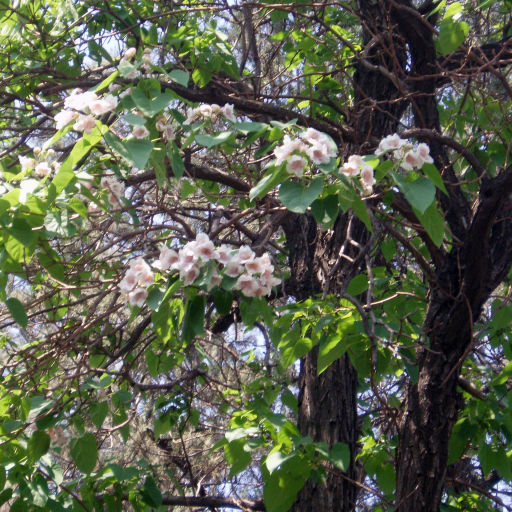
Plant Overview
Known as the Fortune’s Empress Tree or the Dragon Tree, Paulownia fortunei is a fast-growing marvel of the botanical world. Originating from East Asia, this tree is legendary for its ability to transform from a tiny sapling into a towering, shade-providing giant in just a few seasons. It is deeply rooted in Chinese culture, where it was traditionally planted upon the birth of a daughter, only to be harvested for her wedding chest years later.
🔍 How to Identify
- 🌸 Foxglove-like Blooms: In early spring, before the leaves appear, the tree is smothered in upright clusters of trumpet-shaped flowers. They are typically creamy white or pale lavender with distinct purple spots and yellow stripes inside the throat.
- 🍃 Oversized Velvety Leaves: The foliage is massive and heart-shaped (cordate), sometimes reaching over 20 inches across on young shoots. The leaves have a soft, fuzzy texture that feels almost like suede to the touch.
- 🌰 Woody Seed Capsules: After flowering, the tree produces pointed, egg-shaped woody pods. When they ripen and crack open, they release thousands of tiny, paper-thin winged seeds that dance on the wind.
🏡 In Your Garden
- 🚀 The "Instant" Tree: If you need shade quickly, this is your candidate. It is one of the fastest-growing trees on the planet, often putting on 10 feet of height in a single year. However, its speed comes with a trade-off; the wood can be brittle, so it should be planted away from areas where falling branches might hit structures during storms.
- ✂️ The Stooling Technique: Many gardeners practice "pollarding" or "coppicing"—cutting the tree back to the ground every winter. This prevents flowering but forces the plant to produce gargantuan, prehistoric-looking leaves that create a dramatic tropical effect in temperate climates.
⚠️ Safety & Toxicity
- ✅ Non-Toxic: Paulownia fortunei is generally considered safe and non-toxic for humans, cats, and dogs. It is often used in reforestation because it is so hardy.
- 🚫 Invasive Warning: While not "poisonous," this tree is considered a "weedy" species in some regions. Its prolific seed production and rapid growth allow it to outcompete native plants, so check your local environmental guidelines before planting it near wild woodlands.
✨ Fun Fact
In East Asia, the wood of the Paulownia is known as "Aisari" or "Silver Wood." It is incredibly lightweight yet fire-resistant and resonant, making it the prized material for crafting traditional musical instruments like the Guqin and the Koto.

Detailed Care Instructions
To grow Paulownia fortunei, follow these steps:
- Choose a suitable location: Paulownia fortunei thrives in full sun, so select a spot in your garden that receives at least 6 hours of direct sunlight per day. The soil should be well-draining.
- Prepare the soil: Dig a hole that is slightly larger and deeper than the root ball of the plant. Amend the soil with organic matter like compost to improve its fertility and drainage.
- Planting: Gently remove the Paulownia fortunei plant from its container and place it in the prepared hole. Ensure that the top of the root ball is level with or slightly above the surrounding soil. Backfill the hole with soil, gently firming it around the roots.
- Watering: Water the plant thoroughly after planting to settle the soil and eliminate any air pockets around the roots. Keep the soil evenly moist, but avoid overwatering, as Paulownia doesn't tolerate waterlogged conditions.
- Mulching: Apply a layer of organic mulch, such as wood chips or shredded bark, around the base of the plant. Mulching helps to conserve moisture, suppress weed growth, and regulate soil temperature.
- Pruning: Prune any damaged or dead branches, as well as any suckers or shoots that may emerge from the base of the plant. Pruning is best done during dormancy in late winter or early spring.
- Fertilizing: Apply a balanced, slow-release fertilizer in early spring to promote healthy growth. Follow the manufacturer's recommendations for application rates.
- Protect from frost: Young Paulownia fortunei plants are sensitive to frost and cold temperatures. If you live in an area with harsh winters, consider protecting the plant with a frost cloth or by planting it in a sheltered location.
- Staking: If the plant is tall and prone to leaning or toppling over, it may benefit from staking for support. Use soft ties to loosely secure the plant to a sturdy stake, ensuring not to restrict growth.
- Regular maintenance: Monitor the plant for pests and diseases and take appropriate measures to control them. Regularly check the soil moisture levels and water as needed. Prune for shaping and to remove any dead or diseased branches.
By following these steps and providing proper care, you can successfully grow a Paulownia fortunei plant in your garden.

Place in a bright room that is sun drenched almost all day. Or directly in a south-facing window.

To water the Paulownia Fortunei plant effectively, follow these steps:
1. Observe the plant: Pay attention to the soil's moisture level before watering. Insert your finger about an inch deep into the soil to check for dryness. If it feels dry, it's time to water.
2. Choose the right time: It is best to water the plant either early in the morning or late in the evening when the temperatures are cooler. Avoid watering during the peak heat of the day, as it can lead to excessive evaporation.
3. Prepare the watering equipment: Use a watering can or a hose with a gentle spray nozzle to water the plant. This will ensure a steady and even distribution of water.
4. Water at the base: Direct the water towards the base of the plant, just above the soil. This method helps the water reach the roots directly, enhancing the plant's uptake.
5. Be mindful of the soil type: Consider the type of soil in which the plant is growing. If the soil is sandy, water more frequently but in smaller amounts. If the soil is heavy or clay-based, water less often but deeply to allow for proper drainage.
6. Avoid overwatering: Ensure you don't overwater the plant, as this can lead to root rot and other issues. Once the water begins to accumulate on the surface, stop watering and allow it to penetrate into the soil.
7. Monitor the plant: Check the plant regularly for signs of either underwatering or overwatering. Wilting leaves indicate the need for more water, while yellowing or moldy soil may suggest excessive moisture.
8. Consider environmental factors: Take into account external factors such as weather conditions and humidity levels. During hot and dry periods, the plant may require more frequent watering, while rainy or humid periods may require less water.
9. Maintain a watering schedule: Establish a consistent watering routine based on the plant's needs. Monitor the soil moisture regularly and adjust your watering schedule accordingly.
10. Remember to stop during dormant periods: When the plant goes into a dormant phase, typically during winter, reduce the frequency of watering. The plant requires less water during this time to prevent waterlogging and potential damage to the roots.
Following these steps will help ensure proper watering practices for your Paulownia Fortunei plant, promoting healthy growth and overall plant vitality.
- Begin fertilization of the Paulownia Fortunei plant during the spring season when new growth starts to appear.
- Choose a balanced, slow-release fertilizer with a formulation like 10-10-10, 14-14-14, or something similar for optimal results.
- Prior to applying the fertilizer, ensure that the soil around the plant is moist, but not overly saturated.
- Spread the fertilizer evenly around the base of the plant, avoiding direct contact with the stem or leaves.
- Use the recommended amount of fertilizer according to the packaging instructions, typically based on the plant's size and age.
- Gently work the fertilizer into the top few inches of soil using a hand cultivator or rake.
- After fertilizing, water the plant thoroughly to help distribute and activate the nutrients.
- Monitor the plant's response to the fertilizer over the next few weeks. If leaves turn yellow or exhibit signs of burn, dilute the fertilizer with additional water during subsequent applications.
- Repeat the fertilization process every four to six weeks during the growing season to maintain the plant's health and vigor.
- Cease fertilization in late summer to allow the plant to naturally enter a period of dormancy in preparation for the winter season.
Paulownia Fortunei is a fast-growing tree that requires well-drained and fertile soil to thrive. The soil should have a pH level ranging from slightly acidic to slightly alkaline, ideally between 5.5 and 7.5. It is recommended to use loamy or sandy soil with good organic matter content. The soil should retain moisture adequately but must also offer excellent drainage to prevent waterlogging. Additionally, the soil should have good aeration to allow oxygen to reach the roots.
It is beneficial to amend the soil with organic matter such as compost, well-rotted manure, or peat moss prior to planting. This helps improve soil structure, moisture retention, and nutrient availability. Adding organic matter also enhances the soil's fertility, which is important for the healthy growth of Paulownia Fortunei.
Before planting, ensure that any potential soil drainage issues are addressed by improving the soil's structure or creating proper drainage systems. It is also recommended to conduct soil tests to assess the nutrient levels and pH of the soil. This can help determine if any additional amendments, such as lime or sulfur, are required to adjust the soil's pH.
In summary, Paulownia Fortunei thrives best in well-drained, loamy or sandy soil with good organic matter content. The soil should have a pH level between 5.5 and 7.5 and provide adequate aeration for the roots. Proper soil preparation, including adding organic matter and addressing drainage issues, will create an ideal growing environment for the Paulownia Fortunei plant.
- Selecting a healthy parent plant: Start by choosing a robust and disease-free Paulownia Fortunei parent plant from which you want to propagate new plants. Ensure that the parent plant is mature and exhibiting desirable traits.
- Preparing the cuttings: During the late winter or early spring, gather semi-hardwood cuttings from the parent plant. These cuttings should be about 6-8 inches long and possess a diameter of approximately ¼ to ½ inch. Remove any leaves from the lower part of the cutting.
- Hormone treatment: To enhance rooting, apply a rooting hormone to the lower end of the cutting. This hormone will encourage the development of roots. Follow the instructions on the specific rooting hormone product carefully.
- Preparing the planting medium: Prepare a well-draining and nutrient-rich planting medium using a mix of peat moss, perlite, and vermiculite. Fill small pots or propagation trays with this medium, ensuring it is moist but not overly saturated.
- Inserting the cuttings: Make a small hole in the planting medium using a pencil or a dibber and insert the lower end of the cutting into the hole. Firmly press the medium around the cutting to provide stability.
- Providing appropriate environmental conditions: Place the potted cuttings in a warm and humid environment, such as a greenhouse or a propagator. Maintain a temperature of around 70-80°F (21-27°C) and ensure consistent moisture levels in the soil.
- Mist propagation: To maintain high humidity around the cuttings, mist them regularly using a spray bottle. This will prevent excessive moisture loss and facilitate the development of roots.
- Root development: Over the next few weeks, monitor the cuttings for the development of roots. Avoid disturbing the cuttings during this period to allow uninterrupted root growth. Gently tug on the cuttings after a few weeks to check for resistance, indicating root formation.
- Transplanting the rooted cuttings: Once the cuttings have established a good root system, typically within 6-8 weeks, they are ready for transplanting. Carefully remove each cutting from its pot and transplant it into individual containers using well-draining soil.
- Nursery care: Place the newly transplanted plants in a sheltered area with partial shade, protecting them from harsh direct sunlight and strong winds. Ensure regular watering and monitor for any signs of pests or diseases.
- Gradual adaptation: As the rooted cuttings continue to grow, gradually acclimate them to outdoor conditions by exposing them to increasing periods of sunlight and gradually reducing their dependence on artificial humidity.
By following these steps, you can successfully propagate Paulownia Fortunei plants and potentially grow a new generation of these beautiful trees.








