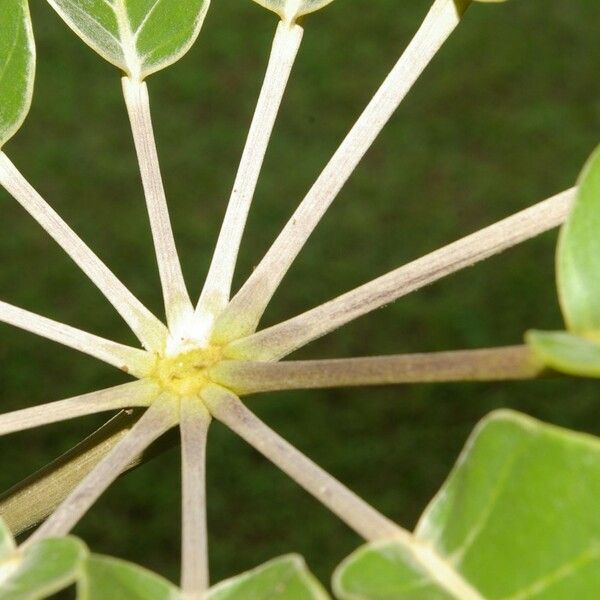
Plant Overview
Often known as the Rose Pavonia or the Schiede's Pavonia, this delicate member of the Mallow family is the shy, woodland cousin of the flamboyant Hibiscus. Native to the lush tropical forests of Mexico and Central America, it is frequently called Mozote in Spanish—a name it earned not for its flowers, but for its "hitchhiking" seeds that cling stubbornly to the fur of passing animals. It is a hardy, understated beauty that brings a touch of wild, tropical grace to shady garden corners.
🔍 How to Identify
- 🌸 The Bloom: Small, bell-shaped flowers that range from pale pink to a soft rose color. Unlike their Hibiscus relatives, these blooms often remain partially closed, giving them a modest, "sleepy" appearance.
- 🍃 The Foliage: The leaves are broadly ovate (egg-shaped) with noticeably jagged or serrated edges and a slightly fuzzy texture on the underside.
- 🧶 The "Hitchhikers": After the flower fades, it produces small, dry fruits equipped with tiny, hooked spines designed to snag onto clothing or pet fur.
🏡 In Your Garden
- ☁️ The Understory Vibe: Because it evolved on the forest floor, this plant thrives in dappled light. It’s the perfect solution for those "difficult" shady spots where sun-loving tropicals refuse to bloom.
- 🌱 Low Maintenance Roots: It is remarkably resilient and can tolerate various soil types, but it prefers consistently moist, well-draining earth. It doesn't like to dry out completely, as it mimics the humid environments of the rainforest.
- 🐝 Pollinator Magnet: While the flowers are small, they are rich in nectar and are a favorite for local bees and butterflies who appreciate the long blooming season.
⚠️ Safety & Toxicity
- ✅ Generally Safe: Pavonia schiedeana is not known to be toxic to humans, dogs, or cats. It is a "friendly" inhabitant of a family garden.
- 🐕 Fur Tanglest: The primary "danger" is mechanical rather than chemical. If you have a long-haired dog, be mindful that the sticky seed pods (the "Mozote") can cause stubborn mats in their fur that require brushing or clipping to remove.
✨ Fun Fact
The name "Mozote" is used throughout Central America for various plants with "sticky" seeds. Pavonia schiedeana is such an effective hitchhiker that it has successfully spread itself across almost every tropical region in the Americas just by "grabbing a ride" on migrating animals and travelers!

Detailed Care Instructions
To grow Pavonia Schiedeana, also known as butterfly mallow or cameo plant, follow these steps:
- Choose a suitable location: Make sure to select a suitable spot in your garden or indoors that receives full sun or partial shade. The plant thrives in warm conditions and can tolerate some drought.
- Prepare the soil: Ensure that the soil is well-drained and fertile. You can improve the soil quality by adding organic matter such as compost or well-rotted manure.
- Planting: Dig a hole that is slightly larger than the plant's root ball. Place the plant in the hole, making sure the top of the root ball is level with the soil surface. Backfill the hole with soil, gently firm it around the plant, and water thoroughly.
- Watering: Water the plant thoroughly after planting. Pavonia Schiedeana prefers regular watering, but it is important not to overwater to avoid root rot. Allow the top inch of soil to dry out between waterings.
- Mulching: Add a layer of organic mulch around the base of the plant to help retain moisture, suppress weeds, and protect the roots from extreme temperatures.
- Fertilizing: Apply a slow-release, balanced fertilizer in early spring and mid-summer to provide essential nutrients. Be sure to follow the dosage instructions on the fertilizer package.
- Pruning: Prune the plant in early spring before new growth emerges to remove any dead or damaged branches. You can also lightly prune throughout the year to maintain a desired shape and remove spent flowers.
- Pest and disease control: Pavonia Schiedeana is generally resistant to pests and diseases, but it can occasionally face issues like aphids or spider mites. Regularly inspect the plant for any signs of infestation and use appropriate organic pesticides if necessary.
- Propagation: You can propagate Pavonia Schiedeana through cuttings or by collecting and planting its seeds. For cuttings, take a 4-6 inch stem tip cutting, remove the lower leaves, and place it in a well-draining rooting medium. Keep it moist and warm until roots develop.
By following these steps, you should be able to successfully grow Pavonia Schiedeana and enjoy its beautiful flowers.

Place in a bright room that is sun drenched almost all day. Or directly in a south-facing window.

Pavonia schiedeana is a perennial plant that belongs to the Malvaceae family. It is native to Central and South America and is characterized by its beautiful flowers and ornamental leaves. To ensure the proper growth and health of this plant, it is essential to provide it with adequate watering.
Here is a detailed guide on watering Pavonia schiedeana:
1. Understanding the watering requirements: Pavonia schiedeana prefers moist, well-draining soil. It is crucial to maintain a balance and avoid overwatering or underwatering the plant. While it needs consistent moisture, excessive water can lead to root rot.
2. Check the soil moisture: Before watering, it is important to check the soil moisture to determine whether the plant needs watering. Insert your finger about 2-3 inches into the soil, near the root zone. If the top few inches feel dry, it's time to water the plant.
3. Watering schedule: During the growing season, which typically spans from spring to late summer, Pavonia schiedeana requires regular watering. Aim to water the plant consistently, keeping the soil evenly moist but not waterlogged.
4. Watering methods: One effective method for watering Pavonia schiedeana is using a watering can or a garden hose with a gentle spray nozzle. This helps in providing a controlled and even distribution of water, preventing excessive saturation of the soil.
5. Watering technique: It is advisable to water the plant slowly and deeply. This ensures that the water reaches the root zone, encouraging healthy root development. Avoid splashing water on the foliage, as it can promote the growth of fungal diseases.
6. Consider the weather conditions: Adjust the watering frequency based on the prevailing weather conditions. During periods of high temperatures or drought, the plant may require more frequent watering to prevent dehydration. Conversely, reduce the watering frequency during colder or rainy periods.
7. Mulching: Applying a layer of organic mulch around the base of the plant can help retain moisture in the soil. This reduces water evaporation and helps maintain a more consistent moisture level for the Pavonia schiedeana plant.
8. Monitoring plant response: Pay attention to the plant's response to watering. If leaves start to wilt or appear dull, it may indicate underwatering. On the other hand, yellowing leaves or root rot can be signs of overwatering. Adjust the watering routine accordingly to maintain plant health.
Remember that every plant has its own specific needs, so it is recommended to observe the Pavonia schiedeana plant carefully and make adjustments to the watering routine based on its individual requirements.
To fertilize Pavonia Schiedeana plant, follow these instructions:
- Choose a well-balanced fertilizer specifically designed for indoor plants or flowering plants.
- Dilute the fertilizer according to the package instructions. Typically, it is recommended to use half the recommended strength for indoor plants.
- Water the plant thoroughly before applying the fertilizer to ensure proper absorption.
- Apply the diluted fertilizer directly to the soil around the base of the plant. Avoid getting it on the leaves or flowers.
- Use a watering can or a sprayer to evenly distribute the fertilizer.
- Repeat the fertilization process every four to six weeks during the active growing season, which is typically spring and summer.
- Monitor the plant's response to fertilization. If you notice any signs of fertilizer burn, such as wilting or browning of leaves, reduce the frequency or strength of fertilization.
- Regularly flush the soil with plain water to prevent a buildup of salts from the fertilizers.
- During the dormant period in fall and winter, reduce or stop fertilizing as the plant's growth slows down.
Remember to always follow the specific instructions provided by the fertilizer manufacturer for the best results.
The ideal soil for the Pavonia Schiedeana plant should be well-draining and have a slightly acidic to neutral pH level. This type of soil will provide the necessary structure and aeration for the plant's roots to thrive. It is recommended to use a combination of organic matter such as compost or leaf mold mixed with a sandy or loamy soil. This mixture will ensure good moisture retention while preventing waterlogging that can harm the plant's root system. Additionally, incorporating perlite or vermiculite can improve soil drainage and prevent compaction. Overall, a loose and fertile soil composition will support healthy growth and development of the Pavonia Schiedeana plant.
Pavonia schiedeana, a plant native to Mexico, can be propagated through various methods such as seed propagation, stem cuttings, or division.
- Seed Propagation: The first step is to collect mature seeds from a healthy Pavonia schiedeana plant. Gently remove the seeds from the fruit or seed pods and place them in a container. Since these seeds have a hard outer shell, it's beneficial to scarify them lightly using sandpaper or a file. This process helps to break the seed coat, allowing moisture to penetrate for germination. After scarification, soak the seeds in warm water for about 24 hours.
Prepare a well-draining potting mix by combining equal parts of peat moss and perlite. Fill small pots with the prepared mix, leaving enough space for seedling growth. Place one or two scarified seeds on the soil surface of each pot, covering them lightly with a thin layer of soil.
To provide optimal conditions for germination, keep the pots in a warm and bright location, maintaining a consistent temperature of about 70-75°F (21-24°C). Mist the soil regularly to keep it moist but avoid overwatering. Germination usually takes around 2-3 weeks, but it can vary. Once the seedlings develop several sets of true leaves, they can be transplanted into individual pots or a garden bed.
- Stem Cuttings: Select a healthy and mature Pavonia schiedeana plant with strong, non-flowering stems for cutting propagation. Using a sharp and sterilized knife or pruning shears, take 4-6 inches (10-15 cm) long cuttings from the tip or middle section of the stem. Remove any lower leaves, leaving only a couple of leaves at the top.
Prepare a well-draining rooting medium by mixing equal parts of perlite and peat moss. Moisten the medium slightly, ensuring it's moist but not waterlogged. Dip the cut end of each stem cutting in a rooting hormone powder to promote root development and tap off any excess.
Make holes in the prepared rooting medium using a pencil, and gently insert the stem cuttings into the holes, burying at least half of the cutting. Firmly press the medium around the stem to ensure good contact.
Place the pots or trays with cuttings in a warm and bright location, away from direct sunlight. Maintain a consistent temperature of around 70-75°F (21-24°C) and mist the cuttings regularly to maintain high humidity. After a few weeks, new roots should start forming. Once the roots are well-developed, the new plants can be potted individually or transplanted to a suitable garden location.
- Division: Division is suitable for Pavonia schiedeana plants that have formed clumps or have multiple growing points. This method is typically done in early spring or late fall when the plant is dormant.
Carefully dig up the clump or rootball of the plant, ensuring not to damage the roots too much. Gently separate the plant into smaller sections, ensuring that each section has a healthy root system and at least one growing point or shoot.
Replant the divided sections immediately into well-draining soil, at the same depth as they were before. Water the newly planted divisions thoroughly and keep them in a shaded area for a few days to allow them to recover from the shock of division.
Regular watering and providing appropriate growing conditions will help the newly propagated plants establish themselves and grow into mature Pavonia schiedeana plants.








