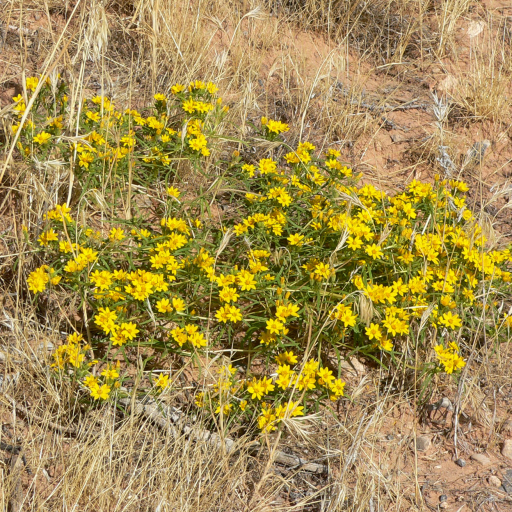
Plant Overview
Often called "Manybristle Cinchweed" or simply "Chinchweed," this hardy desert annual is famous for transforming scorched southwestern landscapes into carpets of brilliant gold. It is most loved for its refreshing, lemon-like scent that fills the air after a heavy monsoon rain. Native to the Sonoran and Chihuahuan deserts, it is a master of timing, waiting for the perfect moment to burst into bloom.
🔍 How to Identify
- 🌼 Golden Blooms: Tiny, bright yellow flowers that resemble miniature daisies, usually appearing in dense, cheery clusters at the tips of the stems.
- 🍃 Scented Foliage: Narrow, thread-like green leaves that are dotted with small, translucent oil glands—the source of its potent citrus aroma.
- 📏 Low Mounding: It maintains a compact, "pincushion" growth habit, rarely reaching more than 8 inches in height but spreading wide across the soil.
🏡 In Your Garden
- ☀️ Heat Seeker: This plant thrives in "punishing" full sun; it actually relies on intense summer heat and rocky, well-draining soil to trigger its rapid growth cycle.
- 💧 Monsoon Specialist: In the wild, it is a "thermo-photo-periodic" plant, meaning it waits for the specific combination of late-summer heat and moisture to germinate.
- 🦋 Pollinator Magnet: The flowers provide a critical late-season nectar source for native bees and butterflies when many other desert plants have already finished blooming.
⚠️ Safety & Toxicity
- ✅ Safe Status: Pectis papposa is generally considered non-toxic to humans, dogs, and cats.
- 👃 Sensory Note: While safe, the essential oils are very strong. If you have sensitive skin, the concentrated oils from crushed leaves might cause mild irritation, and the intense scent can be overwhelming in enclosed spaces.
✨ Fun Fact
Indigenous peoples, including the Zuni and Tohono O’odham, historically used Cinchweed as a flavorful seasoning for corn and meats, and even crushed the plant to use as a natural deodorant and perfume.

Detailed Care Instructions
To grow Pectis papposa (also known as "chinchweed" or "false daisies"), follow these steps:
- Choose the right location: Pectis papposa prefers full sun, so select a spot in your garden that receives at least 6-8 hours of direct sunlight.
- Prepare the soil: The plant prefers well-draining soil with a pH range of 6.0-7.5. Amend the soil with organic matter like compost or aged manure to improve fertility and drainage.
- Sow seeds or transplant seedlings: Pectis papposa can be propagated from seeds or transplanted as seedlings. If starting from seeds, sow them directly in the prepared soil after the last frost date. If using seedlings, ensure they are well-rooted before planting them out.
- Water properly: Water the plants consistently to keep the soil slightly moist but not overly saturated. Allow the soil to dry out slightly between waterings to avoid waterlogged conditions.
- Provide occasional fertilization: Pectis papposa does not require heavy fertilization. However, you can occasionally feed the plants with a balanced, slow-release fertilizer during the growing season to provide them with necessary nutrients.
- Control weeds: Although Pectis papposa is known to suppress weed growth, it is still important to keep the area around the plants weed-free. Regularly remove any competing plants or weeds to prevent them from overtaking the Pectis papposa.
- Prune as needed: Pectis papposa does not require heavy pruning. However, you can lightly trim the plant to maintain its shape or remove any dead or damaged growth.
- Harvest seeds: If you wish to collect seeds for future planting, allow the flowers to develop seeds. Once the flowers dry and turn brown, gently collect the seeds.
Overall, Pectis papposa is a resilient and low-maintenance plant that is ideal for xeriscaping and naturalized landscapes.

Place in a bright room that is sun drenched almost all day. Or directly in a south-facing window.

Pectis papposa, commonly known as the ______ plant, requires careful attention when it comes to watering. Here are some detailed instructions on how to properly water this plant:
1. Soil type: Pectis papposa prefers well-draining soil that is slightly sandy or loamy. Ensure that the soil has good drainage, as excessive water retention can cause root rot.
2. Watering frequency: Water the plant deeply but infrequently. Allow the top few inches of soil to dry out slightly before watering again. The frequency will depend on the environmental conditions and the stage of the plant's growth. In general, watering once every 7-10 days during the growing season should suffice.
3. Observation: Regularly monitor the plant for signs of water stress. Look for wilting leaves or drooping foliage, as these indicate a need for water. However, be careful not to mistake natural plant behavior, such as slight leaf curling in response to heat or light, as a sign of dehydration.
4. Water quantity: When watering, aim to thoroughly moisten the root zone. Water slowly and evenly to allow the soil to absorb the moisture instead of letting it run off. It is important to avoid overwatering, as excessive moisture can lead to root rot.
5. Water source: Use room temperature or slightly lukewarm water when irrigating Pectis papposa. Avoid using cold water, as extreme temperature variations can shock the plant's roots. Additionally, it is recommended to use filtered or distilled water if the tap water in your area is heavily chlorinated or contains excessive minerals.
6. Seasonal adjustments: Adjust the watering frequency accordingly during different seasons. Pectis papposa may require less frequent watering during the dormant period or winter months when its growth rate slows down. In such cases, allow the soil to dry out more between waterings to prevent any potential harm caused by overwatering.
Remember, it is better to slightly underwater than overwater Pectis papposa. By following these detailed guidelines, you can ensure proper watering for the health and vitality of your plant.
To properly fertilize the Pectis Papposa plant, follow these instructions:
- Choose a balanced, all-purpose fertilizer with an NPK ratio of 10-10-10 or 20-20-20. This means the fertilizer contains equal amounts of nitrogen (N), phosphorus (P), and potassium (K).
- Dilute the fertilizer according to the manufacturer's instructions. Typically, a concentration of 1 teaspoon of fertilizer per gallon of water should suffice.
- Water the Pectis Papposa plant thoroughly to ensure the soil is moist before applying fertilizer. This prevents the roots from getting burned by the concentrated fertilizer.
- Pour the diluted fertilizer mixture around the base of the plant, avoiding direct contact with the leaves or stems. Slowly pour the mixture to allow it to penetrate the soil and reach the roots.
- Monitor the plant's response to fertilizer over time. If you notice any signs of overfertilization, such as browning or wilting leaves, reduce the frequency or concentration of fertilizer applications.
- Fertilize the Pectis Papposa plant every 4-6 weeks during the growing season (spring and summer). Reduce or halt fertilization during the dormant period (fall and winter).
- Always read and follow the instructions on the fertilizer packaging. Different fertilizers may have specific application guidelines based on the concentration and type of nutrients they provide.
Remember, it is essential to tailor fertilization to the specific needs and growth requirements of the Pectis Papposa plant to promote healthy growth and prevent damage.
Pectis Papposa plants thrive best in well-draining soil that is rich in organic matter. A suitable soil mix for this plant would consist of a combination of loam, sand, and perlite or pumice to ensure good drainage. Loam provides a balanced texture and nutrient content, while sand improves aeration and prevents waterlogging. Adding perlite or pumice further enhances drainage and prevents the soil from becoming compacted.
Organic matter such as compost or well-rotted manure should be incorporated into the soil mix to improve its fertility and moisture-retention capacity. Additionally, incorporating some peat moss can help retain moisture and provide a slightly acidic pH environment, which is beneficial for Pectis Papposa plants.
It is important to avoid heavy clay soils or those that retain excessive moisture, as this may lead to root rot and other fungal diseases. Pectis Papposa plants prefer slightly acidic to neutral soil pH, ranging from 6.0 to 7.0.
Regular monitoring of the moisture levels in the soil and adjusting watering accordingly is crucial. Overwatering should be avoided, as it can lead to root rot, while underwatering can cause stress to the plant. The goal is to maintain evenly moist soil without waterlogging.
Overall, a well-draining soil mix with adequate organic matter, balanced moisture retention, and slightly acidic to neutral pH is essential for the healthy growth and development of Pectis Papposa plants.
Pectis papposa is a perennial plant that belongs to the Asteraceae family. It is native to desert regions and is known for its small, daisy-like yellow flowers. To propagate Pectis papposa, you can follow these steps:
- Seed Collection: Collect mature seeds from the plant once the flowers have dried and the seeds have turned brown. This usually occurs towards the end of summer or during fall.
- Seed Preparation: Remove any debris or plant material from the collected seeds. Place the seeds in a paper bag or envelope and label them accordingly.
- Stratification: Pectis papposa seeds require a period of stratification for successful germination. This can be achieved by placing the seeds in a plastic bag with moist, but not soaking wet, sand or vermiculite. Store the bag in a refrigerator or a cold room for at least 2-8 weeks. This process simulates the cold winter conditions that break seed dormancy.
- Soil Preparation: While the seeds are undergoing stratification, prepare a well-draining potting mix. Use a mixture of equal parts sand, perlite, and peat moss. Fill small pots or seedling trays with this mix.
- Sowing Seeds: Remove the stratified seeds from the refrigerator and sow them on the surface of the potting mix. Lightly press the seeds into the soil but avoid covering them entirely, as Pectis papposa seeds require light to germinate.
- Watering and Placement: After sowing the seeds, water the pots gently, ensuring the soil is consistently moist but not waterlogged. Place the pots in a warm location where they can receive bright indirect light.
- Germination: Pectis papposa seeds typically germinate within 1-2 weeks, but it can vary. Keep the soil consistently moist during this period to aid germination.
- Seedling Care: Once the seedlings have established and developed a few true leaves, you can transplant them into individual pots or directly into the garden if the weather conditions are suitable.
- Transplantation: When transplanting, ensure the soil is well-drained and the planting site receives full or partial sun. Space the plants adequately to provide enough room for their growth.
- Maintenance: Water the plants regularly, especially during dry spells, but avoid over-watering as it may lead to root rot. Pectis papposa plants are adapted to desert conditions and can tolerate some drought. Provide occasional light fertilization to encourage healthy growth.
By following these steps, you can successfully propagate Pectis papposa and enjoy its beautiful yellow flowers in your garden.








