Plant Overview
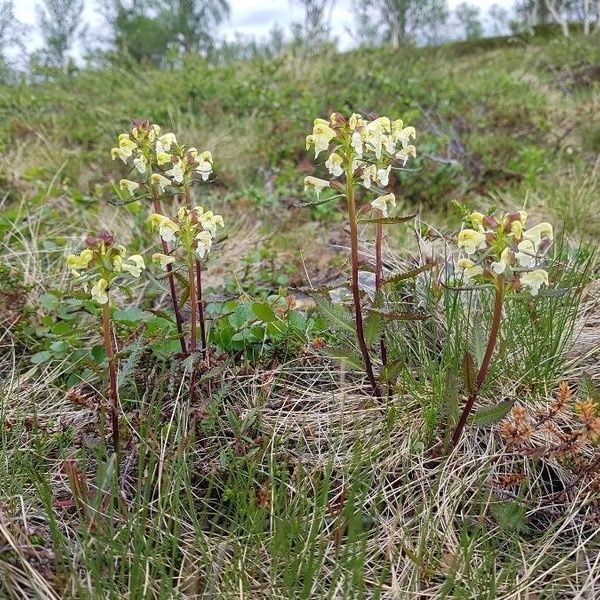
Known commonly as the Lapland Lousewort, this resilient little beauty thrives where most plants give up—the frozen arctic tundra and high-altitude mountain slopes. Despite its somewhat unappealing name, it produces delicate, creamy-yellow blossoms that resemble miniature bird beaks. Historically, it was believed that cattle grazing near these plants would become infested with lice, leading to its quirky and slightly unfair nickname.
🔍 How to Identify
- 🌼 Beaked Blooms: The flowers are a soft, pale yellow or cream color and feature a distinct "beak" or hood, which is a signature look for the Pedicularis genus.
- 🌿 Fern-like Foliage: Its leaves are deeply lobed and serrated, appearing very much like tiny, dark green or reddish ferns hugging the ground.
- 🎨 Sturdy Stems: The plant grows on upright, unbranched stems that are often flushed with a dark purple or reddish tint, providing a beautiful contrast to the pale flowers.
🏡 In Your Garden
- 🤝 The Secret Neighbor: This plant is "hemiparasitic," meaning it has specialized roots that attach to neighboring plants (like dwarf birches or grasses) to steal extra nutrients. Because of this complex relationship, it is nearly impossible to grow in a standard garden pot.
- 🏔️ Arctic Specialist: In the wild, it demands acidic, peaty soil and very cold winters. It is a specialist of the "tundra heath," meaning it prefers open, windy spots where the snow melts early in the spring.
⚠️ Safety & Toxicity
- ⚠️ Status: Generally considered non-toxic to touch, but not for consumption.
- 🐾 Details: Like many members of its family, it contains tannins and various alkaloids. While not typically lethal, ingesting the plant can cause nausea or digestive upset in humans and pets. It is best enjoyed as a visual treasure of the wild rather than a snack.
✨ Fun Fact
The Lapland Lousewort has a "closed" flower design that requires a strong, heavy insect—specifically a bumblebee—to pry the petals open. This ensures that only the most effective pollinators can access its nectar and carry its pollen to the next flower.

Detailed Care Instructions
To grow Pedicularis Lapponica, also known as Arctic lousewort or Lapland lousewort, follow these steps:
- Climate and growing conditions: Pedicularis Lapponica thrives in cool, subarctic to arctic regions. It requires a cold environment and is adapted to growing in rocky or gravelly soil in alpine or tundra habitats. If you don't live in such an area, you may need to create a suitable microclimate, such as a cold frame or alpine garden.
- Soil preparation: The plant prefers well-draining, slightly acidic soil. Prepare the soil by removing any weeds, rocks, and debris. Add organic matter like compost to improve soil fertility and drainage.
- Seeds: Obtain Pedicularis Lapponica seeds from a reputable seed supplier or botanical garden. Sow the seeds in early spring or fall. Cold stratification may be necessary to mimic the plant's natural environment. Place the seeds in a moist paper towel or ziplock bag in the refrigerator for a few weeks before sowing.
- Planting: After the seeds have undergone stratification, sow them on the soil surface or gently press them in. Avoid burying the seeds too deep, as they require light to germinate. Space the seeds or seedlings 6-12 inches apart to allow for adequate growth.
- Watering and care: Keep the soil moist but not waterlogged, especially during the germination period. Once established, Arctic lousewort has moderate water requirements. Water the plant regularly, especially during dry periods, but avoid overwatering.
- Sunlight: Pedicularis Lapponica prefers full sun or partial shade. Choose a planting location that receives at least six hours of direct sunlight per day. If growing indoors, place the plant near a south-facing window.
- Mulching and weed control: Apply a layer of organic mulch, like wood chips or straw, around the plants. Mulching helps retain moisture, prevent weed growth, and maintain a stable soil temperature.
- Pests and diseases: Pedicularis Lapponica is generally resistant to pests and diseases. However, keep an eye out for aphids or slugs, which can occasionally affect the plant.
- Pruning: Trim back any dead or damaged foliage in late fall or early spring to promote healthy growth.
- Propagation: Pedicularis Lapponica can also be propagated by division. Divide mature plants in early spring, replanting them in suitable locations.
Remember that growing Pedicularis Lapponica may pose a challenge outside its natural habitat. It's essential to recreate the plant's native conditions as closely as possible for successful growth.

Place in a window with dappled sun or a spot in the middle of a room. Or directly in a window facing west or east.

Pedicularis Lapponica is an aquatic plant that requires consistent moisture and hydration for optimal growth. When watering, it is important to ensure that the soil or growing medium is evenly moist but not waterlogged or saturated. This can be achieved by either misting the plant with a spray bottle or watering it directly at the base, taking care not to overwater or let the soil dry out completely between watering sessions. It is also recommended to avoid getting water on the leaves or flowers, as this can lead to rot or fungal growth. Overall, regular and consistent watering is important for the health and vitality of Pedicularis Lapponica.
To properly fertilize this plant, you should first test the soil to determine its pH and nutrient levels. Once you have this information, you can choose a balanced fertilizer that will provide the necessary nutrients in the correct amounts.
It is important to apply the fertilizer at the correct time and rate. Avoid fertilizing during periods of drought or extreme heat, as this can damage the plant. Apply the fertilizer according to the instructions on the package, typically every 4-6 weeks during the growing season.
Finally, ensure that the plant is getting enough water and sunlight. Proper watering and light levels will help the plant to absorb the nutrients from the fertilizer and grow healthy and strong.
Pedicularis Lapponica plant prefers to grow in well-draining soil that is slightly acidic to neutral in pH. The soil should be rich in organic matter and nutrients to support healthy growth, but not overly fertilized as this can lead to excessive vegetative growth and reduced flowering. It is important that the soil does not become waterlogged, as this can lead to root rot and other problems. A soil mix that contains a combination of peat moss, perlite, and vermiculite can provide the ideal growing conditions for Pedicularis Lapponica. Additionally, the plant requires moderate levels of sunlight or partial shade, and regular watering to maintain its growth and health.
Pedicularis Lapponica is a perennial plant and can be propagated in several ways, including seed propagation and vegetative propagation. To propagate vegetatively, one can take cuttings from the plant in late spring or early summer when the plant is actively growing. The cuttings should be taken from the top of the plant and should include at least two nodes. The leaves on the lower half of the cutting should be removed, and the cutting should be planted in a moist soil mixture. The cutting should be kept in a warm and humid environment until new growth appears. Once the cutting has rooted, it can be transplanted into a larger container or into the ground. Seed propagation can also be done by collecting seeds from the plant in late summer or early fall and sowing them in a well-draining soil mix. The seeds should be lightly covered with soil, and the container should be kept in a warm and moist environment until the seedlings emerge. The seedlings should be thinned to one per container and should be transplanted when they are large enough to handle.








