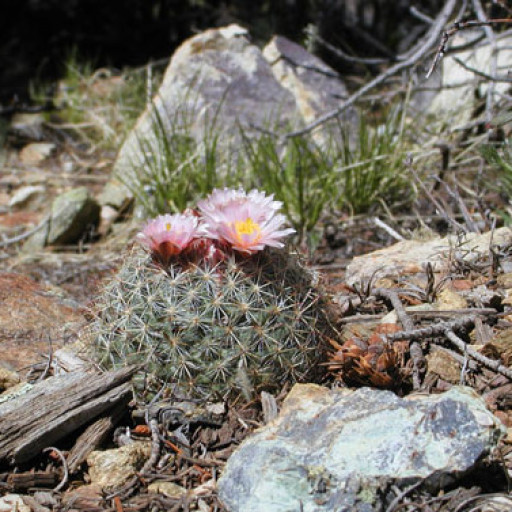
Plant Overview
Known as the Mountain Ball Cactus or Snowball Cactus, this resilient little succulent is the "Iron Man" of the desert world. While most cacti crave blistering heat, Pediocactus simpsonii feels right at home in the high-altitude peaks of the Rocky Mountains, often buried under several feet of snow for months. It is one of the most cold-hardy cacti in existence, making it a favorite for outdoor rock gardeners in temperate climates.
🔍 How to Identify
- 🌵 The Shape: It typically grows as a small, solitary globe, though older plants may form clusters. It rarely exceeds 6 inches in height, looking like a fuzzy green grapefruit tucked among stones.
- 🧶 Spine Armor: The plant is densely covered in a "nest" of spines. You’ll see 15–35 radial spines that are white or cream-colored, often obscuring the green body of the cactus entirely.
- 🌸 Early Blooms: It is one of the first cacti to flower in spring. The blossoms emerge from the very top (the apex) and can range from sweet-scented rose pink to pale yellow or even white.
🏡 In Your Garden
- 🏔️ High-Altitude Needs: Because it originates from alpine regions, it demands "perfect" drainage. It thrives in gritty, mineral-heavy soil with very little organic matter. If the roots stay wet in humid summer heat, the plant can rot overnight.
- ❄️ The Winter Sleep: Unlike tropical houseplants, this cactus needs a cold winter dormancy to trigger flowering. It can withstand temperatures far below freezing (down to -30°F), provided it is kept bone-dry during its winter nap.
⚠️ Safety & Toxicity
- 🟢 Status: Generally non-toxic to humans and pets.
- 🌵 Physical Hazard: While not chemically poisonous, its dense spines are sharp and can easily puncture the skin or get stuck in a pet's fur. It is best placed in a "look but don't touch" area of the garden or shelf.
✨ Fun Fact
This cactus is a true mountaineer—it has been found growing at elevations of over 10,000 feet! To survive the freezing mountain air, it actually dehydrates itself in late autumn, shriveling up and pulling itself closer to the soil to avoid being cracked by expanding ice crystals inside its tissues.

Detailed Care Instructions
To grow Pediocactus simpsonii (commonly known as Simpson's hedgehog cactus), follow these steps:
- Acquisition: Obtain Pediocactus simpsonii seeds or a young plant from a reputable nursery or specialist cactus supplier. Alternatively, you can collect seeds from mature plants if legal in your area.
- Soil: Choose well-draining soil with a sandy or gritty texture. A cactus and succulent mix or a soil mix containing perlite or pumice works well.
- Container: Select a small-sized pot or container with drainage holes for the cactus. Ensure that it is wide enough for root development.
- Planting: Fill the pot with the well-draining soil mix, leaving some space at the top for watering. Plant the seeds or place the young plant in the center, ensuring the roots are covered, and gently firm the soil around it.
- Light: Pediocactus simpsonii prefers full sun to partial shade. Place the potted cactus in a location where it receives at least 6-8 hours of direct sunlight per day. A south or west-facing window or a sunny outdoor spot is suitable.
- Temperature: Provide average to warm temperatures for the cactus. Pediocactus simpsonii can tolerate temperatures as low as 20°F (-6°C) but prefers temperatures between 68-86°F (20-30°C) during the growing season.
- Watering: Allow the soil to dry out completely between waterings. Overwatering can cause root rot and other issues. Water deeply, ensuring the water reaches the roots, but make sure the excess water drains out completely. Reduce watering during the dormant period in winter.
- Fertilizer: Pediocactus simpsonii is a slow grower and does not require frequent fertilization. Use a balanced, diluted cactus fertilizer during the growing season (spring and summer) according to the manufacturer's instructions. Avoid fertilizing during the winter dormancy period.
- Maintenance: Remove any dead or damaged parts to maintain the health of the cactus. Be cautious of handling the cactus due to its spines.
- Repotting: Pediocactus simpsonii generally doesn't require frequent repotting. However, if the plant outgrows its pot or the soil loses its drainage capacity, repot it in a slightly larger container using the same well-draining soil mix.
With proper care and attention to its specific needs, your Pediocactus simpsonii plant should thrive and grow, providing you with the beauty of its unique form and delicate flowers.

Place in a bright room that is sun drenched almost all day. Or directly in a south-facing window.

To water this particular plant, the soil should be thoroughly moistened once a month during the growing season, which typically runs from spring to fall. However, the soil should be allowed to fully dry out in between waterings to avoid any risk of root rot. When watering, it is important to avoid getting water directly on the plant itself and to instead apply the water to the soil around the base of the plant. During the winter months, the plant should not be watered at all and instead should be allowed to rest in a cool, dry location.
To provide proper nutrients for this plant, apply a low-nitrogen fertilizer once a year during the growing season from early spring to mid-summer. Use a balanced fertilizer with equal amounts of phosphorus and potassium, such as a 10-10-10 formula. Avoid over-fertilizing, as this can damage the plant. Apply the fertilizer according to the package instructions, and water the plant deeply afterward. Only fertilize established plants that are at least one year old.
When growing this particular plant, it is important to use soil that is well-draining and low in organic matter. The soil pH should be slightly acidic to neutral, ranging from 5.5 to 7.0. A mix of sand, gravel, and perlite can be used to create a suitable growing-medium because it avoids soil compaction and facilitates proper drainage. Additionally, adding a small amount of coarse grit to the soil improves the soil structure and improves drainage. It is important to avoid adding too much fertilizer, as this plant can be sensitive to high levels of nutrients. Overall, it is important to use a soil blend that mimics the plant's native environment, which is often in rocky, gravelly soils on hillsides or mesas.
To propagate this particular species of cactus, you will need to start by selecting a healthy and mature plant that has developed offsets, which are small pups that develop around the base of the parent plant. You can carefully remove these offsets from the parent plant using a sharp and clean knife, taking care not to damage the roots or the surrounding soil.
Once you have successfully separated the offsets from the parent plant, you should allow them to air dry in a cool and dry location for a few days. This will help to prevent the cut edges from rotting and allow them to form calluses, which are essential for successful rooting.
Next, you should prepare your propagation soil by mixing together equal parts perlite and cactus soil mix, which will provide a well-draining and nutrient-rich growing medium. You can then fill your propagation container with this soil mix, leaving enough space for the offsets to settle in.
Carefully place the offsets on top of the soil, making sure that they are firmly in contact with the soil surface. You can then mist the soil surface with water until it is evenly moist. It is important to avoid overwatering at this stage, as this can lead to root rot and other problems.
Finally, you should place the propagation container in a warm and bright location, but out of direct sunlight. You can cover the container with a plastic bag or lid to create a greenhouse-like environment that will help to retain moisture and promote healthy growth.
Over the next few weeks, you should monitor the offsets closely for signs of new growth and ensure that the soil remains evenly moist. Once the new plants have established a strong rooting system, you can gradually acclimate them to brighter light and drier conditions, eventually transplanting them into their own pots or a suitable outdoor location.
Common pests of the plains cactus include Scale insect, mealybugs, spider mites. Make a habit of checking your plains cactus frequently for pests so that any infestations can be caught and managed early.








