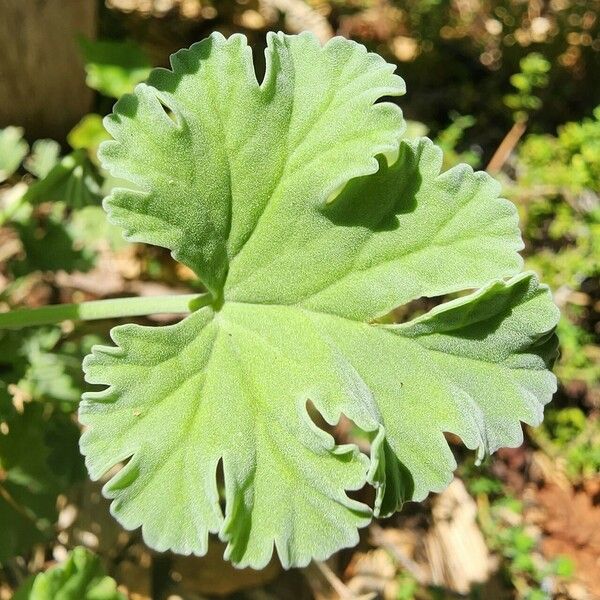
Plant Overview
Often called the Nutmeg Geranium, this charming hybrid is a sensory delight that has been a favorite in herb gardens for centuries. While many garden plants are grown for showy blooms, this Pelargonium is prized for its aromatic foliage that releases a warm, spicy scent—reminiscent of holiday baking and pine—at the slightest touch. It is a compact, elegant choice for sunny windowsills and "sensory gardens" where its velvety texture can be truly appreciated.
🔍 How to Identify
- 🍃 The Foliage: Small, heart-shaped or slightly lobed leaves with a distinct greyish-green hue and a soft, velvety "felted" texture.
- 🌸 The Blooms: Dainty, star-like white flowers that feature subtle, feathery purple or maroon streaks on the two upper petals.
- 🪴 Growth Habit: A compact, mounding sub-shrub that typically grows in a dense, bushy shape, rarely exceeding 12 inches in height.
🏡 In Your Garden
- ☀️ Sun for Scent: To maximize the nutmeg aroma, place the plant in a spot with plenty of bright, direct sunlight. Heat is the key ingredient that helps the plant develop its fragrant essential oils.
- 💧 Drought Discipline: This hybrid hates "wet feet." It prefers a gritty, well-draining potting mix and should be allowed to dry out significantly between waterings to prevent root rot.
- ✂️ Pruning Nuance: Because it can become "woody" over time, regular pinching of the tips during the growing season will encourage a fuller, more lush appearance and more frequent flowering.
⚠️ Safety & Toxicity
- 🐾 Pet Warning: This plant is toxic to cats, dogs, and horses. It contains geraniol and linalool, which can cause skin irritation, vomiting, or lethargy if nibbled on.
- 👐 Skin Sensitivity: While generally safe for humans to touch, the concentrated oils in the leaves may cause mild skin irritation or a rash in individuals with highly sensitive skin.
✨ Fun Fact
During the Victorian era, scented geraniums were popular "parlor plants." They were strategically placed in narrow hallways so that the long, heavy skirts of passing guests would brush against the leaves, naturally perfuming the air with spicy scents as they moved through the house.

Detailed Care Instructions
Pelargonium × Fragrans, also known as the nutmeg-scented geranium, can be grown successfully with the following steps:
- Plant in well-draining soil: Make sure the soil is well-draining and has good aeration. Avoid compacted or waterlogged soil as it can cause root rot.
- Provide ample sunlight: Place the plant in a location that receives at least 6-8 hours of sunlight per day. However, protect it from intense afternoon sun in warmer climates.
- Water consistently: Keep the soil evenly moist but not waterlogged. Water when the top inch of soil feels dry, and avoid letting the soil dry out completely.
- Fertilize regularly: Feed the plant with a balanced liquid fertilizer every 4-6 weeks during the growing season (spring and summer).
- Prune regularly: Regularly pruning the plant will help promote bushier growth and encourage more blooms. Remove any dead or leggy growth to maintain a compact shape.
- Protect from pests: Keep an eye out for common pests like aphids, spider mites, and whiteflies. Use insecticidal soap or neem oil to treat infestations.
- Provide humidity: Pelargonium × Fragrans appreciates higher humidity levels, so misting the plant occasionally or placing a humidity tray nearby can help.
By following these tips, you should be able to successfully grow and care for your Pelargonium × Fragrans plant.

Place in a bright room that is sun drenched almost all day. Or directly in a south-facing window.

1. Water the plant thoroughly, allowing the water to saturate the soil completely.
2. Wait until the top inch of the soil is dry before watering again.
3. Water the plant at the base, avoiding getting the leaves wet to prevent fungal diseases.
4. Use room temperature water to avoid shocking the plant's roots.
5. Adjust the frequency of watering based on the plant's specific needs and the current environmental conditions.
6. Ensure proper drainage in the pot to prevent waterlogged soil, which can lead to root rot.
7. Consider using a moisture meter to accurately determine when the plant needs to be watered.
8. During hot weather or when the plant is actively growing, increase the frequency of watering to keep the soil consistently moist.
Pelargonium × Fragrans plants should be fertilized with a balanced water-soluble fertilizer every 2-4 weeks during the growing season. Use a fertilizer with an N-P-K ratio of 10-10-10 or similar. Dilute the fertilizer to half strength and apply it to the soil around the base of the plant, being careful not to get any on the leaves or stems. Water the plant thoroughly after fertilizing to help spread the nutrients throughout the soil. Avoid over-fertilizing, as this can harm the plant.
Pelargonium × Fragrans plants prefer a well-draining soil mix that is slightly acidic to neutral in pH. A good mix for these plants should be rich in organic matter, such as peat moss or compost, to provide essential nutrients and promote healthy root growth. It is also important for the soil to have good drainage to prevent waterlogging, as these plants are susceptible to root rot.
A recommended soil mix for Pelargonium × Fragrans plants could include a combination of peat moss, perlite, and coarse sand to improve drainage and aeration. Additionally, adding a slow-release fertilizer or incorporating a balanced liquid fertilizer into the watering routine can help provide the necessary nutrients for optimal growth.
Overall, a well-draining, nutrient-rich soil mix is essential for the health and success of Pelargonium × Fragrans plants.
Pelargonium × Fragrans can be propagated through stem cuttings. Begin by selecting a healthy and mature stem from the parent plant. Use a sharp and sterilized pair of scissors or pruning shears to take a cutting that is around 4-6 inches long.
Remove the lower leaves from the cutting, leaving only a few at the top. This will help reduce water loss and promote root growth. Dip the cut end of the stem in a rooting hormone powder to enhance root formation.
Prepare a well-draining potting mix that is rich in nutrients. Moisten the mix slightly before planting the cutting. Make a hole in the soil using a pencil or stick, then insert the cutting about halfway into the soil.
Place the pot in a warm and brightly lit area, but away from direct sunlight. Keep the soil consistently moist, but not waterlogged. You can cover the cutting with a plastic bag or a clear plastic container to create a mini greenhouse effect and maintain high humidity levels.
After a few weeks, check for root growth by gently tugging on the cutting. If you feel resistance, it means roots have developed. Once the roots are well-established, transplant the cutting into a larger container or into the garden. Make sure to continue caring for the new plant by providing adequate sunlight, water, and nutrients.
Common pests of the fragrant geranium include Spider mites, fungus gnats, aphids, whiteflies. Make a habit of checking your fragrant geranium frequently for pests so that any infestations can be caught and managed early.








