Plant Overview
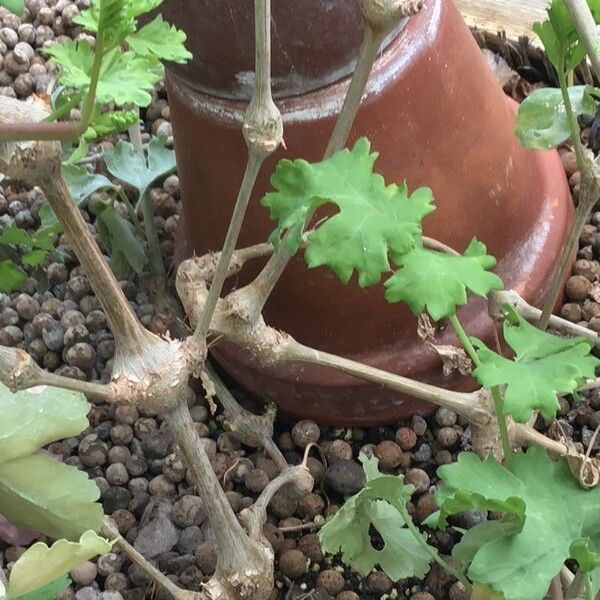
Known affectionately as the "Gouty Pelargonium," this South African native is a botanical curiosity that looks like a collection of knobby, swollen joints. While it may appear a bit "alien" or skeletal during its dormant phase, it transforms into a fragrant wonder when it blooms. It is one of the few yellow-flowered species in its genus, making it a prized possession for succulent enthusiasts and perfume lovers alike.
🔍 How to Identify
- 🦴 The Stems: Its most striking feature is the thick, succulent-like stems with prominent, swollen nodes (joints) that give it the "gouty" appearance.
- 🌿 The Foliage: The leaves are a soft, glaucous gray-green and are deeply divided into lobed sections, often appearing somewhat ruffled.
- 🌼 The Flowers: Clusters of small, butter-yellow to greenish-yellow flowers emerge on long stalks. Unlike many bright geraniums, these are subtle in color but intricate in shape.
🏡 In Your Garden
- 💤 Summer Dormancy: This plant is a winter-grower. It often drops its leaves and looks like a pile of dry sticks in the heat of summer. Do not panic or overwater during this time; it is simply resting and waiting for cooler weather to wake up.
- 🧗 Scrambling Habit: In its natural habitat, it scrambles over rocks and shrubs. In a home setting, it looks spectacular in a hanging basket or trained against a small trellis where its "knotted" stems can be appreciated as living art.
- 🌙 Evening Magic: While the flowers have little scent during the day, they release a powerful, sweet fragrance reminiscent of cloves or bananas as soon as the sun goes down.
⚠️ Safety & Toxicity
- 🐾 Mild Caution: Like many members of the Pelargonium family, this plant contains geraniol and linalool. While generally considered low-toxicity, it can cause mild skin irritation in sensitive individuals.
- 🐱 Pet Warning: If ingested by curious cats or dogs, it may cause vomiting or lethargy. It is best kept on a high shelf or in a hanging pot away from nibbling pets.
✨ Fun Fact
The specific epithet gibbosum comes from the Latin word "gibbus," meaning "humped" or "swollen," referring specifically to those lumpy stem joints that look like a bad case of arthritis!

Detailed Care Instructions

Place in a bright room that is sun drenched almost all day. Or directly in a south-facing window.

To water this plant, one should first check the moisture level of the soil by inserting a finger into the soil up to the first joint. If the soil feels dry, it is time to water. However, if the soil feels moist, it is best to wait a day or two before watering. When watering, one should avoid getting water on the leaves and flowers as this can lead to fungal growth and damage. Instead, water the soil around the base of the plant until the water begins to drain out of the bottom of the pot. It is important to allow the soil to dry out slightly between waterings to prevent overwatering, which can cause root rot. In addition, the plant should be watered more frequently during the summer months when temperatures are higher and less frequently during the winter months when growth slows down.
These plant needs regular fertilizing during growing seasons. Fertilizing your plants in dormant state during the winter, might result in scorching or browning of the leaf tips. If mature plants display signs of nutrient insufficiency, fertilizer administration is necessary to restore the plant to its previous state.
You may use All Purpose Plant Food or Flower Fertilizer or Green Plant Food for your Gouty Geranium
Pelargonium gibbosum plant requires well-draining and fertile soil that contains a balanced ratio of organic matter, sand, and silt. The soil pH should be slightly acidic to neutral, ideally between 6.0 to 7.0. It is recommended to use a fast-draining soil mix that contains ingredients such as perlite, coarse sand, and peat moss. The soil should be able to hold moisture without becoming waterlogged, as excess moisture can lead to root rot. Adding some slow-release fertilizer to the soil mix before planting can also help provide essential nutrients to the plant. Regularly checking the soil moisture level and watering only when the top inch of soil is dry is essential for the plant's growth and health.
Common pests of the gouty geranium include Spider mites, fungus gnats, aphids, whiteflies. Make a habit of checking your gouty geranium frequently for pests so that any infestations can be caught and managed early.








