Plant Overview
Often called the "Rose Geranium" or "Sweet-scented Geranium," Pelargonium graveolens is a sensory delight that has traveled from the hillsides of South Africa to window boxes across the globe. Unlike its cousins grown for showy blooms, this plant is cherished for its velvety, deeply divided leaves that release a potent, heavenly rose aroma at the slightest touch. It’s a favorite among Victorian-era gardeners and modern aromatherapy enthusiasts alike.
🔍 How to Identify
- 🍃 The Foliage: The leaves are heart-shaped but deeply lobed with irregular, toothy edges. They feel soft and slightly fuzzy due to tiny glandular hairs that store the fragrant essential oils.
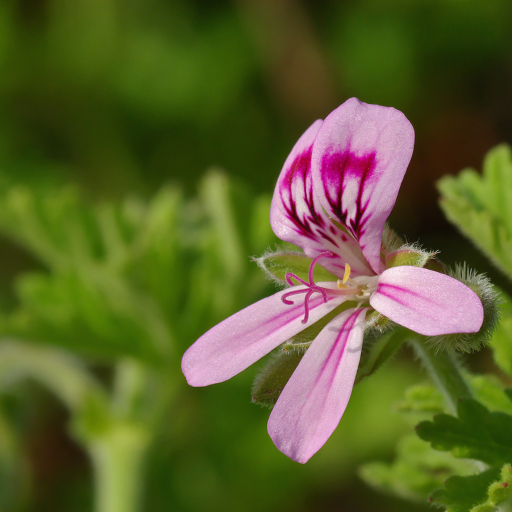
- 🌸 The Flowers: While secondary to the leaves, it produces small, delicate clusters of five-petaled flowers. They are typically pale pink to lavender, with the upper two petals often featuring dark purple "whisker" markings.
- 👃 The Scent: The most reliable ID method! When crushed or rubbed, the leaves emit a clear, sweet scent indistinguishable from high-quality rose blossoms.
🏡 In Your Garden
- ☀️ Sun & Scent: This plant relies on sunlight to produce its aromatic oils. Placing it near a sunny walkway or a frequently opened door allows you to catch a "scent cloud" every time you brush past it.
- 🪴 Drainage is Vital: Because it is a succulent-adjacent plant from dry climates, it hates "wet feet." If the roots sit in soggy soil for even a few days, the plant may collapse. Use a gritty, well-draining mix to keep it happy.
- ✂️ Leggy Growth: It can become quite "woody" and stretched out over time. Don't be afraid to pinch back the stems; this encourages a bushier, more attractive shape and gives you plenty of leaves to use for scenting sugar or teas.
⚠️ Safety & Toxicity
- 🐾 Pet Warning: While humans often use the leaves for flavoring, Pelargonium graveolens is toxic to dogs, cats, and horses. The essential oils (geraniol and linalool) can cause skin irritation or digestive upset if ingested.
- 👶 Child Safety: Generally safe for children to touch and smell, but it’s best to discourage ingestion as the high concentration of essential oils can be a bit intense for little tummies.
✨ Fun Fact
Because real Rose oil (Attar of Roses) is incredibly expensive to produce, the perfume industry often uses Pelargonium graveolens as a more affordable substitute. In many high-end "rose" perfumes, the scent you are actually smelling comes from this humble geranium!

Detailed Care Instructions
| Color | Pink |
| Soil Ph | 5.8-6.3 |
| Lighting | Full Sun |
| Soil Type | Rich, Medium-Moisture, Well-Drained Soil |
| Bloom Time | Seasonal Bloomer |
| Plant Type | Herbaceous Perennial (Usually Grown As An Annual) |
| Mature Size | Growing To 4Ft |
| Native Area | The Cape Provinces And The Northern Provinces Of South Africa, Zimbabwe And Mozambique |
| Sun Exposure | Full Sun To Part Shade |
| Hardiness Zones | 10-11 |
Growing Pelargonium graveolens, also known as scented geranium or rose geranium, is relatively easy. Here are some steps to help you grow this plant:
- Choose a suitable location: Pelargonium graveolens prefers full sun, so select a spot with at least six hours of direct sunlight each day. It can also tolerate partial shade, but it may result in reduced flowering.
- Soil preparation: The plant prefers well-draining soil. Prepare the soil by loosening it and removing any rocks or debris. You can amend the soil with organic matter like compost or aged manure to improve its fertility and drainage.
- Planting: Plant pelargonium graveolens either from seeds or through cuttings. If using seeds, sow them in a seed tray filled with a well-draining potting mix. Cover the seeds lightly with soil, mist them with water, and keep them in a warm location. Once the seedlings are around 2-3 inches tall, transplant them into individual pots or directly into the garden.
If using cuttings, take stem cuttings of around 4-6 inches long from a healthy mother plant. Remove the lower leaves, dip the cut end in rooting hormone powder, and plant it in a pot filled with a well-draining mix. Keep the soil moist and provide indirect sunlight until the cutting establishes roots.
- Watering: Water the plant deeply once or twice a week, allowing the soil to dry out between waterings. Avoid overwatering, as this can lead to root rot. Ensure good drainage to prevent waterlogged soil.
- Fertilizing: Feed pelargonium graveolens with a balanced fertilizer, like a 10-10-10 or 14-14-14 formulation, during the growing season (spring and summer). Follow the package instructions for application rates. Avoid over-fertilizing, as this can lead to weak growth and less desirable scent profiles.
- Pruning: Regularly pinch back the stems to encourage bushiness and prevent leggy growth. This will also help improve air circulation and reduce the risk of diseases. Additionally, remove any dead or damaged leaves to maintain a tidy appearance.
- Pests and diseases: Pelargonium graveolens can be susceptible to common pests like aphids, spider mites, and whiteflies. Inspect the plant regularly and treat with organic pest control methods if necessary. Ensure good ventilation and avoid overhead watering to prevent fungal diseases like powdery mildew.
By following these steps, you can successfully grow Pelargonium graveolens and enjoy its fragrant foliage and colorful blooms.

Place in a bright room that is sun drenched almost all day. Or directly in a south-facing window.

To water this plant, one must take care to avoid overwatering as it can lead to root rot. The soil should be allowed to dry out slightly between waterings. When watering, avoid getting water on the leaves and instead aim to water the soil directly at the base of the plant. The plant should be watered more frequently during the growing season and less frequently during the dormant season. It is important to use a well-draining soil mix and to ensure that the pot has drainage holes to prevent water from accumulating in the soil. Additionally, it is recommended to water early in the day to allow for any excess water to evaporate before nightfall.
To fertilize this plant, use a balanced fertilizer with an N-P-K ratio of 10-10-10. Apply the fertilizer every 2-3 weeks during the growing season (spring and summer). Be careful not to over-fertilize as this can lead to fertilizer burn and damage to the plant. Water the plant before fertilizing to avoid stressing the roots.
When planting Pelargonium Graveolens, it is important to choose a well-draining and nutrient-rich soil. The ideal soil for this plant is a mixture of loam, sand, and organic matter such as compost or sphagnum peat moss. It is important to avoid using heavy or clay soils that may retain too much moisture, as this can lead to root rot. Additionally, the pH level of the soil should be slightly acidic, between 5.5 and 6.5. To ensure good drainage, it is recommended to add a layer of gravel or coarse sand at the bottom of the pot. Finally, it is important to fertilize the plant regularly using a balanced liquid fertilizer to encourage healthy growth and abundant blooms.
To propagate this plant, start by taking a cutting from the stem that is about 4-6 inches long. Remove any leaves from the bottom 1-2 inches of the stem, leaving only a few at the top. Dip the cut end in rooting hormone powder, and place the stem in a pot of moist soil, ensuring that at least 1-2 nodes are buried. Place the pot in bright, indirect light and keep the soil moist, but not waterlogged. After a few weeks, new growth should start to appear from the nodes buried in the soil, indicating that the cutting has successfully rooted. Continue to care for the plant as it grows, gradually transitioning it to the same growing conditions as the parent plant.
Common pests of the sweet-scented geranium include Spider mites, fungus gnats, aphids, whiteflies. Make a habit of checking your sweet-scented geranium frequently for pests so that any infestations can be caught and managed early.








