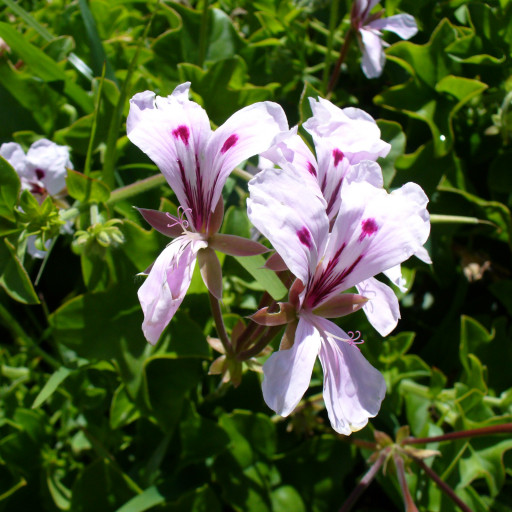
Plant Overview
Often called the "Ivy Geranium," Pelargonium peltatum is the undisputed queen of hanging baskets and window boxes across the globe. Originating from the coastal slopes of South Africa, this trailing beauty mimics the look of English Ivy but surprises you with an explosion of vibrant, butterfly-like blooms. It is the perfect choice for gardeners looking to create a "flowering curtain" effect on balconies, stone walls, or elevated planters.
🔍 How to Identify
- 🍃 Shield-Shaped Leaves: Unlike the fuzzy, rounded leaves of common garden geraniums, these are smooth, waxy, and five-lobed, bearing a striking resemblance to ivy.
- 🌸 Clustered Blooms: The flowers appear in clusters (umbels) on long stalks. They feature five petals, often with the top two petals marked with delicate darker "nectar guides."
- 🌿 Trailing Habit: The stems are long, slender, and somewhat brittle, designed to scramble over rocks or spill gracefully downward rather than growing upright.
🏡 In Your Garden
- ☀️ Light & Heat Balance: While it loves the sun to produce flowers, its roots prefer to stay relatively cool. In blistering summer climates, a bit of afternoon shade prevents the leaves from "bleaching" or turning yellow.
- 💧 Watering Wisdom: Because the leaves are somewhat succulent and thick, they are excellent at storing water. Overwatering is the most common mistake; let the soil dry out between drinks to avoid "edema," a condition where the plant develops unsightly bumps from absorbing too much water.
- 🌬️ Wind Protection: Its stems are famously "snappy" and brittle. To keep your trailing vines intact, place your baskets in a spot sheltered from high winds.
⚠️ Safety & Toxicity
- 🐾 Pet Alert: Mildly toxic to cats, dogs, and horses.
- 🤢 The Risk: Ingestion can cause vomiting, lethargy, and skin irritation (dermatitis) due to the presence of essential oils like geraniol and linalool. It is best kept in high-hanging baskets out of reach of curious nibblers.
✨ Fun Fact
- 🛡️ The Shield Connection: The species name peltatum comes from the Latin word pelta, meaning "small shield." This refers to the unique way the leaf stem attaches to the center of the leaf blade rather than the edge, making each leaf look like a tiny, green gladiator's shield!

Detailed Care Instructions
| Color | Pink, Red, Salmon, White |
| Soil Ph | Slightly Acidic To Slightly Alkaline; 6.5 To 7.5 |
| Humidity | Normal |
| Lighting | Full Sun |
| Soil Type | Moist, Well-Drained |
| Bloom Time | Spring, Summer, Fall |
| Difficulty | Medium |
| Plant Type | Perennial |
| Mature Size | 12 To 30 Inches |
| Native Area | South Africa |
| Temperature | 17°C - 27°C |
| Sun Exposure | Full Sun |
| Hardiness Zones | Usda Zones 9-10 |
To grow Pelargonium peltatum (commonly known as the Ivy-leaf Geranium) successfully, follow these steps:
- Choose a suitable location: Pelargonium peltatum prefers full sun or partial shade. Select a location with well-draining soil.
- Planting: Start by selecting healthy plants or propagate from stem cuttings. Dig a hole slightly larger than the root ball and place the plant in the hole. Gently backfill the hole with soil and water thoroughly.
- Watering: Pelargonium peltatum prefers moderate watering. Water the plant deeply when the top inch of soil feels dry. Avoid overwatering, as it can lead to root rot.
- Fertilization: Apply a balanced, slow-release fertilizer in the spring and repeat every 6-8 weeks during the growing season. Alternatively, you can use a water-soluble fertilizer at half strength every 2-3 weeks.
- Pruning: Regular pruning helps maintain a compact shape and encourages bushier growth. Pinch off any dead or faded flowers and cut back overly long or leggy stems.
- Pests and diseases: Keep an eye out for common pests like aphids, spider mites, and whiteflies. Treat promptly with suitable insecticides if detected. Additionally, provide good air circulation and avoid overhead watering to prevent fungal diseases.
- Winter care: Pelargonium peltatum is not frost-tolerant. In colder climates, it is best to bring the plant indoors or propagate new plants from cuttings before the first frost. Alternatively, you can treat it as an annual plant and replant each year.
By following these guidelines, you should be able to successfully grow Pelargonium peltatum and enjoy its vibrant flowers and trailing foliage.

Place in a window with dappled sun or a spot in the middle of a room. Or directly in a window facing west or east.

When watering this plant, it is important to avoid over-watering as this can cause root rot and damage to the plant. Allow the top inch of soil to dry out before watering, and ensure that the soil is well-draining to prevent standing water.
When watering, apply water at the base of the plant, rather than watering the leaves or flowers. Water until the soil feels moist but not waterlogged, and avoid getting water on the leaves or flowers.
In general, this plant prefers slightly moist soil and may need more frequent watering during hot or dry weather. However, be careful not to water too often as this can lead to problems with fungus or other plant diseases.
Overall, it is important to monitor the soil moisture levels and adjust your watering schedule as needed to ensure that the plant stays healthy and happy.
Water the plant thoroughly before fertilizing to avoid fertilizer burn. Use a balanced fertilizer with a ratio of 20-20-20 or 10-10-10, diluted to half strength. Apply every two weeks during active growth periods, such as spring and summer. Avoid fertilizing during dormancy or when the soil is dry. Spread the fertilizer granules evenly around the base of the plant and water well after application.
When selecting soil for a Pelargonium Peltatum plant, it is important to choose a well-draining soil mix that is rich in nutrients. The soil should have a pH between 6.0 and 7.5. A mixture of equal parts peat moss, perlite, and vermiculite is a good choice. Alternatively, a soil mix containing coconut coir or composted bark can also be used. It is important to avoid soils that are heavy and compacted, as they can impede root growth and lead to waterlogging. To improve soil structure, adding sand or gravel to the mix can increase drainage. Additionally, adding organic fertilizer or compost can provide the plant with the necessary nutrients for healthy growth. It is important to avoid using soil from the garden or ground, as it may contain disease-causing pathogens that can harm the plant.
To propagate this plant, you will need to take stem cuttings from a healthy adult plant. Choose a healthy stem that is at least 3-4 inches long and has no signs of disease or damage.
Using clean, sharp scissors or pruning shears, make a clean cut just below a node (where leaves attach to the stem). Remove any leaves from the lower half of the cutting, leaving only a few leaves at the top.
Dip the cut end of the stem into rooting hormone powder and gently tap off any excess. Then, place the stem cutting into a small pot filled with fresh potting soil. Water the cutting thoroughly and place it in a warm, bright spot that receives indirect sunlight.
Keep the soil moist but not waterlogged and mist the cutting with water daily to maintain humidity. After 2-3 weeks, the cutting should develop roots and begin to grow new leaves.
Once the cutting has established itself with a strong root system, it can be transplanted into a larger pot or placed outdoors in a sunny, sheltered location. With proper care, it will continue to grow and thrive.
Common pests of the ivy geranium include Spider mites, fungus gnats, aphids, whiteflies. Make a habit of checking your ivy geranium frequently for pests so that any infestations can be caught and managed early.








