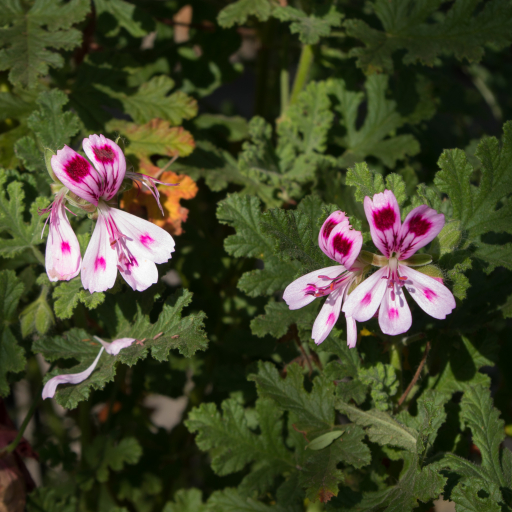
Plant Overview
Commonly known as the Oak-leaved Geranium or "Village Oak," this South African native is a sensory delight for any gardener. Unlike common garden geraniums bred for massive blooms, this species is prized for its deeply lobed, "oak-like" foliage and a pungent, balsamic fragrance that fills the air when the leaves are touched. It is a sturdy, woody sub-shrub that brings a touch of wild, rustic elegance to patios and sensory gardens.
🔍 How to Identify
- 🍃 Foliage Shape: The leaves are deeply divided into sharp lobes, mimicking the classic silhouette of a miniature oak leaf, often with a dark, purplish-brown blotch in the center.
- 🌸 Petite Blooms: It produces clusters of small, delicate flowers that are usually light pink to mauve, featuring two upper petals with distinct dark magenta "nectar guides."
- 🖐️ Sticky Texture: The stems and leaves are covered in fine, glandular hairs that feel slightly sticky to the touch, which is where the aromatic resins are stored.
🏡 In Your Garden
- 🏜️ Drought Specialist: Thanks to its origins in the rocky slopes of the Cape, this plant is incredibly drought-tolerant; it actually prefers "tough love" and well-draining soil over frequent watering.
- ✂️ Pruning Needs: Because it can become quite "leggy" and woody over time, a firm pruning in early spring helps maintain a bushy, compact shape and encourages a fresh flush of scented leaves.
⚠️ Safety & Toxicity
- 🐾 Toxic to Pets: Like most members of the Pelargonium genus, it contains geraniol and linalool. If ingested by dogs or cats, it can cause vomiting, lethargy, and skin rashes.
- 👶 Skin Sensitivity: While safe for humans to touch, the essential oils and rough leaf hairs may cause mild contact dermatitis in individuals with particularly sensitive skin.
✨ Fun Fact
In the language of flowers popular during the Victorian era, the Oak-leaved Geranium was often included in "tussie-mussies" (small bouquets) to symbolize true friendship and strength.

Detailed Care Instructions
| Humidity | Dry |
| Lighting | Full Sun |
| Difficulty | Easy |
| Hibernation | Cold Period |
| Temperature | 18°C - 28°C |
| Hardiness Zones | 8 - 11 |
To grow Pelargonium Quercifolium (oakleaf geranium) plant, you can follow these steps:
- Choose a suitable location: Pelargonium Quercifolium prefers full sun to partial shade. Select a location that receives at least 6 hours of sunlight per day. The soil should be well-draining and fertile.
- Prepare the soil: Before planting, prepare the soil by loosening it and removing any weeds or grass. You can amend the soil with organic matter like compost to improve its fertility.
- Planting: Dig a hole slightly larger than the root ball of the plant. Place the plant in the hole and backfill with soil, gently firming it around the roots. Make sure the crown of the plant (where the stem meets the roots) is level with the soil surface.
- Watering: Water the plant thoroughly after planting to help settle the soil. Afterward, water regularly to keep the soil moist but not soggy. Avoid overwatering as it can lead to root rot.
- Fertilizing: Pelargonium Quercifolium benefits from regular feeding during the growing season. Apply a balanced, slow-release fertilizer according to the package instructions or use a diluted liquid fertilizer every few weeks.
- Pruning: Prune the plant to maintain its shape and promote bushiness. Pinch back the tips of the stems regularly to encourage branching. You can also remove any dead or diseased foliage to keep the plant healthy.
- Mulching: Apply a layer of mulch around the base of the plant to conserve moisture and suppress weed growth. Mulching also helps regulate soil temperature.
- Pests and diseases: Keep an eye out for common pests like aphids, spider mites, and whiteflies. Treat any infestations promptly with organic or chemical insecticides. Regularly inspect the plant for signs of diseases such as leaf spot or gray mold, and take appropriate measures to control them.
- Winter care: Pelargonium Quercifolium is not frost-hardy and can be damaged by cold temperatures. In regions where winters are harsh, it is best to grow them as annuals or bring potted plants indoors during winter.
By following these steps, you can successfully grow Pelargonium Quercifolium and enjoy its beautiful foliage and delicate flowers.

Place in a window with dappled sun or a spot in the middle of a room. Or directly in a window facing west or east.

1. Determine the watering needs of the plant: Before watering the Pelargonium Quercifolium, it is essential to understand its watering requirements. This information can be obtained from plant care guides or by consulting a knowledgeable plant expert.
2. Check the soil moisture level: The best way to know when to water the plant is by checking the moisture level of the soil. This can be done by inserting a finger or a moisture meter device into the soil. If the soil is dry, it is time to water the plant.
3. Use high-quality water: It is essential to use high-quality water to avoid damaging the plant. The preferred water for Pelargonium Quercifolium is rainwater, distilled water, or any other low-salt content water. Avoid using hard or chlorinated water as it can harm the plant.
4. Water at the right time: Pelargonium Quercifolium plants prefer to be watered early in the morning or late in the evening. Avoid watering the plant during the hottest part of the day as this can cause the water to evaporate too quickly and not reach the roots.
5. Water the soil, not the leaves: Ensure that the water is applied to the soil, not the leaves, as this can promote the development of fungal diseases. Watering the soil also ensures the water gets directly to the roots.
6. Use the right watering technique: Pelargonium Quercifolium can be watered using a watering can or a hose with a gentle spray nozzle. Water the plant until the soil is evenly wet but not waterlogged.
7. Allow the soil to drain: After watering, allow the soil to drain for a few minutes to avoid waterlogging. The plant should not be sitting in a saucer of water as this can cause root rot.
8. Monitor the plant: Regularly monitor the plant to ensure it is not over or under-watered. The plant will give signs of distress if it is not getting enough water, such as wilting and drooping leaves. Over-watering can cause the leaves to turn yellow, and the plant may become susceptible to root rot.
To fertilize this plant, use a balanced, water-soluble fertilizer with equal amounts of nitrogen, phosphorus, and potassium. Mix the fertilizer into the watering can as recommended on the label, and apply the solution to the soil every two weeks during the growing season. Be careful not to over-fertilize, as this can damage the plant. Additionally, ensure the soil is well-draining and the pot is not too large, as excess water can cause root rot.
Pelargonium Quercifolium plant prefers a well-draining soil that is rich in nutrients. The soil should have a pH level that is slightly acidic, between 6 and 6.5. The ideal soil mixture should consist of a combination of loam, sand, and organic matter, such as compost or peat moss. This will provide the plant with the necessary drainage and nutrients it needs to grow and thrive. Additionally, it is important to use a pot with good drainage holes to prevent water from accumulating in the soil and leading to root rot. Overall, using a well-draining soil mixture with plenty of organic matter will create a healthy environment for Pelargonium Quercifolium to grow and flourish.
To propagate this plant, you will need to take stem cuttings from a healthy mature plant. The cuttings should be about 4-6 inches long with at least 2-3 sets of leaves. Gently remove the bottom set of leaves from the stem cutting, leaving a few inches of bare stem.
Dip the bottom end of the cutting in rooting hormone powder and plant it in a pot filled with a well-draining soil mixture. Keep the soil moist, but not waterlogged and place it in a warm, bright location avoiding direct sunlight.
Cover the pot with a plastic bag or plastic wrap to create a mini-greenhouse effect that will help the cutting retain moisture. After a few weeks, check to see if roots have formed by gently tugging on the plant. Once there are signs of new growth, you can remove the plastic covering.
After a few more weeks, the new plant should be established enough to be transplanted to its permanent location. Keep it well-watered and avoid placing it in direct sunlight until it has fully acclimated to its new environment.
Common pests of the oakleaf geranium include Spider mites, fungus gnats, aphids, whiteflies. Make a habit of checking your oakleaf geranium frequently for pests so that any infestations can be caught and managed early.








