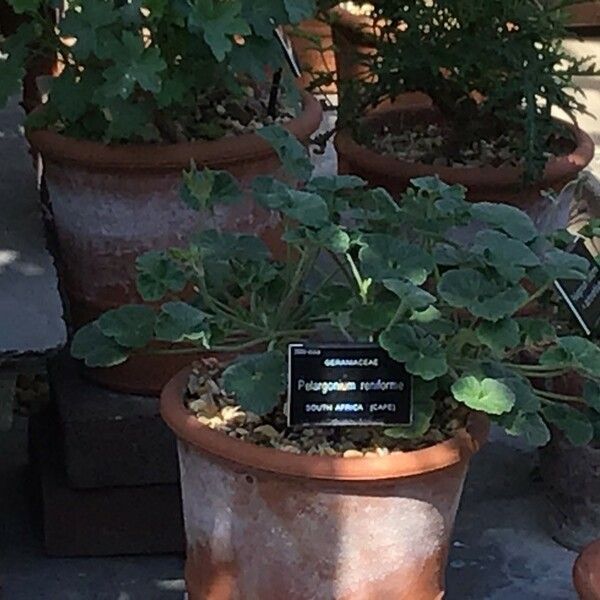
Plant Overview
Often called the Kidney-leaved Pelargonium, this South African native is a master of survival and a star of traditional medicine. It gets its name from its distinctive, velvety foliage that looks like small green kidneys scattered across the soil. While it may look delicate with its slender stems and vibrant magenta flowers, it is a rugged survivor from the dry, rocky slopes of the Eastern Cape.
🔍 How to Identify
- 🍃 Kidney-Shaped Leaves: The foliage is the most iconic feature—heart or kidney-shaped leaves with scalloped edges, covered in fine silvery hairs that give them a soft, velvety texture.
- 🌸 Intense Magenta Blooms: It produces small, striking flowers on long, thin stalks. Each flower has five petals, usually in deep shades of magenta or purple, with the upper two petals featuring dark, intricate nectar guides.
- 🌿 Low, Sprawling Habit: It grows as a low-lying shrublet. Its stems are initially soft and green but become woody at the base as the plant matures, creating a charming, weathered look.
🏡 In Your Garden
- ☀️ The "Dry" Rule: Because it hails from arid regions, this plant is highly drought-tolerant. It stores moisture in its thick, tuberous roots. The biggest mistake you can make is "killing it with kindness"—too much water will cause the roots to rot quickly.
- 🪨 Perfect for Rockeries: It thrives in poor, sandy, or gritty soil. If you have a sunny balcony or a rock garden where other plants struggle with the heat, this Pelargonium will feel right at home. It loves "feet" that dry out quickly.
⚠️ Safety & Toxicity
- 🐾 Mildly Toxic to Pets: Like most members of the Geraniaceae family, it contains essential oils (geraniol and linalool) that can cause digestive upset or skin irritation in cats and dogs if ingested in large quantities.
- 👶 Safe for Handling: It is generally safe for humans to touch, though its velvety leaves can occasionally trap dust or pollen, which might bother those with sensitive allergies.
✨ Fun Fact
The roots of this plant are a primary ingredient in a famous herbal cough medicine called Umckaloabo. For centuries, it has been used in traditional Zulu medicine to treat respiratory infections, and today it is sold globally in pharmacies!

Detailed Care Instructions
To grow Pelargonium reniforme (commonly known as fingerleaf geranium or kidney-leaf geranium), follow these steps:
- Select an appropriate planting location: Pelargonium reniforme thrives in full sun or partial shade. Choose a spot with well-draining soil.
- Prepare the soil: Loosen the soil to improve drainage and remove any weeds or rocks. You can also add organic matter, like compost, to enrich the soil.
- Sow seeds or transplant: You can start Pelargonium reniforme from seeds or transplant young plants. If sowing seeds, follow the instructions on the seed packet for the best results. If transplanting, gently remove the plant from its container and place it in a prepared hole, ensuring that the soil level matches the level of the plant's root ball.
- Watering: Water the plant thoroughly immediately after planting. Afterward, provide regular watering to keep the soil consistently moist but not waterlogged. Watering once or twice a week should be sufficient, depending on rainfall and climate conditions.
- Fertilization: Apply a balanced, slow-release fertilizer according to the manufacturer's instructions. This will help promote healthy growth and flower production. Alternatively, you can use a liquid fertilizer diluted to half strength every two weeks during the growing season.
- Pruning: Regularly trim back any dead or damaged branches to maintain the plant's shape and encourage new growth. You can also remove spent flowers (deadheading) to promote continuous blooming.
- Protection: Pelargonium reniforme is generally resistant to pests and diseases. However, keeping the plant healthy and providing good air circulation can help prevent issues. Monitor for any signs of pests or diseases and take appropriate action if necessary.
- Winter care: In colder climates, Pelargonium reniforme is not frost-hardy and should be protected during winter. Either bring the plant indoors, place it in a greenhouse, or cover it with the appropriate protection to prevent frost damage.
Remember to consult specific care instructions for your particular region and climate. With proper care, Pelargonium reniforme will reward you with lovely flowers and foliage.

Place in a bright room that is sun drenched almost all day. Or directly in a south-facing window.

To properly water this plant, it is important to check the soil moisture level regularly. When the top inch of soil feels dry to the touch, it is time to water. Use a watering can or hose to gently water the soil around the plant, avoiding getting water on the leaves or stems. Make sure to water thoroughly, allowing water to soak into the roots.
It is important to avoid overwatering this plant, as it can lead to root rot. Additionally, do not let the plant sit in standing water, as this can also be harmful. If the plant is outdoors, consider using a rain gauge to monitor natural rainfall and adjust watering accordingly.
To fertilize this plant, you should use a balanced fertilizer with an N-P-K ratio of 10-10-10 or 20-20-20. Apply the fertilizer every two weeks during the growing season, which typically runs from early spring to late fall. Make sure to dilute the fertilizer with water before applying it to the soil around the base of the plant. Avoid getting the fertilizer on the leaves or flowers, as this could cause damage. Water the plant thoroughly after fertilizing to help distribute the nutrients throughout the soil.
Pelargonium Reniforme plant prefers a well-draining soil that is rich in organic matter. The soil should have good water retention capacity and be neutral to slightly acidic in pH. A soil mix consisting of sand, peat moss, and perlite in a 1:1:1 ratio is ideal for this plant. Soil should be kept evenly moist but not waterlogged, and it is important to allow the soil to dry out slightly between watering. Adding a slow-release fertilizer to the soil during the growing season can also enhance the plant's growth. It is recommended to repot the plant every couple of years to refresh the soil and ensure good drainage.
To propagate this plant, first take a healthy stem cutting that is about 4-6 inches long. Remove any leaves on the bottom half of the stem. Dip the bottom of the cutting in rooting hormone to help stimulate root growth.
Next, plant the cutting in a well-draining potting mix. Place the pot in a warm, bright area but out of direct sunlight. Keep the soil moist but not overly wet.
After a couple of weeks, roots should begin to form. Once the roots are established, the new plant can be transplanted into a larger pot or planted in the ground outdoors.








