Plant Overview
Often called the Square-stemmed Pelargonium, this South African native is a true architectural wonder of the succulent world. Unlike its bushy "Geranium" cousins, this plant looks more like a collection of green geometric wires or a strange cactus until it surprises you with delicate, orchid-like blooms. It is a master of disguise, blending into the scrublands of the Little Karoo until the rainy season brings it to life.
🔍 How to Identify
- 🌵 The Stems: The most striking feature; the stems are fleshy, succulent, and distinctly four-angled (square), creating a zig-zagging growth habit.
- 🍃 The Foliage: Leaves are small, heart-shaped, and slightly rubbery. Interestingly, the plant often drops its leaves during dry periods to conserve water, relying on its green stems for photosynthesis.
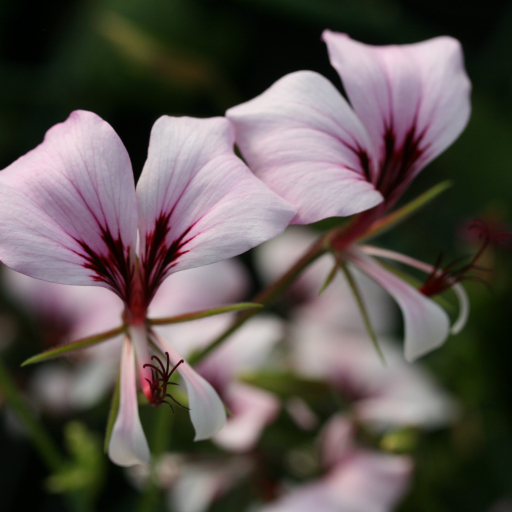
- 🌸 The Flowers: Large and elegant, the flowers feature two oversized upper petals splashed with deep wine-red or purple veins, contrasted by three smaller, pale lower petals.
🏡 In Your Garden
- 🧱 Structure and Support: Because the stems are thin and succulent, they can be quite brittle. In the wild, they scramble through taller bushes for support; in your home, they look best in a hanging basket or leaning against a small trellis.
- ☀️ The "Succulent" Treatment: This plant thrives on neglect. It requires exceptionally sharp-draining soil—think cactus mix with extra perlite. It hates "wet feet," so only water when the soil is bone-dry to the touch to prevent stem rot.
- 🌤️ Light Nuance: While it loves bright light, the stems can turn a reddish-bronze color if exposed to intense, direct summer sun. This is a natural stress response and can actually look quite attractive!
⚠️ Safety & Toxicity
- 🐾 Pet Sensitivity: Like many members of the Pelargonium family, it contains geraniol and linalool. If ingested by cats or dogs, it may cause mild digestive upset or skin irritation.
- 👶 Human Safety: Generally safe to handle, though the sap may cause minor dermatitis in individuals with very sensitive skin. It is always best to wash your hands after pruning.
✨ Fun Fact
The species name tetragonum is derived from the Greek words "tetra" (four) and "gonia" (angle), directly referencing its unique square stems which act as miniature water-storage reservoirs during South African droughts.

Detailed Care Instructions
To grow Pelargonium tetragonum, also known as square-stemmed pelargonium, you can follow these steps:
- Planting: Obtain a healthy Pelargonium tetragonum plant or seeds from a reputable source. Choose a well-draining pot or garden bed with sandy or gritty soil.
- Light: Place the plant in a location that receives full sun to partial shade. Pelargonium tetragonum thrives in bright light conditions.
- Watering: Water the plant thoroughly when the top inch of soil feels dry. Avoid overwatering as it can lead to root rot. During winter, reduce the watering frequency.
- Fertilizing: Apply a balanced, slow-release fertilizer once a month during the growing season (spring and summer). Follow the package instructions for dosage.
- Pruning: Prune Pelargonium tetragonum regularly to maintain its shape and encourage bushier growth. Remove any dead or damaged leaves and stems to keep the plant healthy.
- Propagation: Pelargonium tetragonum can be propagated using stem cuttings. Take a 3-5 inch cutting from a healthy plant, remove the lower leaves, and place it in a well-draining rooting medium. Keep the cutting moist until it develops roots.
- Maintenance: Keep an eye out for pests such as aphids or spider mites. If infested, treat the plant with an appropriate insecticide or use organic methods like neem oil or insecticidal soap.
- Winter care: Pelargonium tetragonum is not frost-tolerant. If you live in a cold climate, consider moving the plant indoors or protecting it during winter.
Remember to research specific care recommendations for your particular region, as it may influence when and how you care for your Pelargonium tetragonum plant.

Place in a bright room that is sun drenched almost all day. Or directly in a south-facing window.

To properly water this plant, you should begin by assessing the soil moisture using a moisture meter or by sticking your finger about an inch into the soil. Water the plant deeply only when the top inch of soil feels dry to the touch. Be sure to allow any excess water to drain from the pot completely to avoid waterlogged soil. It is also important to avoid getting water on the leaves or stem of the plant as this can lead to leaf scorch or stem rot. Finally, be attentive to the plant's water needs, adjusting your watering schedule as necessary based on factors such as temperature, humidity, and the size of the pot.
To fertilize this plant, use a balanced fertilizer that has equal amounts of nitrogen, phosphorus, and potassium. Apply the fertilizer to the soil once every two weeks during the growing season, which is typically from spring to early fall. Be careful not to over-fertilize, as this can cause the plant to become leggy and produce fewer flowers. Water the plant thoroughly after fertilizing to help distribute the nutrients evenly throughout the soil.
Pelargonium Tetragonum prefers well-draining soil that is neutral to slightly acidic. The soil should be rich in nutrients and organic matter, with good ventilation to prevent waterlogging and root rot. A mix of peat, sand, and perlite or vermiculite is recommended for optimal growth. Humus and bone meal can be added to boost soil fertility. It is important to avoid heavy clay soils or those with high alkaline content, as they can impede nutrient uptake and cause damage to the plant. Additionally, regular watering and fertilization are crucial to maintaining healthy growth and flower production.
To propagate this plant, take a cutting of its stem that is approximately 3-4 inches long. Cut the stem at a 45-degree angle just below a leaf node. Remove any leaves that would be below the soil surface when you plant it.
Prepare a pot with a well-draining soil mix that is moist but not wet. Dip the cut end of the stem in rooting hormone and plant it in the soil. You can propagate several cuttings in one pot, but make sure they are not too crowded.
Cover the pot with a plastic bag or clear plastic wrap to create a humid environment. Place the pot in a location with bright, indirect light and temperatures between 60-80°F.
Check the cuttings regularly and mist them with water if the soil begins to dry out. In about 4-6 weeks, you should begin to see roots forming on the cuttings. Once the roots are well established, you can remove the plastic cover.
Transplant the new plants into individual pots with fresh soil and continue to care for them as you would an established Pelargonium tetragonum plant.
Common pests of the square-stemmed pelargonium include Spider mites, fungus gnats, aphids, whiteflies. Make a habit of checking your square-stemmed pelargonium frequently for pests so that any infestations can be caught and managed early.








