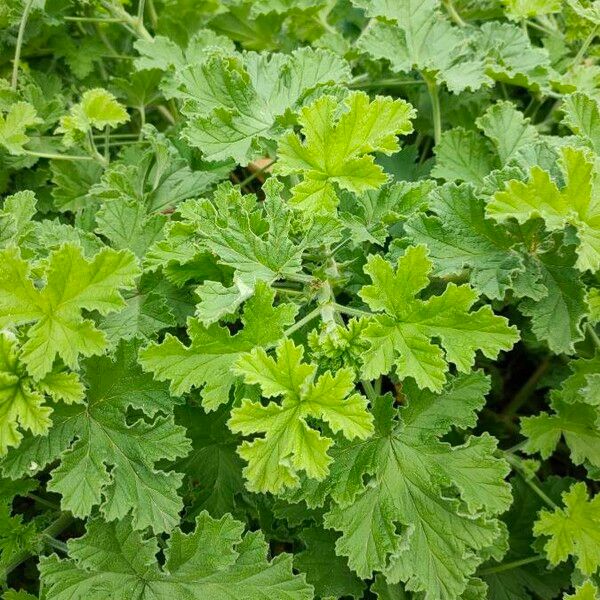
Plant Overview
Commonly known as the Rose Scented Geranium, this plant is the secret star of the perfume world. While it looks like a humble garden shrub, its leaves hold a complex essential oil that smells remarkably like expensive damask roses. Originating from South Africa, it has traveled the globe, earning a place in Victorian parlors and modern apothecary gardens alike for its calming, sweet-floral fragrance.
🔍 How to Identify
- 🌿 The Foliage: The leaves are deeply lobed, almost lace-like, and have a slightly rough, "sandpaper" texture (which is where the name asperum comes from).
- 🌸 The Blooms: It produces clusters of small, delicate flowers that are usually pale pink or lavender, often featuring two darker purple "nectar guides" on the upper petals.
- 👃 The Scent Test: Unlike most flowers, the scent isn't in the petals—it's in the leaves. Rubbing a leaf between your fingers will release an unmistakable, powerful burst of rose and citrus.
🏡 In Your Garden
- ☀️ Sun & Air: This plant is a Mediterranean soul at heart. It thrives in bright, direct sunlight which helps it concentrate its aromatic oils. Good air circulation is vital to prevent "wet feet" and fungal issues on those fuzzy leaves.
- ✂️ Pruning Habits: It can become "leggy" or woody if left to its own devices. Regular pinching of the tips encourages it to bush out, giving you more fragrant foliage to enjoy and keeping the plant's shape tidy.
- 💧 Drought Strategy: Because it stores a bit of moisture in its semi-succulent stems, it prefers to dry out between waterings. Overwatering is the quickest way to lose a Pelargonium.
⚠️ Safety & Toxicity
- 🐾 Pet Warning: While delightful for humans, this plant contains geraniol and linalool. It is considered toxic to dogs, cats, and horses if ingested, often causing skin irritation or digestive upset.
- 👶 Human Sensitivity: The essential oils are generally safe for aromatic use, but the hairy leaves can sometimes cause mild contact dermatitis (skin redness) in people with very sensitive skin.
✨ Fun Fact
In the 19th century, Rose Geranium was the "poor man's rose." Because pure rose oil was so expensive, distillers used Pelargonium x asperum to stretch their supplies or create more affordable perfumes and soaps that smelled just like a royal garden!

Detailed Care Instructions
To grow Pelargonium X Asperum, also known as scented geraniums, follow these steps:
- Choose a location: Scented geraniums thrive in full sun to partial shade. Select a location that receives at least 6 hours of direct sunlight per day.
- Soil preparation: Ensure the soil is well-draining with a pH level between 6.0 and 7.0. Incorporate organic matter, such as compost or well-rotted manure, to improve drainage and nutrient content.
- Propagation: Scented geraniums can be grown from seeds, stem cuttings, or division of mature plants. Using stem cuttings is often the easiest and most successful method. Take a 4-6 inch cutting of healthy, non-flowering stem and remove the lower leaves. Insert the cutting into moistened potting soil or a mixture of perlite and vermiculite, burying at least half of the cutting. Keep the soil moist but not waterlogged until roots develop.
- Planting: Once roots have developed, transfer the rooted stem cutting into a well-prepared garden bed or a container. Space the plants about 12-18 inches apart to allow for growth.
- Watering: Scented geraniums prefer slightly dry conditions, so water infrequently but deeply. Allow the top inch of soil to dry out before watering again. Avoid over-watering, as it can lead to root rot and other issues.
- Fertilization: Apply a balanced, slow-release fertilizer once or twice during the growing season, following the manufacturer's instructions. Be cautious not to over-fertilize, as scented geraniums do not require heavy feeding.
- Pruning: Regularly trim back the plants to maintain their shape and promote bushier growth. Pinching off the tops of the stems encourages branching. Pruning also helps maintain the overall health and vigor of the plants.
- Pests and diseases: Scented geraniums are generally resistant to pests and diseases. However, keep an eye out for common garden pests like aphids, spider mites, and whiteflies. Treat any infestations promptly using organic pest control methods if necessary.
- Harvesting: Enjoy the aromatic leaves of scented geraniums by picking them when needed. The leaves can be used fresh or dried for culinary purposes, crafting, or potpourri.
By following these guidelines, you can successfully grow Pelargonium X Asperum and enjoy their delightful fragrance and beautiful foliage.
Pelargonium X Asperum is a plant that is easily prone to root rot if overwatered. It is recommended to allow the soil to dry out slightly in between waterings. Before watering, check the top inch of soil by sticking your finger in it. If it feels dry, then it is time to water. When watering, make sure to thoroughly saturate the soil until water runs out of the drainage holes at the bottom of the pot. Avoid getting water on the leaves and only water the soil directly. In addition, make sure that the pot has good drainage to prevent excess water from sitting in the bottom of the pot. Finally, reduce watering frequency during the plant's dormant season to prevent the roots from becoming waterlogged.
- Choose a balanced, water-soluble fertilizer with equal amounts of nitrogen, phosphorus, and potassium.
- Dilute the fertilizer in water according to package instructions.
- Water the plant thoroughly and wait until the soil is moist before applying the fertilizer.
- Apply the fertilizer every two to four weeks during the growing season (spring and summer).
- Avoid fertilizing during the plant's dormant period (fall and winter).
- Do not over-fertilize, as this can cause the plant to become weak and vulnerable to pests and diseases.
- Consider adding organic compost to the soil as an alternative to chemical fertilizers.
Pelargonium X asperum thrives best in a well-draining soil mix. The ideal medium should replicate its native habitat conditions, which are somewhat arid and nutrient-poor. Here are key considerations for selecting the right soil:
- Drainage: Ensure the soil mix has excellent drainage to prevent waterlogging, which can lead to root rot. Adding components like perlite, coarse sand, or fine gravel can improve drainage.
- Texture: A loamy or sandy-loam texture is ideal. These soils are loose and allow roots to penetrate easily while also ensuring proper aeration.
- Organic Matter: Incorporate organic matter such as compost or well-rotted manure. This will provide essential nutrients while still maintaining good structure and drainage.
- pH Level: The preferred soil pH is slightly acidic to neutral, typically in the range of 6.0 to 7.0.
- Nutrient Content: While this plant does not require extremely nutrient-rich soil, a balanced mix with moderate fertility is beneficial. Avoid overly rich soils, which can promote excessive foliage growth at the expense of flowering.
- Commercial Mixes: Commercial potting mixes formulated for cacti or succulents can be a good starting point. You can further modify these mixes with additional components like compost or sand to suit the plant’s specific needs.
By focusing on these attributes when choosing or creating your soil mix, you can provide an optimal growing environment for Pelargonium X asperum. Regular checks to ensure the soil isn’t retaining too much moisture and occasional feeding with a balanced fertilizer during the growing season can also help maintain plant health.
There are several ways to propagate this plant, one of which is through stem cuttings. To do this, select a healthy stem with several leaves and remove the lower leaves, leaving only a few at the top. Dip the cut end in rooting hormone and plant it in a well-draining soil mix. Keep the soil moist and in a humid environment until roots have formed.
Another way to propagate this plant is through division. Carefully separate the plant into smaller sections, making sure each section has roots attached. Plant these sections in separate pots with a well-draining soil mix and water thoroughly.
The plant can also be propagated through seed. Sow seeds in well-draining soil mix and keep soil moist. Germination usually occurs within two weeks.
When propagating any plant, it is important to maintain a healthy environment for the new growth to thrive. Provide adequate sunlight, water, and nutrients, and monitor for any signs of disease or pest infestation.








