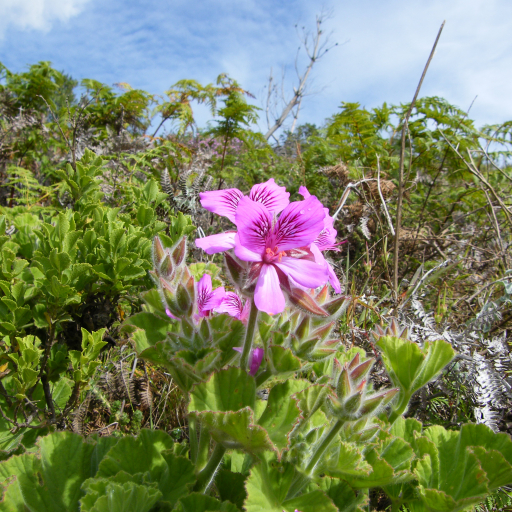
Plant Overview
Commonly known as the Regal Geranium or the Martha Washington Geranium, these showstoppers are the aristocrats of the flower world. Unlike their common cousins, they boast massive, ruffled blooms that look like they were painted by hand. Originating from South African hybrids, they became a Victorian-era obsession and remain the go-to choice for gardeners who want a "wow" factor in their spring displays.
🔍 How to Identify
- 🌸 Velvet Blooms: Massive, trumpet-like flowers that often feature "dark eyes" or deep maroon blotches in the center of the petals, resembling pansies.
- 🍃 Jagged Foliage: Stiff, fan-shaped leaves that are bright green and have sharply toothed or ruffled edges, feeling slightly like sandpaper.
- 🏰 Shrubby Habit: They grow in an upright, bushy manner rather than trailing, often reaching up to two feet in height.
🏡 In Your Garden
- 🌬️ The Cool Requirement: Unlike most geraniums, Regals are "temperature sensitive." They actually stop blooming if the nights get too hot, as they require cool evening breezes to trigger their flower buds.
- ✂️ Deadheading Ritual: To keep the plant looking its best, you must snap off spent flower stalks at the base. This tells the plant to keep producing flowers instead of putting energy into seeds.
- 💧 Thirsty Aristocrats: They have a finer root system than Zonal geraniums, meaning they dry out faster. They prefer consistently moist (but never soggy) soil to prevent their lower leaves from yellowing.
⚠️ Safety & Toxicity
- 🐾 Pet Warning: Mildly toxic to cats and dogs. The plant contains geraniol and linalool, which can cause vomiting, lethargy, or skin irritation if chewed on.
- 🖐️ Skin Sensitivity: While generally safe for humans, the essential oils in the leaves can occasionally cause a mild itchy rash for those with very sensitive skin.
✨ Fun Fact
The "Martha Washington" nickname became popular in the United States during the early 20th century because the plant’s formal, elegant appearance was thought to represent the dignity of the first First Lady.

Detailed Care Instructions
To grow a Pelargonium X Domesticum, commonly known as the regal or Martha Washington geranium, follow these steps:
- Choose a suitable location: Select a location that receives at least six hours of direct sunlight per day. These plants can also tolerate partial shade but will bloom best in full sun.
- Prepare the soil: Ensure that the soil is well-draining and rich in organic matter. Pelargoniums prefer slightly acidic soil with a pH between 6.0 and 7.0. If the soil is heavy or compacted, add compost or organic matter to improve drainage.
- Planting: Plant the Pelargonium X Domesticum during the spring or fall. Dig a hole slightly larger than the root ball and place the plant in it, ensuring that the crown of the plant is level with the soil surface. Backfill the hole and gently tamp the soil around the plant.
- Watering: Water the newly planted geranium thoroughly to settle the soil. Afterward, water deeply but less frequently to encourage deep root growth. Allow the top inch of soil to dry before watering again to avoid overwatering, which can lead to root rot.
- Fertilizing: Regularly feed the geranium with a balanced, water-soluble fertilizer. Apply the fertilizer according to the package instructions, generally every 4-6 weeks during the growing season (spring through fall). Avoid overfertilizing, as it can cause excessive foliage growth at the expense of blooming.
- Pruning: Prune the Pelargonium X Domesticum regularly to maintain its shape and encourage bushier growth. Pinch off spent flowers and remove dead or leggy stems to promote new blooms. Pruning can be done throughout the growing season as needed.
- Winter care: Pelargonium X Domesticum plants are not frost-tolerant, so they need protection during the winter months in colder climates. Before the first frost, bring potted plants indoors, or dig up the plants from the ground and pot them. Store them in a cool, dark place with temperatures around 45-50°F (7-10°C). Water sparingly during this dormant period.
- Propagation: If you want to propagate your Pelargonium X Domesticum plant, it can be easily done through stem cuttings. Take 4-6 inch (10-15 cm) long cuttings from healthy, non-flowering stems and remove the lower leaves. Plant the cuttings in a well-draining potting mix, keep them moist, and provide indirect light. The cuttings should develop roots within a few weeks.
By following these steps with care, you can successfully grow and enjoy your Pelargonium X Domesticum plant.

Place in a window with dappled sun or a spot in the middle of a room. Or directly in a window facing west or east.

1. Watering Frequency: Pelargonium X Domesticum plants need to be watered regularly, usually every 5-7 days, depending on the humidity and temperature in their environment.
2. Soil Moisture: Before watering the plant, check the soil's moisture level. The top layer of soil should be dry to the touch. If the soil feels excessively dry, it is time to water the plant.
3. Watering Technique: When watering, aim for the soil around the plant's base rather than the leaves. Use a watering can or a mist sprayer to control the amount of water you're using. Avoid overwatering the plant as it can cause root rot and other water-related diseases.
4. Water Quality: Pelargonium X Domesticum plants prefer slightly acidic pH levels of 5.5-6.5. When watering, it is essential to use water that is free of any chemicals or contaminants, like chlorine. Let the water sit out for a few hours to allow it to reach room temperature before using it to water the plant.
5. Drainage: Ensure that the pot you're using has proper drainage holes to prevent water from accumulating in the soil. You can also use a pot with a saucer, but ensure that it is emptied regularly.
6. Weather and Season: Pelargonium X Domesticum plants require less water during the winter months and during periods of low humidity. During hot, dry summer months, the plant's watering needs may increase.
7. Observation: Keep an eye on the plant for signs of over or under-watering, like yellowing leaves, limp stems, or wilting. Adjust your watering schedule and technique accordingly to maintain the plant's health.
To fertilize this plant, use a balanced fertilizer with equal amounts of nitrogen, phosphorus, and potassium. The best time to fertilize is during the growing season, which begins in the early spring and lasts through the fall. You can use a slow-release fertilizer or a liquid fertilizer, applying it every two to four weeks. Make sure to follow the instructions on the fertilizer packaging and avoid over-fertilizing, as this can damage the plant. Additionally, always water the plant thoroughly before and after fertilizing to prevent any fertilizer burn to the roots.
The best soil to use for this plant is a well-draining soil that is slightly acidic. It should be a mixture of organic matter such as compost, peat moss, or leaf mold and a mineral component such as sand, perlite, or vermiculite. The soil should also be rich in nutrients and have a pH level of about 6-6.5. It is important to avoid using heavy soils that hold too much water and cause root rot. Additionally, adding a slow-release fertilizer to the soil can help provide essential nutrients to the plant throughout its growing season.
There are different ways to propagate this plant. One way is to take a stem cutting from the plant and allow it to root in water or soil. To do this, select a healthy stem with several nodes (the points where leaves emerge). Cut the stem below a node, leaving at least 2-3 leaves on the remaining stem. Remove the lower leaves from the stem, leaving only the topmost leaves. If using water, place the stem in a jar or vase filled with water, making sure the stem is submerged. Change the water every few days to prevent bacteria growth. If using soil, dip the cut end of the stem in rooting hormone powder and plant it in moist potting soil. Cover the pot with a plastic bag to create a humid environment.
Another way to propagate this plant is through division. This involves separating the plant into two or more parts, each with its own roots and stems. To do this, carefully dig up the plant and gently pull apart the roots, separating the plant into two or more clumps. Replant each clump in a separate pot with fresh soil.
Regardless of the propagation method, it is important to keep the new plants in a warm, humid area and to provide them with adequate water and light.
Common pests of the regal pelargonium include Spider mites, fungus gnats, aphids, whiteflies. Make a habit of checking your regal pelargonium frequently for pests so that any infestations can be caught and managed early.







