Plant Overview
Known as the "Forest Lily," Peliosanthes teta is a shadowy beauty from the moist, tropical jungles of Southeast Asia. Unlike showy garden lilies that reach for the sun, this plant keeps its treasures low to the ground, offering a mysterious and architectural presence to any shaded collection. It is a favorite among collectors of "Gothic" plants due to its dark, moody floral tones and metallic-looking seeds.
🔍 How to Identify
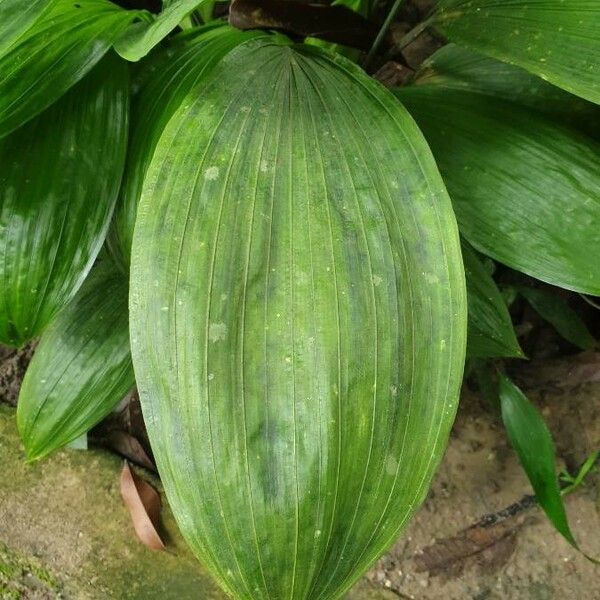
- 🍃 Lush Foliage: The leaves are broadly lance-shaped and deep green, often featuring prominent parallel veins that give them a pleated or corrugated texture similar to a Cast Iron Plant.
- 🍇 Dark Blooms: It produces short, sturdy flower spikes (racemes) crowded with small, waxy, bell-shaped flowers that range from deep maroon to an almost-black purple.
- 🧿 Azure Seeds: Perhaps its most striking feature is its "naked" seeds. As the fruit develops, it bursts early, exposing fleshy, bright metallic-blue seeds that look like tiny gemstones resting near the base of the plant.
🏡 In Your Garden
- ☁️ High Humidity Fanatic: This plant is a true child of the rainforest floor. It thrives in high-humidity environments like conservatories or large terrariums and will develop brown, crispy leaf tips if the air in your home is too dry.
- 🌑 The Shadow Dweller: Because it evolved under dense forest canopies, it is exceptionally tolerant of low light. Direct afternoon sun is its enemy and will quickly scorch the elegant foliage; keep it in a spot where it receives soft, dappled light.
⚠️ Safety & Toxicity
- 🐾 Mildly Toxic: Like many members of the Asparagaceae family, this plant contains saponins which can be irritating if ingested.
- 👶 Keep Out of Reach: While not considered deadly, it is best kept away from curious pets and toddlers, as eating the leaves or blue seeds may cause stomach upset, drooling, or nausea.
✨ Fun Fact
In various cultures across Southeast Asia, Peliosanthes teta isn't just an ornamental plant; it is a staple in traditional medicine. The roots are often brewed into a tonic or tea believed to help reduce fevers and soothe internal inflammation.

Detailed Care Instructions

Place in a window with dappled sun or a spot in the middle of a room. Or directly in a window facing west or east.

Some plants require more regular watering than others, which should be done every few days. It's critical to maintain the soil moist all of the time. The water requirements of the same plant placed in pots with varying sizes will differ. Because the water in the smaller pot evaporates faster than the water in the larger pot, it will require more watering. Regardless of pot size, the surface should constantly be maintained moist.








