Plant Overview
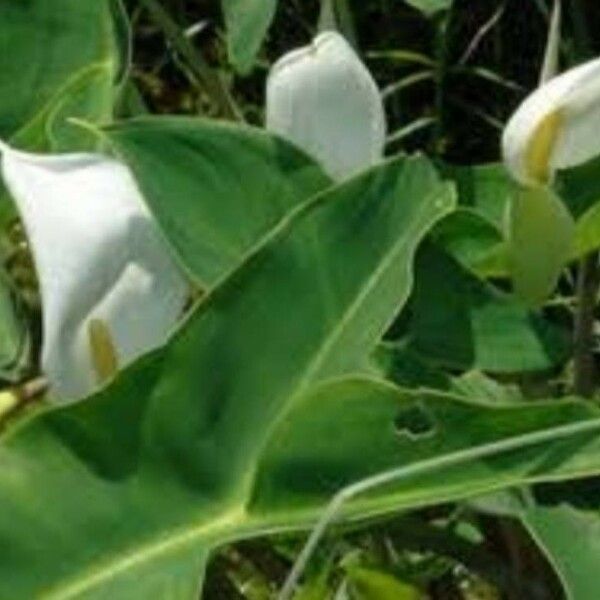
Often called the Spoon Flower because of its snowy-white, scoop-shaped bloom, Peltandra sagittifolia is a striking wetland beauty native to the southeastern United States. It stands as a more delicate, white-flowered cousin to the common Green Arrow Arum. In both wild marshes and backyard water gardens, it is prized for its elegant, arrowhead-shaped foliage that adds a touch of architectural drama to the water's edge.
🔍 How to Identify
- 🍃 The Leaves: Look for deep green, glossy leaves shaped like elongated arrowheads (sagittate). They can grow up to 12 inches long and feature prominent veins.
- 🥄 The Bloom: The "flower" is actually a white, leaf-like bract called a spathe that curves gracefully around a central spike (the spadix), resembling a delicate porcelain spoon.
- 🍒 The Fruit: After flowering, the plant produces a cluster of berries that transition from green to a dark reddish-brown or black, tucked into the remains of the flower base.
🏡 In Your Garden
- 💧 Wetland Specialist: This plant loves having "wet feet." It is best suited for the margins of ponds, water features, or bog gardens where the soil remains consistently saturated or shallowly submerged.
- 🌱 Mucky Foundations: It thrives in acidic, organic-rich "muck." Because it grows from thick, creeping rhizomes, it is excellent for stabilizing soil along a pond’s edge to prevent erosion.
- ☀️ Light Balance: While it enjoys the sun, in hotter climates, it prefers a bit of dappled afternoon shade to keep its lush leaves from scorching.
⚠️ Safety & Toxicity
- 🚫 Status: Toxic to humans and pets.
- 👅 Irritant: Like many members of the Arum family, it contains calcium oxalate crystals. If any part of the plant is chewed or swallowed, these "needles" cause intense burning, swelling of the mouth and throat, and digestive distress.
- 🐾 Pet Safety: Keep this plant out of reach of curious dogs or cats who might be tempted to nibble on the low-growing foliage near a pond.
✨ Fun Fact
The Spoon Flower is much rarer than its cousin, the Green Arrow Arum (Peltandra virginica). While the green version is found all over the Eastern US, the white Spoon Flower is a Southern specialty, primarily gracing the coastal plains from North Carolina down to Florida.

Detailed Care Instructions
To grow Peltandra sagittifolia, also known as arrow arum or duck-potato, follow these steps:
- Climate and location: Peltandra sagittifolia is native to wetlands, so it requires a moist, boggy or marshy environment. It thrives in full sun to partial shade but can tolerate shade. Ensure the temperature is within the suitable range for the plant, which is typically hardy in USDA zones 5-9.
- Propagation: Peltandra sagittifolia can be propagated either by seed or by dividing existing plants.
- Seed propagation: Collect ripe seeds from the plant in autumn when the seedheads have turned brown. Sow the seeds immediately in a tray or container filled with a moist growing medium. Place the tray in a warm location with temperatures around 70-80°F (21-27°C). Keep the growing medium consistently moist. Germination usually occurs within a few weeks.
- Division: In late winter or early spring, dig up an established plant. Gently separate the clumps into smaller sections, making sure each section has a healthy rhizome and some foliage. Replant these divisions in a suitable location.
- Soil preparation: Peltandra sagittifolia prefers a loamy, slightly acidic to neutral soil. Ensure that the planting area stays constantly moist. If your soil is heavy clay, you may need to improve drainage by adding organic matter like compost or well-rotted manure.
- Planting: Dig a hole slightly larger than the root ball of the division or for the seeds, ensuring that the rhizome is just below the soil surface. Space the plants about 1-2 feet apart if you are planting multiple individuals.
- Watering and maintenance: Keep the soil consistently moist, especially during dry periods. If growing in a container, ensure that it doesn't dry out. Monitor the soil moisture regularly to prevent waterlogging. Remove any weeds that may compete with the plant for nutrients and space.
- Fertilization: Peltandra sagittifolia doesn't require frequent fertilization. However, adding a balanced slow-release fertilizer or a layer of compost in spring can help promote healthy growth.
- Pests and diseases: These plants are generally resistant to most diseases and pests. However, watch out for potential issues like slugs and snails, which can damage the foliage. If necessary, control these pests using organic methods or appropriate insecticides.
By following these guidelines, you can successfully grow Peltandra sagittifolia in your garden or wetland area.

Place in a bright room that is sun drenched almost all day. Or directly in a south-facing window.

To water this plant, it is important to first make sure it is potted in a well-draining soil mix. This will prevent water from pooling and potentially drowning the roots. When watering, make sure to saturate the soil completely, until water runs out the drainage holes at the bottom of the pot. Avoid watering too frequently, allowing the top inch or two of soil to dry out before watering again. In addition, this plant prefers to be kept consistently moist, so make sure to not let the soil completely dry out between waterings. It is also important to avoid getting water on the leaves, which can cause damage or lead to disease issues.
To fertilize this plant, use a balanced fertilizer with a 10-10-10 ratio. Apply the fertilizer every 2-3 weeks during the growing season, starting in the spring and continuing until early fall. Dilute the fertilizer according to the instructions on the label and apply around the base of the plant, avoiding contact with the leaves. Water the plant immediately after fertilizing to help the nutrients absorb into the soil. Avoid over-fertilizing, as this can lead to burning the roots.
The ideal soil type for this plant is a well-draining soil that is high in organic matter. It should be slightly acidic with a pH level between 6.0-6.5. The soil should also be consistently moist but not waterlogged. Clay soils should be avoided as they can become compacted and prevent healthy root growth. A mix of peat moss, sand, and loam soil can help provide the appropriate conditions for this plant to thrive.
To propagate this plant, you will need to carefully remove a healthy stem or leaf from the existing plant. Next, place the stem or leaf in a small container of water, making sure that the base of the cutting is submerged. It is important to ensure that the container is located in a warm, well-lit area.
Over time, the cutting will begin to develop roots. Once the roots have grown to a reasonable size, the new plant can be carefully removed from the water and planted in soil. Be sure to keep the soil moist and continue to provide plenty of light while the new plant becomes established.








