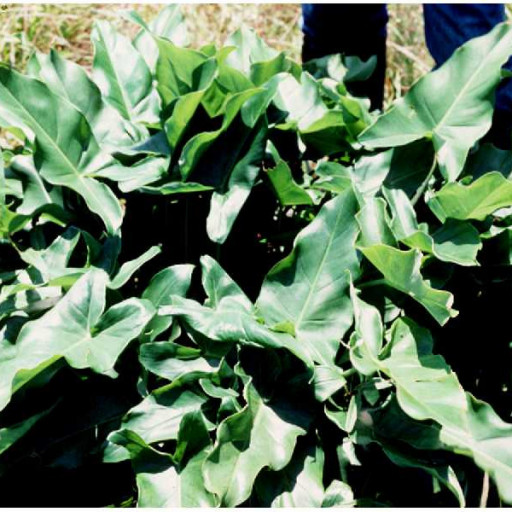
Plant Overview
Often called the Green Arrow Arum or Tuckahoe, this plant is a staple of North American wetlands. With its bold, architectural leaves that look like ancient spearheads emerging from the mud, it brings a prehistoric feel to any pond edge. Historically, it was a vital survival food for Indigenous peoples, though it requires very specific preparation to be safe.
🔍 How to Identify
- 🏹 The Foliage: Large, bright green leaves shaped perfectly like an arrowhead. They feature three prominent veins—one running to the tip and one to each of the lower lobes.
- 🕯️ The "Flower": It doesn't have traditional petals. Instead, it produces a long, wavy green sheath (spathe) that tightly wraps around a hidden flowering spike (spadix).
- 🍇 The Fruit: After flowering, the plant produces a heavy cluster of green or blackish berries. As they ripen, the stem actually curves downward to deposit the seeds directly into the mud or water.
🏡 In Your Garden
- 💧 Water Enthusiast: Unlike most garden plants, this arum loves "wet feet." It thrives in standing water up to 6 inches deep or in saturated boggy soil, making it perfect for the margins of a backyard pond.
- 🐢 Wildlife Haven: While it provides excellent cover for frogs and small fish, its seeds are a favorite snack for wood ducks and snapping turtles, who can eat them without ill effects.
- 🌱 Low Maintenance: Because it grows from thick rhizomes, it is incredibly sturdy. It won't "wander" as aggressively as some other aquatic plants, keeping its clumped shape year after year.
⚠️ Safety & Toxicity
- 🚫 Status: Toxic to humans and pets if handled or eaten raw.
- 👅 Irritant: The entire plant contains calcium oxalate crystals. If chewed, these microscopic "needles" cause intense burning, swelling of the mouth and throat, and digestive distress.
- 🐾 Pet Warning: Keep curious dogs away from the pond edge; ingestion can lead to excessive drooling and difficulty swallowing.
✨ Fun Fact
The name "Tuckahoe" comes from Native American languages and refers to the plant's thick, starchy roots. While toxic when raw, Indigenous groups spent days roasting or drying the roots to neutralize the toxins, eventually grinding them into a flour used to bake bread.

Detailed Care Instructions
| Lighting | Full Sun |
| Hardiness Zones | 5A - 10B |
To grow Peltandra Virginica, also known as the green arrow arum or arrow arum, you can follow these steps:
- Choose the right location: Peltandra Virginica prefers to grow in moist or wet environments. It thrives in marshes, swamps, and along water margins. If you have a pond or a wetland area in your garden, it would be an ideal spot for this plant.
- Prepare the soil: The soil around the planting area should be rich in organic matter and consistently moist. Peltandra Virginica prefers loamy soil, but it can tolerate sandy or clay soils as well.
- Planting: Dig a hole in the prepared area that is slightly larger and deeper than the plant's root ball. Gently place the plant in the hole and fill it with soil, ensuring that the top of the root ball is level with the surrounding ground. Pat the soil down gently to eliminate any air pockets.
- Watering: Peltandra Virginica requires constant moisture, so make sure to water it thoroughly after planting. Afterward, keep the soil consistently moist but not waterlogged. Regular watering will be necessary, especially during dry spells or droughts.
- Sunlight: While Peltandra Virginica can tolerate partial shade, it prefers full sun or light shade. Ensure that the plant receives at least 6 hours of direct sunlight each day.
- Mulching: Apply a layer of organic mulch around the plant to retain moisture in the soil and suppress weeds. This helps keep the plant's roots cool and prevents drying out.
- Fertilizing: Peltandra Virginica generally doesn't require much fertilization. However, if the plant appears to be struggling, you can apply a balanced slow-release fertilizer according to the manufacturer's instructions.
- Maintenance: Remove any dead or yellowing leaves periodically to keep the plant looking tidy. Additionally, you may need to divide and repot the plant every few years if it becomes too crowded or sprawling.
By following these guidelines, you should successfully grow and maintain your Peltandra Virginica plant. Remember to consider local regulations regarding planting near water bodies and choose appropriate locations accordingly.

Place in a window with dappled sun or a spot in the middle of a room. Or directly in a window facing west or east.

To properly water this plant, fill a watering can with room temperature water and slowly pour it over the soil surrounding the base of the plant. Be sure to avoid getting water on the leaves. Check the soil consistently to make sure it remains moist to the touch, but not overly saturated. Adjust the watering schedule according to the plant's growth and environment.
To fertilize this plant, begin by selecting a slow-release fertilizer that is balanced and designed for use in aquatic environments. Be sure to follow the instructions on the packaging carefully, and apply the fertilizer as directed, typically by placing the pellets in the soil near the base of the plant. Avoid over-fertilizing, as this can lead to nutrient imbalance and unhealthy growth patterns. It is also important to monitor water quality regularly and adjust fertilization levels as needed to maintain optimal conditions for this plant's growth and health.
Peltandra Virginica, a plant that grows in wet soil conditions, requires a soil mixture that is moisture-retentive, nutrient-rich, and well-draining. A suitable soil mix might consist of a blend of compost, loamy soil, and perlite or coarse sand. The soil should be slightly acidic with a pH level around 6.0-6.5. It is important to avoid soils that are too heavy or compacted as this can hinder root development and water absorption.
To propagate this plant, first identify healthy and mature plants with numerous leaves. Then, observe and select plants with large and plump rhizome. Dig out the rhizomes with a sharp and sterile garden knife or spade, ensuring each section has numerous emerging shoots and healthy leaves. Cut the rhizomes into sections, each containing one or two eyes or new shoots. Then, prepare pots with a rich and fertile soil mix. Plant the sections of the rhizomes one inch below the surface of the soil in each pot, ensuring the new shoots are pointing upwards. Water gently and keep the pots in a warm and humid environment with bright but indirect sunlight. Maintain the soil moist by watering regularly, but avoid overwatering or allowing standing water. When the new shoots reach a height of about four to six inches, transplant them into larger pots or in the desired location in the garden.
Common pests of the green arrow arum include Spider mites, thrips. Make a habit of checking your green arrow arum frequently for pests so that any infestations can be caught and managed early.








