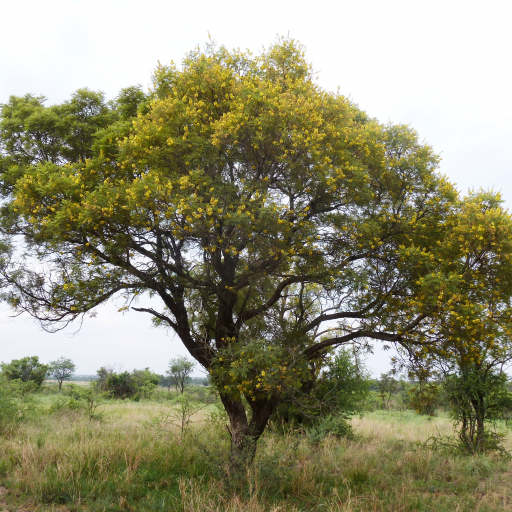
Plant Overview
The Peltophorum africanum, widely known as the Weeping Wattle or African Wattle, is a stunning deciduous tree that paints the African savannah in brilliant shades of gold. Its most famous nickname comes from a curious interaction with insects that makes the tree appear to be "crying" or raining during the hot summer months. It is a favorite among landscapers looking for a hardy, drought-tolerant shade tree with a touch of wild elegance.
🔍 How to Identify
- 🌿 Feathery Foliage: The leaves are twice-compound (bipinnate) and look remarkably like fern fronds, often having a soft, silvery-green sheen.
- 🟡 Golden Spikes: In spring and summer, the tree is covered in upright, crinkled yellow flowers that grow in large, showy clusters at the ends of branches.
- 🫘 Flat Seed Pods: After the flowers fade, the tree produces distinctive dark brown, flat, woody pods that can hang on the branches for months.
- 🪵 Rough Bark: The trunk features a rugged, grey-to-brown bark that becomes deeply fissured as the tree ages, providing a home for many small insects.
🏡 In Your Garden
- 🌳 The Taproot Rule: This tree develops a strong, deep taproot early in its life. Because of this, it is notoriously difficult to transplant once established, so choose its permanent "forever home" carefully.
- ☀️ Drought Warrior: Once established, the Weeping Wattle is incredibly tough. It thrives in full sun and can survive long dry spells, making it an excellent choice for xeriscaping or water-wise gardens.
- 🐝 Wildlife Magnet: It is a high-value ecological asset. The flowers attract bees and butterflies, while the dense canopy provides nesting sites for birds. In its native habitat, even elephants enjoy snacking on the bark.
⚠️ Safety & Toxicity
- ✅ Safe Status: The Weeping Wattle is generally considered non-toxic to humans, dogs, cats, and livestock.
- 🤚 Skin Sensitivity: While not poisonous, the fine hairs on the seed pods or the rough bark might cause minor mechanical irritation to sensitive skin if handled roughly.
- 🧹 Garden Safety: Be aware that the tree drops a significant amount of flowers and pods. On walkways, these can become slippery when wet or crunchy trip hazards for toddlers.
✨ Fun Fact
The tree earns its "Weeping" nickname thanks to the Spittlebug. These tiny insects cluster on the branches and suck the sap, excreting excess moisture so rapidly that it drips from the tree like rain, cooling anyone standing beneath the canopy on a hot day!

Detailed Care Instructions
To grow Peltophorum Africanum plant, also known as the African Wattle, you can follow these steps:
- Choose the right location: Peltophorum Africanum plants prefer a sunny location with well-draining soil. Make sure the planting area receives at least six hours of direct sunlight daily.
- Prepare the soil: Before planting, prepare the soil by loosening it and removing any weeds or grass. You can also mix in compost or well-rotted manure to improve soil fertility and drainage.
- Planting: Dig a hole twice as wide and deep as the plant's root ball. Place the plant in the hole, ensuring the top of the root ball is level with the soil surface. Backfill the hole with soil, gently firming it around the plant.
- Watering: Give the newly planted Peltophorum Africanum a thorough watering immediately after planting. Afterward, water the plant regularly to keep the soil moist but not waterlogged. Reduce watering during winter or rainy seasons.
- Mulching: Apply a layer of organic mulch around the plant, keeping it a few inches away from the trunk. Mulching helps retain moisture, suppresses weed growth, and insulates the roots.
- Pruning: Regular pruning is not necessary for Peltophorum Africanum plants. However, you can remove any dead, diseased, or damaged branches as needed. Pruning for shaping and size control can be done in early spring.
- Fertilizing: Fertilize the plant with a balanced slow-release fertilizer in spring and early summer. Follow the instructions on the fertilizer package for proper application rates.
- Pest and disease control: Peltophorum Africanum plants are generally pest and disease-resistant. However, keep an eye out for common pests such as aphids, mealybugs, or scale insects. If necessary, use an appropriate insecticidal soap or organic pesticide to control infestations.
- Propagation: Peltophorum Africanum can be propagated through seeds or cuttings. Collect seeds from mature pods and plant them in a well-draining potting mix. For cuttings, take semi-hardwood cuttings in late summer and root them in a rooting hormone.
- Regular care: Provide regular care by checking for signs of stress, watering, and fertilizing appropriately. Monitor the plant for any signs of nutrient deficiencies, diseases, or pests, and address them promptly.
Remember, growing plants successfully also requires patience and observation. Observe the plant's growth, and adjust care accordingly for optimal results.

Peltophorum Africanum plant requires regular watering to keep its soil moist but not waterlogged. It is important to water the plant deeply so that the entire root ball is moistened. However, it is equally important to ensure that the soil is not soggy as it can lead to root rot.
The frequency of watering largely depends on the temperature, humidity and light available. During hot and dry weather, the plant may require watering more frequently, while in cooler and humid weather, the frequency of watering may decrease.
It is advisable to check the soil moisture levels before watering. To do this, stick a finger into the soil up to the second knuckle. If the soil feels dry, then it's time to water.
When watering, avoid getting water on the plant's leaves and flowers. It is best to water around the base of the plant using a watering can or a slow-running hose. Once the soil is moist, stop watering and let the excess water drain away.
To prevent overwatering, ensure the pot or container has proper drainage holes and use a well-draining soil mix. During the winter season, it is advisable to reduce the frequency of watering as the plant goes dormant during this period.
Overall, proper watering practices are essential for maintaining a healthy and vibrant Peltophorum Africanum plant.
To fertilize this plant, apply a balanced fertilizer with equal amounts of nitrogen, phosphorus, and potassium in early spring just before the growing season begins. Follow the package instructions for application rates according to the size and age of the plant. Avoid over-fertilizing, which can cause leaf burn or toxic buildup in the soil. Supplemental feeding may be necessary during the growing season for plants in poor soil or containers. Choose a slow-release granular fertilizer or one that is water-soluble and apply every 4-6 weeks as needed. Water deeply after fertilizing to help distribute nutrients evenly throughout the root zone.
The Peltophorum Africanum plant prefers well-draining soil with a slightly acidic to neutral pH level. A combination of sand, loam, and organic matter is ideal for this plant. The soil should be rich in nutrients, but not overly fertile, as this can lead to excessive growth and weak branches. It is also important to ensure the soil is moist, but not waterlogged, as this can cause root rot and other issues. Adding a layer of mulch around the base of the plant can help to retain moisture and regulate temperature.
Peltophorum Africanum plant can be propagated through several methods such as seeds, cuttings, air layering, and grafting.
To propagate through seeds, collect fresh seeds from the plant and soak them in water for 24 hours. After that, sow the seeds in well-draining soil, cover lightly with soil, and water gently. Keep the soil moist and provide the seedlings with adequate sunlight for germination.
Cuttings can be taken from semi-hardwood or hardwood stem tips of healthy plants. Trim the stem to below a node and remove any leaves from the bottom two-thirds. Dip the cut end in rooting hormone and plant it in well-draining soil. Keep the soil constantly moist and warm until new growth appears.
Air layering is another propagation method where a stem is wounded and wrapped with moist sphagnum moss and plastic wrap. Roots will form at the wound, and when new growth appears, it can be separated from the original plant and planted in soil.
Lastly, grafting involves joining a stem cutting of Peltophorum Africanum to the rootstock of a different plant. This method is typically done by experienced growers and is used to maintain the desirable characteristics of the parent plant.








