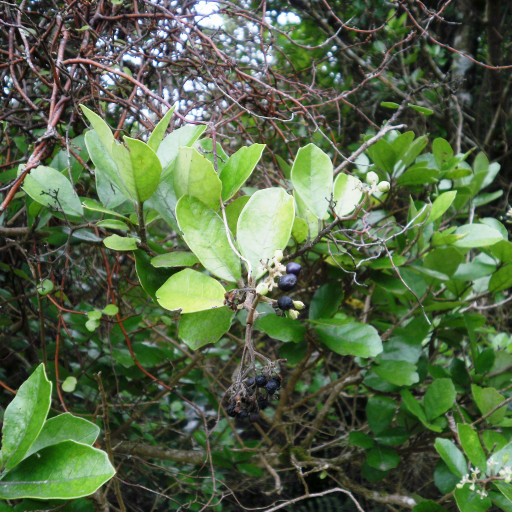
Plant Overview
Known to the Māori as the "fire tree," the Kaikomako is one of New Zealand’s most fascinating biological "transformers." It begins its life as a tangled, wiry shrub—a clever defensive strategy evolved to protect its foliage from the now-extinct Moa—before maturing into a graceful, upright tree. Its charming nickname, the Duck's Foot, comes from the peculiar shape of its leaves during its "awkward teenage years."
🔍 How to Identify
- 🦆 The "Duck's Foot" Leaf: During its juvenile stage, the leaves are small, deeply lobed, and shaped remarkably like the webbed foot of a duck.
- 🌳 The Great Transformation: As the tree reaches about 2-3 meters, it undergoes "heteroblasty." The messy, interlaced branches give way to an adult form with larger, oval, glossy green leaves that look entirely different.
- 🍦 Fragrant Clusters: In early summer, the tree is covered in panicles of tiny, creamy-white flowers that emit a sweet, heavy fragrance capable of filling a whole garden.
🏡 In Your Garden
- 🐦 A Bird’s Buffet: After flowering, the Kaikomako produces shiny black berries (drupes). These are a high-energy favorite for nectar-feeding birds like the Tui and Kererū, making it a must-have for biodiversity-focused gardens.
- 🛡️ Natural Windbreak: Because of its dense, interlaced juvenile branches, this plant is incredibly wind-resistant. It’s a "set and forget" species that handles exposed sites and various soil types once it has established its root system.
⚠️ Safety & Toxicity
- ✅ Generally Safe: The Kaikomako is considered non-toxic and is safe to plant in areas frequented by children, dogs, or cats.
- 🥯 For the Birds: While the berries are not known to be poisonous to humans, they are small, oily, and mostly stone. They are best left as a feast for the local wildlife rather than for the kitchen table.
✨ Fun Fact
In Māori mythology, Hine-kaikomako is the goddess of fire. Legend says that during a great flood, she hid the seeds of fire within the Kaikomako tree. To this day, the wood of this tree is used as the "female" rubbing stick to generate heat and sparks when starting a traditional fire.

Detailed Care Instructions

Place in a window with dappled sun or a spot in the middle of a room. Or directly in a window facing west or east.

Pennantia Corymbosa plant prefers to be watered regularly, but not excessively, to maintain healthy growth. To water this plant, you should aim to moisten the soil evenly around the root zone. Water the plant slowly and thoroughly, allowing the water to penetrate deep into the soil.
The amount of water required by the plant depends on various factors like soil type, temperature, humidity, and light. It's good to consider these factors before watering the plant. Generally, watering once a week is ideal, but check the soil moisture level by touching the soil, and if it feels dry, then it's time to water your plant.
Avoid overwatering as it can lead to root rot and waterlogging, which can be detrimental to the plant's health. Make sure the plant has proper drainage to prevent excess water accumulation.
In addition to regular watering, it's also a good idea to spray mist the leaves with water occasionally to increase humidity levels around the plant. This can help prevent the leaves from drying out and can promote healthy growth.
In conclusion, watering Pennantia Corymbosa plant requires consistency and caution to avoid over or under watering. With proper care, your plant will thrive and add beauty to your living space.
The optimal soil for Pennantia Corymbosa plant is a well-draining mix that is rich in nutrients. It should be slightly acidic with a pH between 5.5 and 6.5. This plant thrives in soil that is loose and aerated, with a good balance of organic matter and mineral particles. It is important to avoid using heavy, clay soils as they can become compacted and limit root growth. A mix of sandy loam and organic matter such as compost or peat moss is ideal. To promote healthy growth, add some slow-release fertilizer to the soil before planting.







