Plant Overview
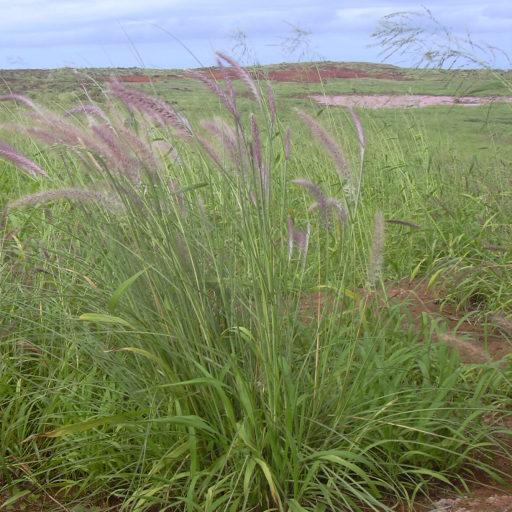
Often called the "Crimson Fountain Grass," Pennisetum setaceum is a dramatic ornamental favorite known for its graceful, arching silhouette that mimics a splashing water fountain. Originally from the scrublands of Africa and the Middle East, it has danced its way into modern landscapes worldwide, adding texture, color, and motion to even the stillest garden.
🔍 How to Identify
- 🌿 The Foliage: Look for long, narrow blades that gracefully curve downward. Depending on the variety, these can range from a vibrant lime green to a deep, moody burgundy or purple.
- 🌾 The "Bottle-brush" Blooms: The most striking feature is the fuzzy, bristly flower spikes that rise above the leaves. These plumes look like soft, feathery wands that catch the light beautifully at sunset.
- 🌬️ Growth Habit: It grows in dense, symmetrical clumps (tussocks). In the wind, the entire plant sways rhythmically, earning its reputation as a "living sculpture."
🏡 In Your Garden
- ☀️ The Sun Factor: This plant is a true sun-worshiper. To keep those deep crimson hues from fading into a dull green, it needs full, direct light; it essentially "runs" on solar power to produce its pigments.
- ✂️ The Annual Haircut: While it is incredibly hardy and drought-tolerant, it can look "shaggy" over time. Cutting the clump back to about 4–6 inches in late winter encourages a flush of fresh, colorful new growth in the spring.
- 🌍 Ecological Note: In warm, frost-free climates (like California or Hawaii), the wild green form can be quite a traveler, spreading seeds into local ecosystems. However, many garden varieties like 'Rubrum' are sterile and won't wander off.
⚠️ Safety & Toxicity
- 🐾 Pet Friendly: Great news for pet owners! This grass is generally considered non-toxic to dogs, cats, and horses.
- 🔪 Mechanical Irritation: While not chemically poisonous, the leaf blades have very fine, sharp edges. Handling the plant without gloves can result in "paper cuts" or skin irritation, so it’s best to wear long sleeves during pruning.
✨ Fun Fact
Most of the deep-red Fountain Grass seen in designer gardens is the 'Rubrum' cultivar. Unlike its wild ancestors, 'Rubrum' is "sterile," meaning it doesn't produce viable seeds. It focuses all its energy on looking beautiful rather than reproducing!

Detailed Care Instructions
| Lighting | Full Sun |
| Toxicity | Poisonous |
| Hardiness Zones | Min 9A |
To grow Pennisetum setaceum, also known as fountain grass, you can follow these steps:
- Choose a location: Select a well-drained area with full sun exposure. Fountain grass can tolerate partial shade, but it thrives in direct sunlight.
- Soil preparation: Ensure the soil is rich in organic matter and has good drainage. Add compost or organic matter to improve its fertility and structure.
- Planting: Dig a hole that is slightly larger than the root ball of the plant. Place the plant in the hole and backfill it with soil, gently firming it around the roots. Water the plant thoroughly after planting.
- Watering: Provide consistent moisture throughout the growing season. Water the plant deeply once or twice per week, allowing the soil to dry slightly between watering sessions. Be cautious not to overwater, as it can cause root rot.
- Fertilization: Apply a slow-release balanced fertilizer in the early spring to promote healthy growth. Follow the manufacturer's instructions for dosage and application.
- Pruning: Trim fountain grass in late winter or early spring before new growth emerges. Cut back the foliage to a few inches above the ground.
- Division: Every few years, divide the plant to maintain its health and vigor. Lift the plant carefully, loosen the root ball, and separate it into multiple sections. Replant the divisions, and water them thoroughly.
- Pest and disease control: Pennisetum setaceum is generally not prone to serious pest or disease issues. However, occasionally it can be affected by fungal diseases like rust or leaf spot. If noticed, promptly remove affected foliage and treat with an appropriate fungicide.
Remember to check your local regulations before growing Pennisetum setaceum, as it is considered an invasive species in some regions.

Place in a window with dappled sun or a spot in the middle of a room. Or directly in a window facing west or east.

The plant in question requires a good amount of water to thrive. As for watering, it is important to keep the soil evenly moist. Therefore, it is recommended to water deeply but infrequently, allowing the soil to completely dry out before the next watering. When watering, it is best to water at the base of the plant in the morning or evening to avoid evaporation. Additionally, it is important to avoid getting water on the leaves, as this can lead to disease or fungal issues.
To properly fertilize this ornamental grass, it is recommended to use a balanced fertilizer with equal parts nitrogen, phosphorus, and potassium. Apply the fertilizer around the base of the plant, approximately 6 inches away from the stem, once in early spring and once in mid-summer. Be sure to water the plant thoroughly after fertilizing to ensure the nutrients are absorbed properly. Avoid over-fertilizing as this can lead to excessive foliage growth and weak stems.
When selecting soil for the plant, it is important to consider its growing requirements. The plant prefers well-draining soil that is rich in nutrients and organic matter. A sandy loam soil with a pH between 6 and 7.5 is ideal. The soil should be kept consistently moist, but not waterlogged, as the plant is sensitive to waterlogging. It is also important to avoid soil with high salt content, as this can damage the plant's roots. Adding compost or organic fertilizer to the soil can improve its nutrient content and support healthy growth.
The process of propagating this plant involves taking stem cuttings from a mature, healthy plant. These cuttings should be about 4-6 inches long and should include at least two nodes. The nodes are the areas on the stem where leaves emerge.
After taking the cuttings, remove the lower leaves so that there is only one or two leaves remaining on the stem. Dip the cut end into rooting hormone powder and then plant it in a pot filled with moist, well-draining soil.
Cover the pot with a plastic bag to create a mini greenhouse and place it in a bright, warm spot out of direct sunlight. Check the soil regularly to make sure it stays moist but not waterlogged.
In a few weeks, the plant should start to grow new leaves, indicating that it has successfully rooted. Once it has developed a strong root system, it can be transplanted into a larger pot or into the garden.
Common pests of the crimson fountaingrass include Thrips. Make a habit of checking your crimson fountaingrass frequently for pests so that any infestations can be caught and managed early.








