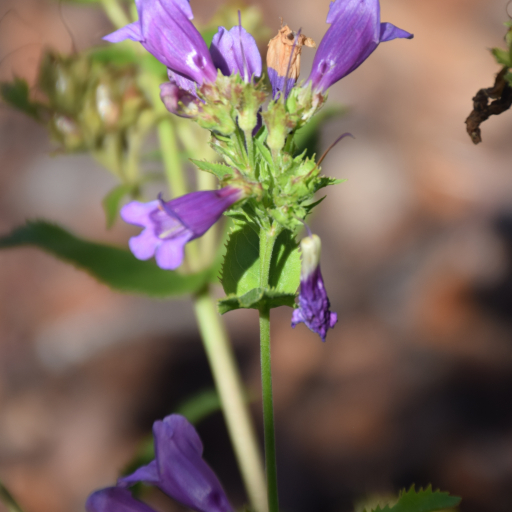
Plant Overview
Known as the Azure Penstemon or Azure Beardtongue, this perennial wildflower is a master of the "true blue" palette that gardeners often find elusive. Native to the mountain slopes and foothills of Northern California and Oregon, it brings a rugged, wild elegance to any landscape. It is a favorite of hummingbirds, who find its tubular blossoms perfectly shaped for a mid-morning snack.
🔍 How to Identify
- 💧 The Flowers: Large, trumpet-shaped blooms that transition from a vibrant sky blue to a deep, royal purple at the base.
- 🍃 The Foliage: The leaves are "glaucous," meaning they have a smooth, waxy, blue-gray coating that feels almost like suede and helps the plant retain moisture.
- 🧔 The "Beard": If you peek inside the flower, you’ll see a sterile stamen (the staminode) covered in tiny yellow hairs, giving it the signature "beardtongue" appearance.
🏡 In Your Garden
- 🏜️ Drainage is Destiny: Coming from rocky, volcanic slopes, this plant absolutely loathes "wet feet." If your soil is heavy clay, plant it in a raised bed or a rock garden to prevent root rot during winter.
- ✂️ Post-Bloom Care: Once the spectacular floral show ends in mid-summer, cutting back the spent flower stalks can encourage a tidier shape and sometimes even a second, smaller flush of color.
- 🦋 Pollinator Magnet: It is an essential stop for long-tongued bees and hummingbirds. Because it’s a native species, it’s much hardier against local pests than many hybridized nursery flowers.
⚠️ Safety & Toxicity
- ✅ General Safety: Penstemon azureus is generally considered non-toxic to humans and common household pets like dogs and cats.
- 🧪 The Selenium Factor: Some species of Penstemon are known as "selenium accumulators," meaning they can absorb high levels of this mineral from the soil, which can be harmful if consumed in massive quantities by livestock. While rarely an issue for garden pets, it's best to keep curious chewers away.
✨ Fun Fact
The name "Penstemon" comes from the Greek words penta (five) and stemon (stamen), referring to the fact that it has five stamens—but only four of them actually produce pollen! The fifth one is the fuzzy "beard" that exists solely to help guide insects into the flower.

Detailed Care Instructions
To grow Penstemon azureus, also known as Rocky Mountain Penstemon or Azure Penstemon, you can follow these steps:
- Select a planting location: Choose a spot that receives full sun or partial shade. The soil should be well-draining and preferably sandy or loamy.
- Prepare the soil: Clear the planting area of weeds and any debris. Improve the soil drainage if necessary by adding organic matter or sand.
- Planting: Dig a hole that is wide and deep enough to accommodate the root ball of the plant. Place the plant in the hole, ensuring that the top of the root ball is level with or slightly above the ground. Backfill the hole with soil and lightly pat it down to eliminate air pockets.
- Watering: After planting, thoroughly water the Penstemon azureus to settle the soil and provide moisture to the roots. Keep the soil moist but not waterlogged during the first few weeks until the plant becomes established. Afterward, water deeply but infrequently, allowing the soil to dry out slightly between waterings.
- Mulching: Apply a layer of organic mulch around the base of the plant to help conserve moisture, suppress weed growth, and insulate the roots. Avoid piling the mulch against the stem, as it can cause stem rot.
- Pruning: In late winter or early spring, prune back any dead or damaged stems to promote new growth and maintain a compact shape. Avoid pruning too heavily, as this may reduce flowering.
- Fertilization: Penstemon azureus generally doesn't require much fertilization. However, if your soil is poor or lacking in nutrients, you can apply a balanced slow-release fertilizer in spring.
- Protection: Provide protection from strong winds that can damage the tall flower spikes. Stake the plant if needed to keep it upright.
- Pests and diseases: Monitor for common pests like aphids and treat them accordingly. Penstemon azureus is generally resistant to diseases, but practice good garden hygiene to prevent any fungal infections.
Overall, Penstemon azureus is a beautiful perennial plant that is relatively low-maintenance. With proper care, it should thrive and produce its vibrant blue flowers year after year.

Place in a bright room that is sun drenched almost all day. Or directly in a south-facing window.

Penstemon Azureus is a perennial plant that requires adequate watering to thrive. To water this plant, it is important to ensure that the soil is evenly moist, but not overly saturated. This can be achieved by watering the plant deeply but infrequently, allowing the soil to dry out slightly between waterings.
It is recommended to water the plant in the early morning or evening, when the sun is not too strong, as this can cause the water to evaporate too quickly and not penetrate the soil properly. When watering, aim to water the soil rather than the leaves, as this can lead to fungal growth and disease.
It is also important to note that Penstemon Azureus prefers well-draining soil, so if the soil becomes waterlogged, this can lead to root rot and damage to the plant. Therefore, it is important to monitor the soil and adjust watering as needed.
In general, Penstemon Azureus requires moderate watering and can tolerate some dryness, but should not be allowed to completely dry out. By following these guidelines, you can ensure that your Penstemon Azureus plant receives the proper amount of water and thrives in your garden.
Use a balanced fertilizer with a ratio of 10-10-10 or 20-20-20. Apply in the spring, just as new growth begins to emerge, and then again in late summer. Apply according to package instructions, being careful not to over-fertilize, as this can cause fertilizer burn. Spread evenly around the base of the plant and water well after application.
When planting the Penstemon Azureus plant, it is important to choose a well-draining soil that is rich in organic matter. The soil should have a slightly acidic to neutral pH level and be able to retain moisture without becoming waterlogged. It is recommended to mix in equal parts of compost and sand to improve drainage and aeration. Additionally, adding a slow-release fertilizer can provide the plant with essential nutrients throughout the growing season. Avoid using soil that is too heavy or clay-like as it can stunt the growth of the Penstemon Azureus plant.
To propagate this plant, take a stem cutting that is 4-6 inches long and remove the lower leaves. Dip the cut end in rooting hormone and plant it in a pot with well-draining soil. Water the plant and cover it with a plastic bag to create humidity. Place the pot in a bright location out of direct sunlight. Check the soil moisture regularly and mist the leaves occasionally. Once the cutting has rooted, gradually reduce the humidity by removing the plastic bag and acclimating the plant to its new environment.








