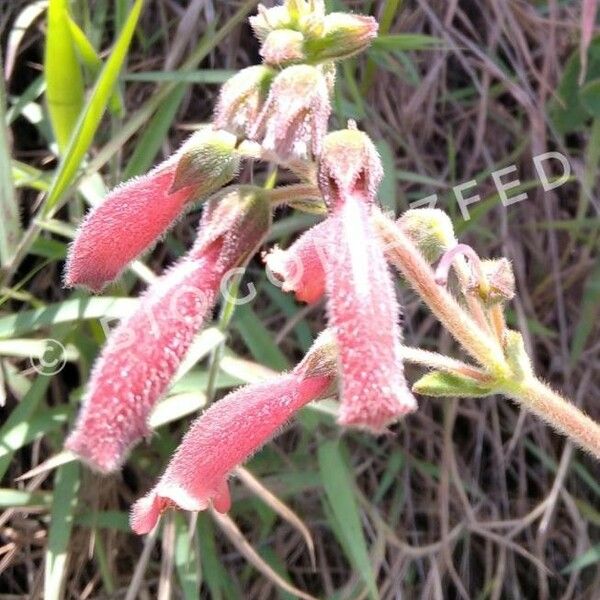
Plant Overview
The Rock Penstemon is a tough-as-nails beauty native to the sun-drenched limestone cliffs of Texas and Northern Mexico. Often called the "Baccharisleaf Beardtongue," it looks like a delicate wildflower but possesses the heart of a survivor, frequently found clinging to rocky crevices where other plants would wither. Its fiery red blooms act like a glowing neon sign, beckoning hummingbirds from miles away.
🔍 How to Identify
- 🌿 The Foliage: Unlike the soft leaves of many other Penstemons, these are stiff, leathery, and have jagged, "toothed" edges that closely resemble the Baccharis shrub.
- 🍒 Tubular Blooms: It produces striking cherry-red or scarlet flowers shaped like long funnels, specifically designed for the beaks of pollinators.
- 🪵 Woody Base: As the plant matures, the lower stems become tough and woody, technically classifying it as a "subshrub" rather than a soft-stemmed perennial.
🏡 In Your Garden
- ⛰️ The Drainage Dilemma: This plant naturally grows on vertical rock faces. In a home garden, it will suffer if its "feet" stay wet. It requires extremely well-draining, gravel-heavy soil or a raised rockery to mimic its cliffside home.
- ☀️ Sun Seeker: It thrives in intense heat and full, unadulterated sun. If placed in too much shade, the plant will become "leggy" (stretched out) and the brilliant red of the flowers will fade.
- ✂️ Pruning Pulse: After the first heavy flush of red flowers in early summer, a light trim can encourage a second wave of blooms and prevent the plant from looking too sparse or woody.
⚠️ Safety & Toxicity
- ✅ Safe Standing: Rock Penstemon is generally considered non-toxic to humans and common household pets.
- 🐾 Mild Irritant: While it doesn't contain dangerous toxins, the leathery, serrated leaves can be physically scratchy and may cause minor stomach upset if a curious pet decides to ingest the tough foliage.
✨ Fun Fact
The common name "Beardtongue" comes from the flower's sterile fifth stamen (the staminode). In many species within this family, this part is covered in tiny, fuzzy gold hairs, making it look exactly like a little hairy tongue sticking out of the flower's throat!

Detailed Care Instructions
To grow Penstemon baccharifolius, also known as rock penstemon or firecracker penstemon, follow these steps:
- Choose the right location: Penstemon baccharifolius thrives in areas with full sun to partial shade. Select a spot in your garden that receives at least 6 hours of direct sunlight per day.
- Prepare the soil: Ensure the soil is well-draining and rich in organic matter. Loosen the soil and remove any weeds or rocks from the planting area.
- Planting: Dig a hole that is slightly larger than the root ball of the plant. Place the Penstemon baccharifolius in the hole, making sure the top of the root ball is level with the soil surface. If planting multiple plants, space them at least 12-18 inches apart.
- Watering: Water the plant thoroughly after planting to settle the soil around the roots. Water consistently, keeping the soil evenly moist but not waterlogged. During hot and dry periods, increase watering frequency.
- Mulching: Apply a layer of organic mulch, such as wood chips or compost, around the base of the plant. This helps retain moisture, suppresses weeds, and keeps the roots cool.
- Fertilizing: Penstemon baccharifolius generally doesn't require heavy feeding. However, if you notice weak growth or yellowing leaves, you can apply a balanced, slow-release fertilizer in early spring.
- Pruning: After the flowering period, you can prune back the spent flower spikes to encourage new growth and a more compact shape. Cut them back to just above a leaf node or bud.
- Pests and diseases: Penstemon baccharifolius is generally resistant to pests and diseases. However, keep an eye out for aphids or spider mites, which can occasionally infest the plant. If necessary, treat with an appropriate insecticidal soap or horticultural oil.
- Winter care: Provide some winter protection to the plant in colder regions. Apply a layer of mulch or straw around the base of the plant to insulate the roots from freezing temperatures.
- Propagation: Penstemon baccharifolius can be propagated by seeds or by taking stem cuttings in early summer. Seeds can be sown directly in the garden, or you can start them indoors a few weeks before the last frost date. Softwood stem cuttings can be taken and rooted in a moist potting mix.
By following these steps, you can successfully grow Penstemon baccharifolius in your garden and enjoy its vibrant blooms.

Place in a bright room that is sun drenched almost all day. Or directly in a south-facing window.

Penstemon Baccharifolius is a plant species that belongs to the family Plantaginaceae. It is a perennial plant that requires regular watering to maintain its health and vigor. Here are some tips on how to water this plant:
1. Watering frequency: Penstemon Baccharifolius needs to be watered regularly, particularly during the growing season. The frequency of watering will depend on various factors such as the climate, soil type, and stage of growth. However, as a general rule, water the plant once or twice a week during the growing season and reduce the frequency during the cooler months.
2. Soil type: Penstemon Baccharifolius prefers well-drained soil, and overwatering can lead to waterlogging and root rot. Therefore, it is essential to ensure that the soil is adequately drained to prevent waterlogging. If the soil is heavy, mix in some sand or grit to enhance drainage.
3. Watering method: It is best to water Penstemon Baccharifolius using a watering can or hosepipe; avoid using a sprinkler system as this can result in the foliage getting wet, which can encourage the growth of fungal diseases. Apply water gently to the soil around the base of the plant to ensure that the water penetrates deeply into the soil.
4. Time of day: Watering in the early morning or late evening is recommended as it allows the plant to absorb water before the heat of the day. Watering during the hottest part of the day can result in water loss through evaporation.
5. Drought tolerance: Penstemon Baccharifolius is semi-drought tolerant, and overwatering it can be harmful. If you are unsure about the watering requirements, it is better to err on the side of caution and let the soil dry out slightly between waterings.
In summary, Penstemon Baccharifolius requires regular watering, well-drained soil, and a gentle watering method to prevent waterlogging. Water in the early morning or late evening and avoid overwatering to maintain the plant's health and vigor.
When it comes to fertilizing this plant, it is important to start by selecting a fertilizer that has high levels of phosphorus and potassium, as these nutrients are key for promoting healthy growth and flowering. It is also important to ensure that the fertilizer you choose is free of nitrogen or that it has very low levels, as excessive nitrogen can lead to lush foliage but poor blooms.
When fertilizing this plant, it is best to apply the fertilizer in the spring just as new growth is beginning to emerge. Simply scatter a handful or two of fertilizer (per plant) around the base of the plant, being careful not to allow it to touch the leaves or stems. lightly work the fertilizer into the soil, and then water thoroughly to ensure that the nutrients reach the roots.
After the initial application, you can apply a second dose of fertilizer in mid-summer if desired, but be sure to follow the same guidelines with regards to nitrogen levels. With regular fertilizing and proper care, your Penstemon Baccharifolius should produce lush foliage and beautiful blooms year after year.
The most suitable soil for the Penstemon Baccharifolius plant is a well-draining soil that is rich in organic matter. It is important that the soil has good drainage as the plant does not tolerate wet or waterlogged soil. A pH of 6.5 to 7.5 is also ideal for this plant. The soil can be amended with compost or other organic matter such as well-rotted manure to improve its fertility and texture. The plant prefers a soil that is slightly acidic to neutral in pH. It is recommended to plant it in location that receives full sun to partial shade, and that the soil is kept moist but not waterlogged. Additionally, it is important not to over-fertilize the plant as this can cause excessive growth and reduced flowering.
- Choose a healthy parent plant: Look for a strong and healthy Penstemon Baccharifolius plant to take cuttings from. Choose a plant that is disease-free, well hydrated, and has adequate sunlight.
- Take stem cuttings: Using a sharp and sterilized cutting tool, cut a stem from the parent plant. The stem should be at least 4 inches long and should have a few leaves attached to it.
- Remove lower leaves: Remove the lower leaves of the stem, leaving only the top leaves intact. This helps to reduce the moisture loss from the cutting.
- Hormone application: Dip the cut end of the stem in a rooting hormone solution to encourage root growth. Make sure to follow the instructions on the rooting hormone package.
- Plant the cutting: Plant the cutting in a pot filled with moist and well-draining potting soil. Firm the soil around the cutting to ensure that it is secure.
- Provide suitable growing conditions: Keep the cutting in a warm, bright, and humid location. You can cover the cutting with a plastic bag or a cloche to increase humidity. Ensure that the cutting receives sufficient light, but avoid direct sunlight as this may burn the leaves.
- Care for the plant: Ensure that the soil remains moist but not waterlogged. Mist the leaves of the plant regularly to prevent them from drying out. Monitor the cutting for any signs of mold or disease, and remove any affected leaves immediately.
- Transplanting: Once the cutting has established roots and has developed a few leaves, it can be transplanted into a larger pot or directly into the ground.
- Maintenance: Regularly prune the plant to encourage bushy growth and to remove any dead or diseased leaves. Provide adequate water and sunlight to help the plant thrive.
- Enjoy your new plant: The new Penstemon Baccharifolius plant will continue to grow and thrive, providing a beautiful addition to your garden or indoor space.








