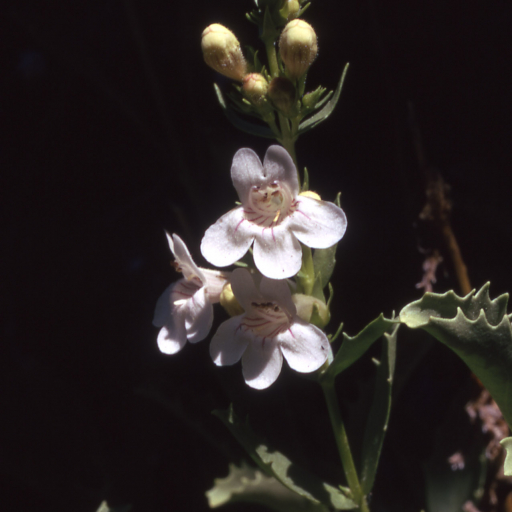
Plant Overview
Commonly known as the Hotrock Penstemon or Scabland Penstemon, this rugged beauty is the ultimate survivor of the plant world. While other flowers wilt in the heat, Penstemon deustus thrives in the harshest, most unforgiving volcanic landscapes of the American West. Its name sounds a bit intense—and for good reason—as it often looks like it has been slightly "scorched" by the sun it loves so much.
🔍 How to Identify
- 🤍 The Flowers: Look for small, tubular, snapdragon-like blossoms that range from creamy white to a pale, toasted yellow. If you peek inside the throat, you’ll see delicate purple "nectar guides" designed to lead bees straight to the prize.
- 🪚 The Leaves: Unlike many soft-leaved Penstemons, these leaves are stiff and sharply toothed, resembling a miniature saw blade. They are usually a dusty, olive green.
- 🪵 The Base: This is a "sub-shrub," meaning it develops a tough, woody base over time. The stems stand upright, reaching anywhere from 8 to 24 inches tall, appearing like sturdy little towers emerging from the rocks.
🏡 In Your Garden
- 🏜️ The "Hotter the Better" Rule: This plant is the king of rock gardens. It doesn't just tolerate rocky, poor soil—it demands it. If you put it in rich, loamy potting soil, it will likely "pout" and suffer from root rot. It needs excellent drainage above all else.
- 🐝 A Pollinator Magnet: Because it blooms in mid-to-late summer when other spring flowers have faded, it serves as a critical pit stop for native bees, butterflies, and the occasional adventurous hummingbird.
- ✂️ Minimalist Maintenance: Once established, it is incredibly drought-tolerant. In fact, the biggest mistake gardeners make is overwatering it. Treat it with "tough love," and it will reward you with years of blooms.
⚠️ Safety & Toxicity
- ✅ Safe for All: The Hotrock Penstemon is generally considered non-toxic to humans, dogs, cats, and horses.
- 🐜 Wild Visitors: While safe to touch, be mindful that its nectar-rich flowers are very popular with bees, so use caution when pruning if you are allergic to stings.
✨ Fun Fact
The Latin species name deustus literally translates to "burned" or "scorched." It was named this way because its brownish, withered-looking spent flowers and parched habitat make it look like it has survived a wildfire!

Detailed Care Instructions
To successfully grow Penstemon Deustus, also known as firecracker penstemon, follow these steps:
- Location: Choose a sunny spot in your garden where the plant can receive at least 6 hours of direct sunlight per day. The soil should be well-draining to prevent waterlogging.
- Soil preparation: Prepare the soil by mixing organic matter such as compost or well-rotted manure to improve its fertility and drainage capabilities. Penstemon Deustus prefers slightly acidic to neutral pH (around 6.0-7.0).
- Planting: Dig a hole slightly larger and deeper than the root ball of the plant. Gently remove the plant from its container, loosen the roots, and place it into the hole. Backfill with soil and press gently to remove air pockets. Water thoroughly after planting.
- Watering: Penstemon Deustus prefers moderate watering, so keep the soil consistently moist but not waterlogged. Water deeply when the top inch of soil feels dry, and avoid overwatering, as this can cause root rot.
- Mulching: Applying a layer of organic mulch around the base of the plant can help conserve moisture, control weeds, and regulate soil temperature. Mulch also adds nutrients to the soil as it breaks down.
- Fertilization: Generally, Penstemon Deustus does not require heavy feeding. However, you can apply a slow-release, balanced fertilizer in the spring to promote healthy growth. Follow the manufacturer's instructions for application rates.
- Pruning: Trim off any dead or damaged stems as soon as you notice them. After flowering, you can cut back the spent flower stalks to encourage repeat blooming and maintain a tidy appearance.
- Winter care: Penstemon Deustus is hardy in zones 5-9. In colder climates, you can protect the plant during winter by adding a layer of mulch around the base to insulate the roots. This will prevent heaving and protect against freezing temperatures.
- Pest and disease control: Penstemon Deustus is relatively resistant to pests and diseases. However, it can occasionally face issues such as aphids, spider mites, or powdery mildew. Monitor your plant regularly and treat any pest or disease issues promptly using organic or chemical remedies as needed.
By following these steps, you will create favorable conditions for the growth and blooming of your Penstemon Deustus plant.

Place in a bright room that is sun drenched almost all day. Or directly in a south-facing window.

To water this plant, it is recommended to use a watering can with a narrow spout or a drip irrigation system. Water the base of the plant and avoid getting water on the leaves and flowers. Water deeply once or twice a week during dry periods, depending on the soil and weather conditions. It is important to allow the soil to dry out slightly between watering to prevent root rot. In general, this plant prefers moderate moisture and well-draining soil. Overwatering or underwatering can result in stunted growth, yellowing leaves, and decreased flower production.
To fertilize this plant, firstly, you should wait until its growing season. Secondly, use a balanced fertilizer. Thirdly, follow the instructions on the fertilizer package and use it in accordance with the recommended rate. Fourthly, spread the fertilizer evenly around the base of the plant, ensuring that it does not come into contact with the foliage. Lastly, water the plant thoroughly after fertilizing to help distribute the fertilizer into the soil.
Penstemon deustus is a plant species that belongs to the family Plantaginaceae. The soil type it prefers is one that is well-draining and slightly alkaline. The pH level of the soil should be between 6.5 to 7.5. The soil needs to be fertile and rich in organic matter such as compost. It is recommended to mix some sand and grit into the soil to improve drainage. The plant can grow in a range of soil textures, but prefers sandy loam which is a mixture of sand, silt, and clay. It is best to avoid using heavy clay soils, as this can result in waterlogging and poor root development. Additionally, the plant prefers full sun with good air circulation, as it needs plenty of sunlight and air movement to thrive.
To propagate this plant, you will need to collect stem cuttings from a healthy and mature plant. Using clean and sharp scissors, cut a stem that is about six inches long. Make sure to cut at a 45-degree angle and remove any leaves from the bottom two inches of the stem.
Next, dip the cut end of the stem into a rooting hormone powder and gently tap off any excess. Plant the stem into a pot filled with well-draining soil and water thoroughly. Cover the pot with a clear plastic bag to create a humid environment and place it in a warm, bright spot, but away from direct sunlight.
Check regularly for new growth, and once the plant has rooted and begun to grow, spread intervals between watering to encourage a healthy root system. After about two months, you can transplant the new plant into a larger pot or into your garden.








