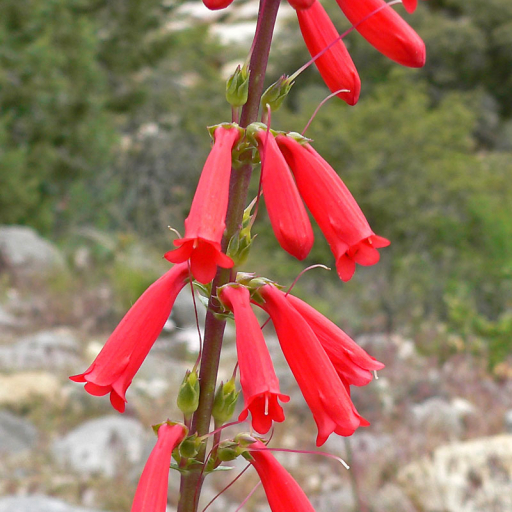
Plant Overview
Often called the Firecracker Penstemon, this desert native is famous for setting rocky landscapes ablaze with its brilliant scarlet blooms. Thriving in the rugged canyons of the American Southwest, it is a tough-as-nails perennial that serves as a vital nectar source for migrating hummingbirds. Its tall, architectural flower spikes make it a dramatic favorite for water-wise gardens and xeriscaping.
🔍 How to Identify
- 🧨 The Flowers: Narrow, tubular blossoms that are a vivid, "stop-light" red. They hang slightly downward along one side of the upper stem.
- 🍃 The Foliage: Leathery, oval to lance-shaped leaves that often have a waxy, grey-green or bluish-green tint to help them retain moisture.
- 📏 The Stature: The plant forms a low basal rosette of leaves, from which multiple upright flowering stalks rise, reaching up to 2–3 feet in height.
🏡 In Your Garden
- 🏜️ Drainage is Vital: This plant is a true desert dweller; it hates "wet feet." In a home garden, it requires very well-draining, sandy, or gravelly soil. If your soil is heavy clay, planting it on a slope or in a raised bed is a must to prevent root rot.
- 🐦 Hummingbird Magnet: Because of its deep red color and long tubular shape, it is specifically designed for hummingbird pollination. While bees may try to visit, the flowers are perfectly evolved for the long beaks of hummers, making it a "must-have" for a wildlife-friendly backyard.
- ☀️ Sun Seeker: It craves full sun and intense light. While it is incredibly cold-hardy for a desert plant, it will become leggy and fail to bloom if tucked away in the shade.
⚠️ Safety & Toxicity
- ✅ Safe for All: Penstemon eatonii is generally considered non-toxic to humans, dogs, cats, and horses.
- 🧤 Garden Handling: It does not have thorns or irritating saps, making it a very safe choice for planting near walkways or in areas where children and pets play.
✨ Fun Fact
Unlike many other flowers that use "landing pads" for bees, the Firecracker Penstemon has evolved to be "bee-unfriendly." Its narrow tubes are too tight for most bees to crawl into, and since many insects cannot see the color red well, the plant saves all its nectar specifically for its favorite feathered friends: hummingbirds!

Detailed Care Instructions
| Humidity | Normal |
| Lighting | Shade |
| Toxicity | Poisonous |
| Difficulty | Medium |
| Hibernation | Cold Period |
| Hardiness Zones | 1 - 12 |
To grow Penstemon eatonii (also known as firecracker penstemon), you can follow these steps:
- Choose a suitable location: Penstemon eatonii prefers full sun to partial shade. Ensure that the location receives at least 6 hours of direct sunlight per day.
- Prepare the soil: The soil should be well-draining and fertile. Amend heavy clay soil with organic matter or compost to improve drainage. Penstemon eatonii can tolerate a wide range of soil types, but it should not be overly moist or waterlogged.
- Planting: Dig a hole that is slightly larger and deeper than the plant's root ball. Place the plant in the hole, ensuring that the crown is level with or slightly above the soil surface. Backfill the hole with soil and gently firm it around the plant.
- Watering: Water the plant thoroughly after planting and continue to water regularly until it becomes established. However, avoid overwatering, as excessive moisture may lead to root rot. Allow the soil to dry out slightly between waterings.
- Mulching: Apply a layer of organic mulch around the plant to conserve moisture, suppress weed growth, and regulate soil temperature. Ensure that the mulch is not directly touching the plant's stem to prevent rot.
- Fertilizing: Penstemon eatonii generally does not require heavy fertilization. However, you can apply a balanced slow-release fertilizer in early spring to promote healthy growth.
- Pruning: Deadhead spent flowers regularly to encourage continuous blooming. Additionally, you can trim back the plant after the blooming period to encourage bushier growth and prevent it from becoming leggy. Prune any dead, damaged, or diseased stems as needed.
- Dividing and propagation: Penstemon eatonii can be divided every few years to rejuvenate older plants. Dig up the clump, gently separate the roots, and replant the divisions in well-prepared soil.
- Pests and diseases: While relatively resistant to pests and diseases, keep an eye out for common garden pests like aphids or slugs. Treat infestations promptly with organic or chemical pest control methods if necessary.
Remember to check the specific care requirements for your specific variety of Penstemon eatonii, as some cultivars may have slightly different preferences.

Place in a bright room that is sun drenched almost all day. Or directly in a south-facing window.

To properly water this plant, start by checking the soil moisture level with your finger. Stick your finger into the soil up to the second knuckle. If the soil feels dry, it's time to water. When watering, aim the hose or watering can at the base of the plant and water slowly and evenly until the soil is moist but not waterlogged. It's best to water in the morning or early evening, avoiding the hottest part of the day. During hot, dry periods, monitor the plant's moisture level closely and water more frequently as needed.
To fertilize this plant, wait until it is well established and in active growth. Choose a fertilizer that is balanced and contains equal parts of nitrogen, phosphorus, and potassium. Apply the fertilizer in the early spring, just as new growth begins, and again in late summer or early fall. Follow the manufacturer's instructions for application rates and frequency. Avoid over-fertilizing as this can lead to excessive growth and decrease the plant's overall health. Water the plant well after fertilizing to help it absorb the nutrients.
Penstemon Eatonii plant is a perennial flowering plant that requires well-draining soil to grow properly. The soil type preferred by this plant is sandy loam that is slightly acidic with a pH ranging from 5.5-7.0. The soil should be rich in organic matter and nutrients to support the growth of the plant. The soil should have a good moisture-holding capacity but not be waterlogged. The plant prefers full sun to partial shade and does well in areas that are dry and hot. The plant is drought-tolerant and does not require frequent watering, but regular watering is necessary during the first growing season to establish the roots of the plant. Mulching around the base of the plant can help in retaining moisture and also provide nutrients to the plant.
To propagate this plant, first select healthy and mature stems. Cut a few inches of the stem, just below a node. Remove the leaves from the lower part of the cutting. You can use a rooting hormone to increase success rates. Fill a pot with well-draining soil and moisten it. Insert the cutting into the soil and gently press it down. Water the soil thoroughly and cover the pot with a plastic cover or a clear plastic bag to maintain humidity. Place the pot in a bright but shaded area. Occasionally water the soil to maintain moisture. In a few weeks, new roots will start to develop. You can then transplant the new plant into its permanent location.








