Plant Overview
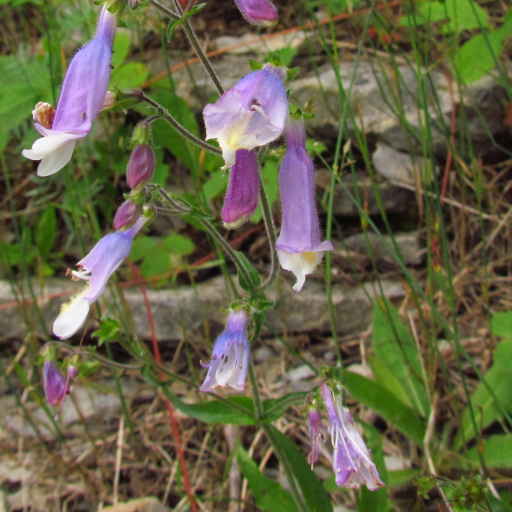
Known commonly as the Hairy Beardtongue, this North American native is a rugged beauty that brings a touch of wild elegance to any landscape. Its name comes from the fuzzy, sterile stamen hidden inside its lavender blossoms, which looks like a tiny, "unshaven" tongue poking out at passersby. It is a champion of the "rock garden," thriving where more delicate flowers might wither.
🔍 How to Identify
- 🌸 The Flowers: Clusters of trumpet-shaped blooms that are typically a soft violet or lavender on the outside and white on the inside.
- 🧵 The Texture: True to its name, the stems and even the outer parts of the flowers are covered in fine, downy hairs that give the plant a silvery sheen in the sunlight.
- 🍃 The Foliage: Lance-shaped leaves grow in opposite pairs along the stem, often turning a beautiful burgundy or purplish-red as the weather cools in autumn.
🏡 In Your Garden
- 🏜️ Lean and Mean: This plant actually prefers "poor" soil. If you give it too much fertilizer or rich organic matter, it may become "floppy" and short-lived. It is the perfect candidate for those dry, rocky spots where nothing else seems to grow.
- 🐝 Pollinator Magnet: Because of the tubular shape of the flowers, they are a primary destination for bumblebees and hummingbirds. The "hairy" stamen inside the flower acts as a landing platform, helping bees steady themselves as they reach for nectar.
⚠️ Safety & Toxicity
- ✅ Status: Non-toxic and generally safe.
- 🐾 Details: Penstemon hirsutus is not known to be poisonous to humans, dogs, or cats. It is a safe addition to family gardens, though it is always best practice to discourage pets from munching on garden plants to avoid digestive upset.
✨ Fun Fact
🧔 The Bearded Mimic: The "beard" on the tongue (the staminode) isn't just for show! Scientists believe it mimics the look of a nectar-rich area or provides tactile friction, forcing bees to wiggle deeper into the flower, which ensures they get covered in pollen to carry to the next plant.

Detailed Care Instructions
To grow Penstemon hirsutus, also known as hairy beardtongue, follow these steps:
- Choose the right location: Find a spot in your garden that receives full sun to partial shade. The soil should be well-draining and fertile.
- Start from seeds: You can start Penstemon hirsutus from seeds indoors about 6-8 weeks before the last frost date in your area. Sow the seeds in seed starting mix, lightly covering them, and keep the soil moist until germination.
- Transplant outdoors: Once the danger of frost has passed, move the seedlings outdoors. Space them around 12-18 inches apart to allow enough room for growth. Ensure the soil is prepared by amending it with organic matter like compost.
- Watering: While Penstemon hirsutus prefers dry to medium moisture levels, it's important to keep the soil consistently moist during the initial period after transplanting. After it establishes, water it moderately, allowing the top inch of soil to dry between waterings.
- Mulching: Apply a layer of mulch around the base of the plant to help retain soil moisture and prevent weeds from competing with the plant.
- Fertilizer: Although Penstemon hirsutus doesn't require much fertilization, you can apply a balanced, slow-release fertilizer in early spring to promote healthy growth. Follow the instructions on the fertilizer package for application rates.
- Pruning: After the plant has finished flowering, you can deadhead spent flowers to encourage new growth and prolong the blooming period. In late fall or early spring, cut back the foliage to about 4-6 inches above the ground to promote fresh growth.
- Winter protection: Penstemon hirsutus is typically hardy, but in colder regions, it may benefit from a layer of mulch or a frost blanket to protect it during winter.
- Dividing: Every few years, Penstemon hirsutus can be divided to maintain vigor and encourage more blooms. Dig up the plant and carefully separate the root clumps. Replant the divisions, ensuring they have enough space to grow.
By following these steps, you can successfully grow Penstemon hirsutus in your garden and enjoy its vibrant blooms.

Place in a bright room that is sun drenched almost all day. Or directly in a south-facing window.

Penstemon Hirsutus is a perennial plant that requires regular watering to thrive. However, overwatering can be detrimental to its growth. Here are some tips on how to water this plant effectively:
1. Check the soil moisture: Before watering, check the soil moisture by inserting a finger into the soil. If it feels dry, it's time to water.
2. Water deeply: Give the plant a deep watering once or twice a week rather than frequent shallow watering. This encourages the roots to grow deeper, making them less susceptible to drought.
3. Water early in the day: Watering early in the day allows the plant to absorb moisture before the heat of the day. Moisture that remains on the leaves or flowers overnight can encourage fungal growth.
4. Use the right amount of water: Penstemon Hirsutus prefers to be kept moist but not waterlogged. A good rule of thumb is to water until the soil is damp to a depth of about 6 inches.
5. Mulch the soil: A layer of mulch around the base of the plant helps to retain moisture and regulate soil temperature.
By following these tips, you can ensure that your Penstemon Hirsutus plant gets the right amount of water and thrives in your garden.
- Select a balanced fertilizer that contains equal amounts of nitrogen, phosphorus, and potassium.
- Apply the fertilizer to the soil around the base of the plant, avoiding contact with the leaves or stems.
- Water the plant thoroughly after applying the fertilizer to help distribute the nutrients.
- Repeat the fertilization process every 4 to 6 weeks throughout the growing season, especially if the plant is not showing good growth or flowering.
- Be careful not to over-fertilize, as this can result in excessive vegetative growth at the expense of flowering.
Penstemon hirsutus requires a well-draining soil that is slightly acidic with a pH between 6.0 and 7.5. It is adapted to grow in soils that are rich in organic matter, such as loamy soils or sandy soils. Additionally, the soil should be moist but not waterlogged, as the plant may be susceptible to root rot if the soil is too wet. Fertilizer can be applied during the growing season to encourage healthy growth and flowering. Overall, it is important to choose a soil that will provide good drainage and adequate nutrients for the plant's growth.
To propagate this plant, take stem cuttings in the early summer from new growth that has not yet flowered. Cut off a 4-6 inch piece of stem, making the cut below a node. Remove the leaves from the bottom third of the stem, leaving only a few leaves at the top. Dip the cut end of the stem in rooting hormone and plant it in a container filled with well-draining soil mix. Keep the soil moist and place the container in a bright, indirect light. Within a few weeks, roots should begin to form and new growth will emerge. Once the new plant is well-established, it can be transplanted into a larger container or directly into the garden.








