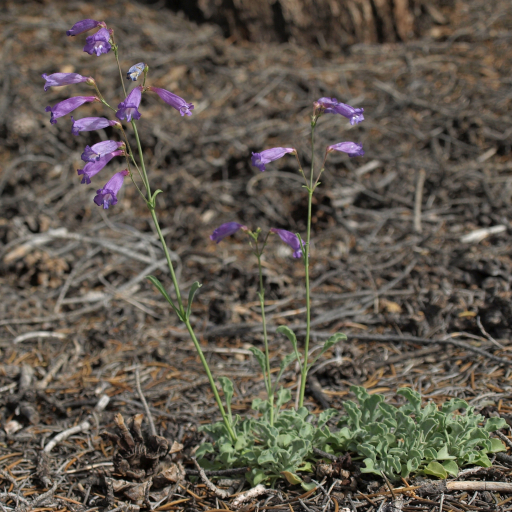
Plant Overview
Known affectionately as the Westgard Penstemon, this hardy mountain dweller is a true specialist of the American West. Found clinging to the high-altitude rocky slopes of the White and Inyo Mountains, it has mastered the art of living in rugged, limestone-rich terrain. Its name scapoides refers to its unique "scape"—a flowering stem that rises elegantly and nakedly above a humble cushion of leaves.
🔍 How to Identify
- 🌱 Mat-Forming Foliage: It grows in a low, ground-hugging cluster. The leaves are small, leathery, and tucked tightly against the earth to protect the plant from harsh alpine winds.
- 💜 Violet "Beardtongues": The flowers are tubular and range from a soft lavender to a deep blue-violet. If you peek inside the bloom, you’ll see the fuzzy, sterile stamen that gives the Penstemon genus its "beardtongue" nickname.
- 📏 The Naked Stalk: Unlike many of its cousins, the flowering stems of this species are nearly leafless (scapose), making the vibrant purple blooms appear as if they are floating above the rocky ground.
🏡 In Your Garden
- 🪨 The Limestone Lover: In its natural habitat, this plant thrives on dolomite and limestone. If you are lucky enough to grow it, avoid rich, "good" garden soil. It craves lean, gritty, and alkaline conditions where water drains away instantly.
- 💧 Drought Discipline: This plant is a water-saver by necessity. It has a deep taproot that hates being disturbed or sitting in "wet feet." Once established, it requires almost zero supplemental water, making it a perfect candidate for high-desert rock gardens.
- 🐝 High-Country Pollinators: Because it blooms in late spring and summer, it serves as a vital pit stop for high-altitude bumblebees and hummingbirds looking for a nectar-rich snack in the thin mountain air.
⚠️ Safety & Toxicity
- ✅ Generally Non-Toxic: Penstemon scapoides is not known to be poisonous to humans, dogs, or cats.
- 🏜️ Selenium Note: Some wild Penstemons are known to accumulate selenium from the soil, which can be harmful if eaten in massive quantities by livestock, but for the average home gardener or hiker, it is considered safe to handle.
✨ Fun Fact
This plant is a "narrow endemic," meaning it is found naturally in only a tiny geographic sliver of the world—specifically a few mountain ranges along the California-Nevada border. Seeing one in the wild is like finding a living mountain treasure!

Detailed Care Instructions

Place in a bright room that is sun drenched almost all day. Or directly in a south-facing window.

Some plants require more regular watering than others, which should be done every few days. It's critical to maintain the soil moist all of the time. The water requirements of the same plant placed in pots with varying sizes will differ. Because the water in the smaller pot evaporates faster than the water in the larger pot, it will require more watering. Regardless of pot size, the surface should constantly be maintained moist.








