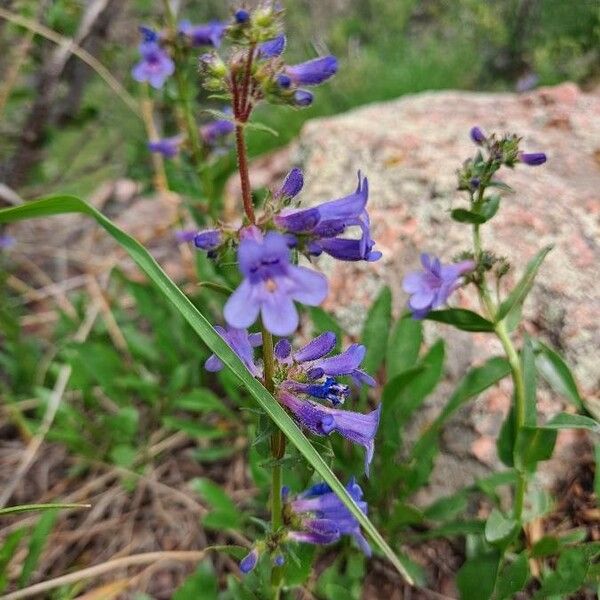
Plant Overview
Known as the "Front Range Beardtongue," this tiny powerhouse is a jewel of the Rocky Mountains. It creates stunning carpets of sapphire blue in late spring, clinging to rocky slopes where other plants might struggle. It is a favorite for native plant enthusiasts who want to bring high-altitude beauty and rugged resilience to their home landscapes.
🔍 How to Identify
- 🍃 Low-Profile Foliage: It forms a dense, ground-hugging mat of deep green, lance-shaped leaves that often remain evergreen even under a blanket of winter snow.
- 🔔 Trumpet Blooms: The flowers are vibrant tubular bells, ranging from sky blue to deep violet, usually standing only 4 to 10 inches tall on upright stems.
- 🧔 The "Beard": If you peer inside the flower, you will find a sterile stamen covered in fine, yellow hairs, which gives the "Beardtongue" its distinctive common name.
🏡 In Your Garden
- 🪨 The Need for Grit: This plant is a "crevice dweller" by nature. It thrives in lean, gravelly soil and will actually suffer in rich, compost-heavy garden beds, which can lead to root rot.
- ☀️ Sun Seeker: It craves full sun and sharp drainage. Because of its taproot system, it is exceptionally drought-tolerant once established but hates being moved, so choose its "forever home" carefully.
- 🦋 Pollinator Banquet: The tubular shape of the flowers is a specialized "landing pad" for bumblebees and hummingbirds, making it a vital food source in early summer.
⚠️ Safety & Toxicity
- ✅ Non-Toxic Status: Penstemon virens is generally considered safe and non-toxic for humans, cats, and dogs.
- 🌱 Environmental Context: While safe in a garden setting, some wild species of Penstemon can accumulate selenium if grown in specific volcanic soils, which can be an issue for grazing livestock, but this is rarely a concern for the hobbyist gardener.
✨ Fun Fact
- 🧪 The Fifth Stamen: The name Penstemon is derived from the Greek "pente" (five) and "stemon" (stamen). While most related plants have four stamens, this genus has a prominent fifth one—though it produces no pollen and exists purely to look fuzzy and attract bees!

Detailed Care Instructions
To grow Penstemon virens, also known as the plains penstemon or eastern red penstemon, you can follow these steps:
- Choose the right location: Penstemon virens thrives in full sun to partial shade. Select a location in your garden that receives at least six hours of direct sunlight each day. Ensure the soil is well-drained as the plant does not tolerate overly wet conditions.
- Prepare the soil: The plant prefers slightly alkaline soil but can adapt to various soil types. Amend the soil with organic matter like compost before planting to enrich its fertility and improve drainage.
- Planting: Dig a hole slightly larger than the size of the plant's container. Place the plant in the hole, making sure the crown is level with the soil surface. Fill the hole with soil and press lightly to remove any air pockets. Water thoroughly to settle the soil around the roots.
- Watering: Penstemon virens prefers moderate moisture levels. Water the plant deeply but infrequently, allowing the top inch of soil to dry out between watering sessions. Avoid overwatering as it can lead to root rot.
- Mulching: Apply a layer of organic mulch around the base of the plant to help retain moisture, suppress weed growth, and regulate soil temperature. Leave a gap around the stem to prevent rotting.
- Fertilizing: Penstemon virens generally doesn't require heavy fertilization. However, you can apply a balanced, slow-release fertilizer in early spring to promote healthy growth. Follow the package instructions for proper dosage.
- Pruning: To encourage bushier growth and prolong flowering, you can pinch back the stems by a few inches in late spring or early summer. Additionally, remove any dead or diseased foliage throughout the growing season.
- Pests and diseases: Penstemon virens is relatively resistant to pests and diseases. However, occasional issues may arise, such as aphids or powdery mildew. Monitor the plant regularly and take appropriate measures if necessary, such as applying insecticidal soap or treating with a fungicide.
- Winter care: Penstemon virens is a perennial plant and can withstand cold temperatures. However, for areas with harsh winters, providing some winter protection like a layer of mulch or burlap can help insulate the plant's roots.
- Propagation: If you want to propagate additional plants, you can do so through stem cuttings or by dividing established clumps in early spring or fall.
By following these guidelines, you should be able to successfully grow Penstemon virens and enjoy its vibrant red flowers and delicate foliage in your garden.

Place in a bright room that is sun drenched almost all day. Or directly in a south-facing window.

1. Determine the water needs of the plant - Penstemon Virens prefers consistently moist soil, but not waterlogged.
2. Water the plant deeply and infrequently - It's better to water your plant once a week, but water it deeply instead of watering it a little bit every day.
3. Check the soil moisture - Stick your finger about an inch deep into the soil to see if it's dry. If it is, then it's time to water.
4. Use a watering can or a hose - Water the soil at the base of the plant instead of watering the foliage.
5. Mulch the soil - Mulching the soil around the plant can help retain moisture and reduce the need for frequent watering.
6. Water during the cooler hours - Water your plant in the early morning or late afternoon instead of during the heat of the day. This gives the plant enough time to absorb the water before the temperature rises.
- Begin fertilizing in early spring when growth begins.
- Use a balanced fertilizer with equal amounts of nitrogen, phosphorus, and potassium.
- Apply the fertilizer sparingly, as Penstemon Virens is sensitive to over fertilization.
- Apply the fertilizer evenly around the base of the plant, avoiding direct contact with the stems and leaves.
- Water the plant thoroughly after fertilizing to prevent burning of the roots.
- Repeat the fertilizing process every 4-6 weeks during the growing season.
- Stop fertilizing in late summer to allow the plant to enter dormancy.
- Resume fertilizing in early spring when new growth begins again.
Penstemon Virens plant prefers well-draining soil that is nutrient-rich and slightly acidic. The soil should also be able to retain moisture but not become waterlogged, as this can cause root rot. A good soil mix for this plant would be a combination of sandy loam, peat moss, and perlite, which provides good drainage while retaining water and nutrients. It is important to avoid using heavy clay soils or soils with high pH levels. Also, adding organic matter, such as compost, can help improve the soil's structure and fertility, providing a better growing environment for the Penstemon Virens.
To propagate this plant, you can take a softwood cutting in the spring from the new growth at the tip of the stem. Make sure the cutting is at least 5 inches long and has several leaves. Remove any leaves from the bottom half of the stem and dip the cut end in rooting hormone. Plant the cutting in well-draining soil and keep it moist but not waterlogged. You can also propagate this plant by dividing the clump in early spring or fall. Carefully dig up the clump, separate it into smaller sections, and replant them in soil that has been amended with compost. Water the new plants thoroughly and keep them moist until they are established.








